
.webp)

Puri, June 30: With the grand Deva Snana Purnima rituals and the much-awaited Hati Besha (Gajanana Besha) of Lord Jagannath, Lord Balabhadra and Devi Subhadra concluding on Monday, the focus at the Shree Jagannath Temple has now shifted to one of its most sacred and mysterious phases-the Anasara period.
Following the ceremonial bathing with 108 pitchers of sanctified water at the Snana Mandap, the Holy Trinity is believed to have fallen ill with fever. As per centuries-old temple tradition, the deities have now been shifted to the Anasara Ghara, where they will remain in complete seclusion for nearly a fortnight, away from public view.

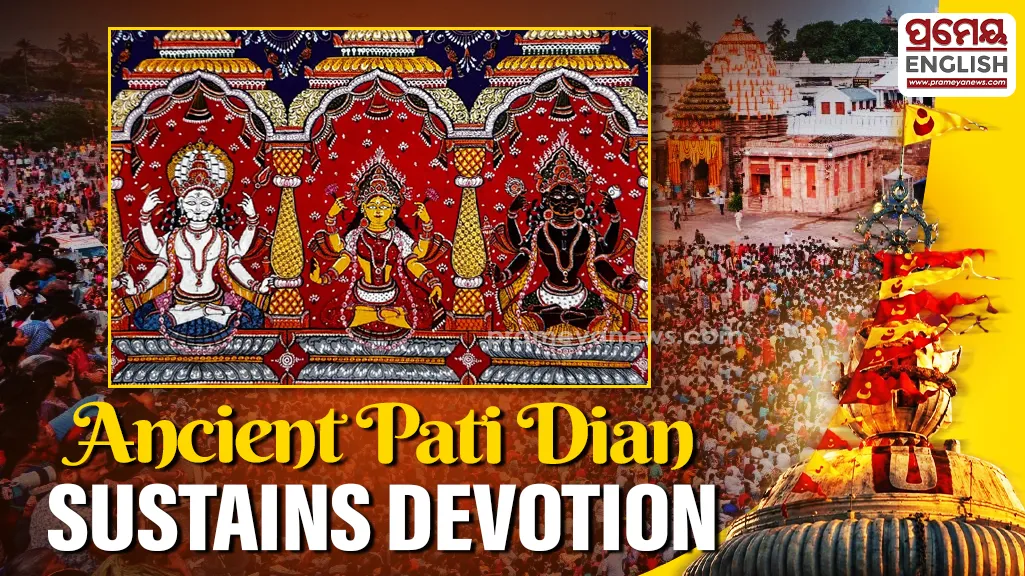
During this period, devotees are denied darshan of the wooden idols. Instead, they worship the sacred Pati Dian-hand-painted cloth icons that symbolically represent Lord Jagannath, Lord Balabhadra and Devi Subhadra until the deities reappear during the Nabajaubana Darshan, just before the annual Rath Yatra.
An investigation by this publication into the lesser-known ritual reveals that the Pati Dian tradition is one of the oldest surviving ritual art practices associated with the Jagannath cult. References to the worship of these sacred paintings are found in the 17th-century text Niladri Mahodaya, while historical records from the reigns of King Anangabhima Deva and Gajapati Ramachandra Deva-I document the hereditary role of Chitrakara servitors in preparing them.

Only three Chitrakara families in and around Puri continue this sacred hereditary service. The paintings are not ordinary Pattachitra artworks but ritual icons created exclusively for temple worship. Their preparation begins weeks before Snana Purnima under strict religious discipline. The artists observe ritual purity, consume only vegetarian food, abstain from intoxicants and worldly pleasures, and use natural pigments such as Hingula, Haritala, Sankha powder, Geru and Kaintha gum to create the images.

Temple tradition also holds that Lord Jagannath himself visits the homes of the Chitrakara servitors while the paintings are being prepared.
The completed Pati Dians are first worshipped at the residence of the chief artist on Snana Purnima. Later, temple servitors arrive with Mahaprasad and ceremonial garlands before escorting the paintings in a grand procession to the Srimandir amid the sounds of bells, kahali and other traditional instruments.
Inside the temple, the Pati Dians are ceremonially installed and become the principal objects of worship during the Anasara period. While the wooden deities undergo secret healing rituals and are offered herbal medicines by the Daitapati servitors inside the Anasara Ghara, devotees offer prayers before the sacred cloth icons.
During Anasara, Lord Jagannath is worshipped in the form of Ananta Narayan, Lord Balabhadra as Ananta Basudeva, Goddess Subhadra as Bhubaneswari, while Patitapabana represents Sudarshan.
Despite its immense religious significance, the centuries-old tradition faces challenges. Chitrakara servitors receive only nominal remuneration for preparing the Pati Dians, and many younger members of these hereditary families are reluctant to continue the demanding ritual service, raising concerns over the future of this unique cultural heritage.
Sanghamitra Sahoo, a devotee from Bhubaneswar, said, "Every year after Hati Besha, we miss seeing Mahaprabhu during Anasara. But the Pati Dian reminds us that the Lord is never away from his devotees. It is a beautiful tradition that deserves greater recognition."
Another devotee, Shreyash Mishra, described the ritual as one of the hidden treasures of Jagannath culture. "Most visitors know about Snana Purnima and Rath Yatra, but very few understand the significance of the Pati Dian. It reflects Odisha's rich spiritual heritage and the extraordinary devotion of the Chitrakara servitors who have preserved this tradition for generations."
.webp)