

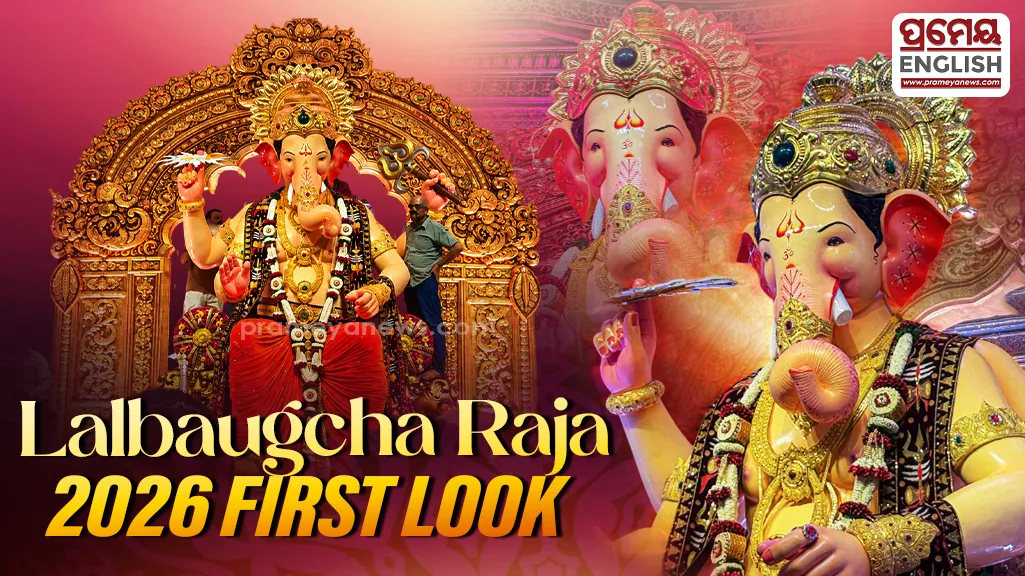
Mumbai, Sept 14: The wait is finally over for Mumbaikars as the first look of the iconic Lalbaugcha Raja 2026 was unveiled on Friday, September 11, ahead of Ganesh Chaturthi.
One of Mumbai’s most celebrated Ganeshotsav traditions, Lalbaugcha Raja has been attracting lakhs of devotees since 1934. This year, the grand pandal has been designed in a temple-inspired style, featuring intricate brickwork, gold-plated elements and elaborate traditional detailing.
One of the major attractions is the grand entrance, which features multiple gates and a massive Shivling inspired by Ujjain Mahakaal. A towering statue of Lord Shiva stands above the entrance, holding a damaru and kamandalu. The setup also features a striking visual effect in which Lord Shiva’s red eye appears to blink.
The idol was officially revealed at 7 PM on September 11, with Lalbaugcha Raja seen seated in a traditional orange dhoti and blessing devotees.
When Will Lalbaugcha Raja Darshan Begin?
Devotees will be able to seek darshan of Lalbaugcha Raja for 11 days, from September 14 to September 25, as part of the Ganesh Chaturthi celebrations.
The first-look ceremony has already generated considerable excitement among devotees, with many preparing to visit the iconic pandal during the festival.
Mukh Darshan vs Navsachi Darshan
Lalbaugcha Raja offers two main darshan options, allowing devotees to choose between getting a distant glimpse of Bappa and going closer to the idol.
Mukh Darshan
The Mukh Darshan queue is meant for devotees who want to see Lalbaugcha Raja from a distance. It generally moves faster than the Navsachi queue, although waiting times can still stretch for several hours during peak days.
Depending on the crowd, devotees may have to wait around three to six hours.
This option is preferred by those who want to see the iconic idol, enjoy the decorations and experience the festive atmosphere without spending an extremely long time in the queue.
Navsachi Darshan
The Navsachi Line is meant for devotees who want to go closer to Lalbaugcha Raja and offer their prayers.
The word Navsacha comes from navas, referring to a wish or vow made by devotees. Lalbaugcha Raja is popularly known as “Navsacha Ganpati”, owing to the widespread belief that Bappa fulfils devotees’ wishes.
The wait for Navsachi Darshan can be significantly longer. During peak days, devotees may have to wait 24 to 40 hours, with queues extending through the surrounding streets of Lalbaug.
For many devotees, however, the long wait itself has become an important part of their annual Ganesh Chaturthi experience.
Why Is Lalbaugcha Raja Called ‘Navsacha Ganpati’?
The history of Lalbaugcha Raja dates back to 1934, when local fishermen and traders prayed for a permanent marketplace. After their wish was fulfilled, the first Ganpati idol was installed as a gesture of gratitude.
Over the decades, the idol became associated with the belief that prayers made before Bappa are fulfilled. This earned Lalbaugcha Raja the title “Navsacha Ganpati” and helped turn the mandal into one of Mumbai’s biggest Ganeshotsav attractions.
Nearly a century later, the combination of its history, distinctive idol, immense public participation and deep cultural significance has made Lalbaugcha Raja much more than just a Ganpati pandal.
For thousands of devotees, seeking Bappa’s blessings at Lalbaug every year remains a cherished Mumbai tradition.