
New Delhi, March 18: The Union government has confirmed that the song 'Sarke Chunariya' has been banned following widespread criticism over its lyrics and visuals.
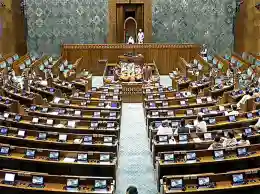
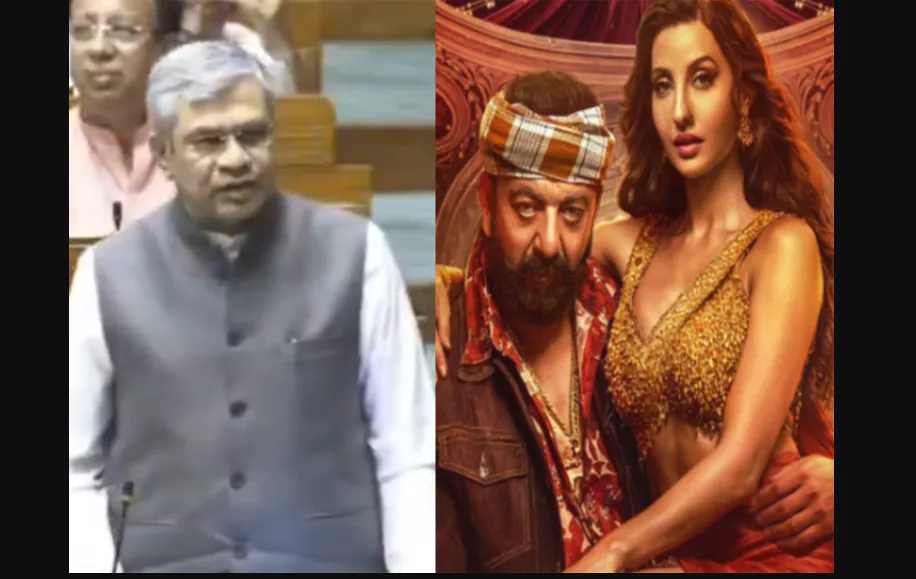
Union Minister for Information and Broadcasting Ashwini Vaishnaw announced the decision in the Lok Sabha while responding to a question raised by Samajwadi Party MP Anand Bhadouria.
Addressing the House, Vaishnaw said the government had already acted against the song and reiterated that freedom of speech in India is subject to constitutional limits. The minister emphasized that expression must operate within the framework of reasonable restrictions laid down by the Constitution.
"The song has already been banned," Vaishnaw said during the parliamentary discussion, adding, "I would like to say this clearly that we should follow the reasonable restrictions imposed by the creators of the Constitution of India on freedom of speech."
The minister referred to the provisions under Article 19(2) of the Constitution, which allow restrictions on freedom of speech in the interest of public order, decency, morality, and other concerns.
"Freedom of speech cannot be absolute. It has to be in the context of society and culture. We must follow the reasonable restrictions imposed by the creators of the Constitution," he said, adding, "And in that, very carefully, in the coming time, the way things are spreading rapidly today through digital means, in that, for the protection of the society, especially for the protection of children, for the protection of women, for the protection of the deprived groups of the society, whatever hard actions should be taken, the government is ready to take them."
The controversy erupted soon after the release of the song, which features actors Nora Fatehi and Sanjay Dutt. Critics alleged that the track contained vulgar lyrics and visuals that objectified women.
The backlash quickly escalated, with several individuals and organisations calling for action against the creators of the song.
Complaints were filed demanding an FIR and removal of the track from circulation, intensifying public debate just days before the matter was raised in Parliament.
Haryana Women Commission, Karnataka Women Commission, actor-politician Ravi Kishan, actor-politician Kangana Ranaut, and singer Armaan Malik, among others, have all spoken out against the track, calling its lyrics objectionable.
An advocate has also approached the Central Board of Film Certification (CBFC) seeking an immediate ban and removal of the song, alleging that its lyrics and visuals are obscene and potentially harmful to minors.
The song was unveiled at a recent launch event attended by Nora Fatehi, director Prem, composer Arjun Janya, Rakshitha, Reeshma Nanaiah and the film's lead star Dhruva Sarja.
Produced by Venkat K Narayana under KVN Productions and presented by the same banner, 'KD: The Devil' is a period action entertainer inspired by real events from 1970s Bangalore. The film features Dhruva Sarja in the titular role alongside Sanjay Dutt, Shilpa Shetty Kundra, Ramesh Aravind, Reeshma Nanaiah and V Ravichandran.The film is scheduled for a theatrical release on April 30, 2026. (ANI)