


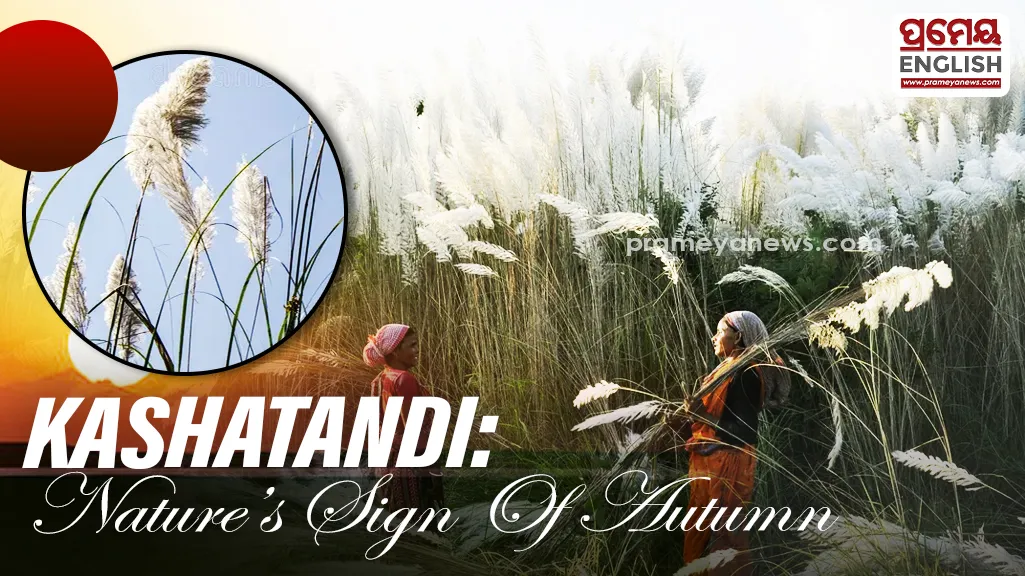
Every season has its own unique charm, and autumn arrives with a beauty that is hard to miss. As the monsoon clouds disappear and the sky turns clear, gentle winds begin to blow and vast stretches of white Kashatandi flowers start blooming across fields, roadsides and riverbanks.
The delicate white flowers not only transform the landscape into a picturesque sight but also signal the arrival of autumn and the festive season of Goddess Durga. As the Kashatandi sways gently in the breeze, it seems as if Mother Earth has dressed herself in a pristine white attire.
Though the flowers have little fragrance, their striking appearance has the power to refresh the mind and captivate nature lovers. For poets and writers, the sight of Kashatandi has long served as an inspiration, finding expression in poems, stories and literature.
But beyond its beauty, Kashatandi also plays an important role in the lives of many rural families. For some economically disadvantaged communities, the grass becomes a seasonal source of livelihood, helping them meet their daily household needs.
Kashatandi generally blooms from late August through September and October before losing its beauty by November and December. This period also coincides with the end of agricultural activities in many rural areas, when employment opportunities become limited.
During this time, many poor families, particularly women, venture out with sickles to collect the grass. After bringing it home, they dry it under the sun for seven to eight days. The dried grass is then used to make brooms and several traditional items used for fishing and other household purposes.
Both men and women participate in preparing and selling these products, turning the seasonal grass into a means of earning income.
The plant is also locally known as Badhuna Khar, while the brooms made from it are commonly referred to as Chhatara Badhuna. These traditional brooms continue to enjoy considerable demand in rural areas and provide a source of income for several families.
Thus, the Kashatandi flower represents more than the arrival of autumn. Its white blooms add beauty to the countryside while, at the same time, providing seasonal employment and supporting the livelihoods of rural communities.
As the cool breeze makes the white flowers sway gently, the landscape takes on a poetic charm, as though a woman draped in a white veil is running towards her beloved. It is this blend of beauty, culture and livelihood that makes Kashatandi an inseparable part of Odisha's autumn landscape.