
.webp)

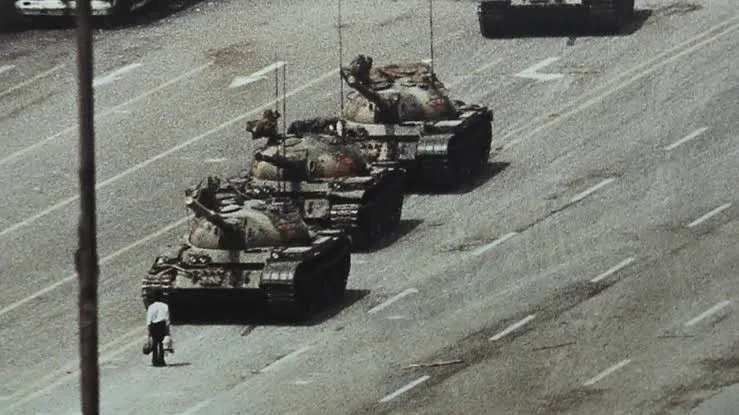
Democracy demands faced heavy military suppression in Beijing - June 4, 1989
Armed soldiers and military armor swept through central Beijing thirty-seven years ago today, forcefully ending weeks of peaceful student demonstrations. This actions on June 3 and 4, 1989, resulted in a high loss of civilian life. Known globally as the June Fourth Incident, the events remain a strictly guarded secret within mainland China, where talking about it carries severe consequences.
Trouble began in April 1989 following the death of Hu Yaobang, a former leader of the Chinese Communist Party. Hu had earned praise from young people for supporting freer political expression. What started as local mourning quickly grew into an expansive public movement. Soon, over one million people filled the central plaza, while similar rallies popped up in 400 other cities. Citizens wanted real freedom of speech, an end to political bribery, and answers to rising living costs.
Students later began hunger strikes just as Soviet leader Mikhail Gorbachev visited the capital, drawing international news cameras to the scene. This public display caused a sharp split inside government walls. Moderate officials like Zhao Ziyang wanted open discussions with the public. Instead, hardline figures backed by Deng Xiaoping chose strict control, declaring martial law and calling in the military.
Troops advanced into the heart of the city using live ammunition against regular citizens who tried to block the roads with temporary barriers. Heavy vehicles crushed tents and structures, including a plaster freedom statue built by art students. While official state reports claimed only a few hundred deaths occurred, independent journalists and rights groups estimate the true losses sit in the thousands. The morning after, an unknown citizen carrying shopping bags blocked a line of departing armored vehicles, creating the iconic Tank Man symbol of peaceful resistance.
Historically, India watched these events with deep caution, choosing not to comment directly to protect fragile border talks that had restarted just a year prior in 1988. Today, authorities use advanced tech to block references to the day. Hong Kong once held regular memory nights, but recent national security laws stopped those gatherings. Groups like the Tiananmen Mothers still face police monitoring simply for trying to visit family graves.
.webp)