

.webp)


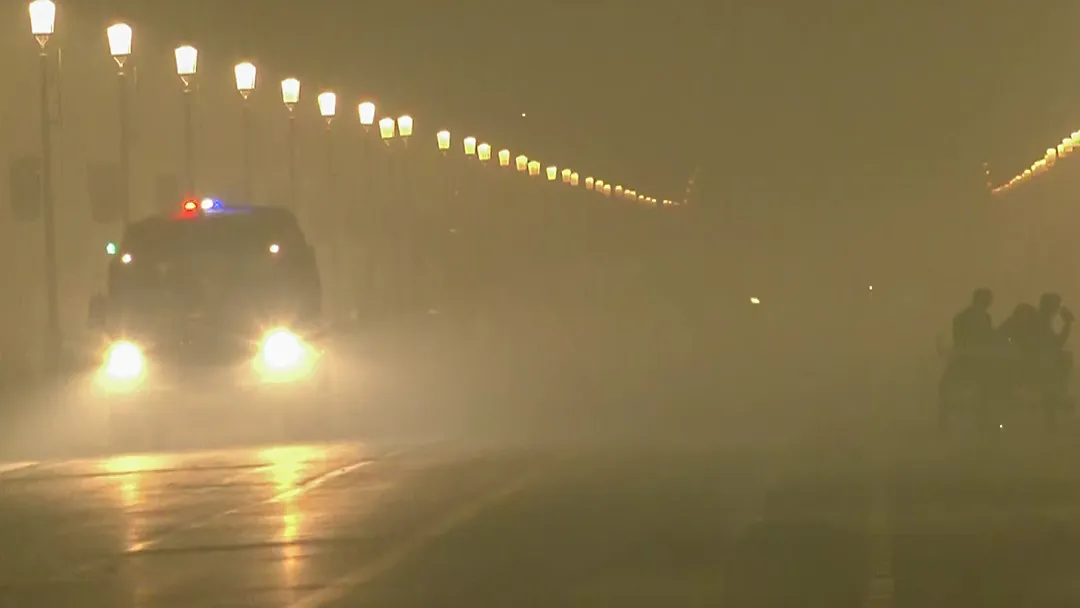
Zero visibility halts travel while air quality hits severe
Commuters and travelers in the national capital are facing a difficult Monday as a thick blanket of fog has brought normal life to a standstill. The India Meteorological Department (IMD) has issued an orange alert, signaling very dense fog conditions for Delhi, Uttar Pradesh, and Uttarakhand. With visibility dropping to near zero in several areas, the regional infrastructure is struggling to cope.
Education has taken a hit in Noida, where the district administration declared a holiday for all schools. This closure remains in effect from December 29 through January 1 to protect students from the extreme cold and hazardous road conditions. The Noida–Greater Noida and Yamuna Expressways are particularly dangerous, with visibility reaching levels that make driving nearly impossible.
The transport sector is experiencing major setbacks. At Delhi’s Indira Gandhi International Airport, at least 128 flights were cancelled, including 64 arrivals and 64 departures. Eight other flights had to be diverted to alternate cities like Ahmedabad and Jaipur. Major airlines, including IndiGo and Air India Express, have issued advisories warning passengers that schedules will remain unpredictable. On the tracks, approximately 100 trains headed for Delhi are running behind schedule due to the persistent mist.
Adding to the weather woes is a sharp decline in air quality. After a short period of relief, Delhi’s Air Quality Index (AQI) has spiraled back into the ‘severe’ category, hitting a mark of 403 on Monday morning. Anand Vihar recorded the most toxic air at 459. Residents are dealing with the double challenge of biting cold and hazardous pollution levels as temperatures hover between 7 and 22 degrees Celsius.
.webp)