

ଓଡ଼ିଆ | ENGLISH
ଓଡ଼ିଆ | ENGLISH

innovation-on-sustainable-development-punam-priyadarshini-qualifies-for-national-childrens-science-congress

Published By : Satya Mohapatra
innovation-on-sustainable-development-punam-priyadarshini-qualifies-for-national-childrens-science-congress

Trump Redefines Global Diplomacy: US Exits 66 International Organizations

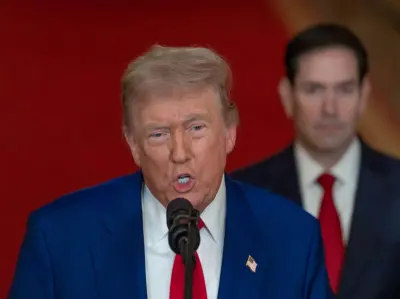
In a historic move that fundamentally alters the landscape of international cooperation, the United States has officially announced its departure from 66 global institutions. President Donald Trump’s administration declared that Washington will sever ties with 31 United Nations bodies and 35 non-UN organizations. This decision represents the most significant retreat from multilateral governance in modern American history, signaling a sharp pivot toward an "America First" doctrine that prioritizes national sovereignty over global consensus.

Impact on India and the International Solar Alliance

For observers in India, one specific inclusion on the exit list stands out significantly. The US withdrawal from global bodies includes the International Solar Alliance (ISA). The ISA is a major initiative championed by India to promote sustainable energy worldwide. By exiting this alliance, along with the International Renewable Energy Agency, the US is effectively stepping back from collaborative global energy transitions, a move that could have ripple effects on India-US cooperation in the green energy sector.

Dismantling the Climate Architecture

Climate policy appears to be the primary target of this sweeping executive action. This announcement follows closely on the heels of President Trump’s second withdrawal from the Paris Agreement, which is set to take effect in January 2026. However, the new memorandum goes much deeper than the Paris accord.

The administration plans to exit the UN Framework Convention on Climate Change (UNFCCC)—the bedrock treaty established in 1992 that supports all global climate negotiations. By leaving the UNFCCC, the US effectively removes itself from the entire infrastructure of global climate diplomacy. Senior officials argue that these treaties disadvantage the American economy, drive up domestic energy costs, and allow competitors like China to operate with fewer restrictions.

War on "Woke" Policies

Beyond climate issues, the White House has cited ideological grievances as a primary driver for these withdrawals. Administration officials have expressed frustration with what they term "mission creep" within the United Nations. They argue that many agencies have strayed from their original humanitarian mandates to enforce "woke" agendas related to gender, migration, and social policies that do not align with American values.

Consequently, agencies such as the UN Entity for Gender Equality (UN Women) and the UN Population Fund are on the chopping block. The administration asserts that these bodies function as enforcement mechanisms for progressive policies that were never approved by the US Congress.

What Remains of US Engagement?

Despite the massive scale of the pullback, the US is not adopting total isolationism. The administration has drawn a clear distinction between institutions it considers "ideological" and those vital for national security.

The United States will maintain its position on the UN Security Council, preserving its crucial veto power. Additionally, humanitarian giants like the World Food Programme and the UN Refugee Agency will retain US support. The White House describes these entities as serving core security functions that remain in America’s best interest.

Global Reactions and Future Implications

This systematic dismantling of the post-World War II order has drawn sharp reactions. Supporters view the US withdrawal from global bodies as a necessary reclamation of independence, ending the flow of taxpayer money to unaccountable bureaucrats. Conversely, critics warn that this creates a dangerous power vacuum. With the US stepping back from standard-setting bodies like the International Trade Centre and the International Law Commission, experts fear that rival powers, particularly China, will step in to rewrite global rules in their favor.

As the US exits organizations ranging from the UN Alliance of Civilizations to the Global Forum on Cyber Expertise, the world is entering a new era of transactional diplomacy where long-standing alliances are no longer guaranteed.