
Bhubaneswar, March 17: The Odisha Government is intensifying its preparations for the grand celebration of Odisha Day 2026, scheduled for April 1.
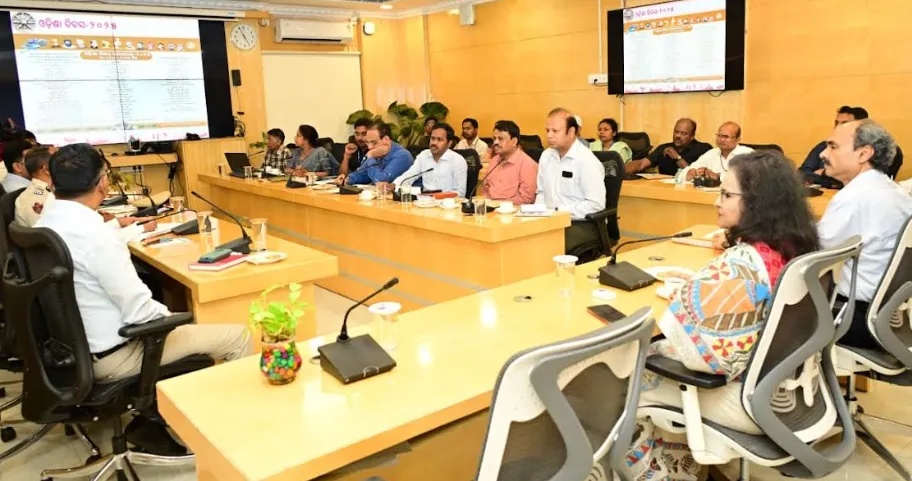
In this regard, Chief Secretary Anu Garg chaired a high-level meeting at Lok Seba Bhavan today to discuss the observance of the day across the state, district, and subdivision levels, including in New Delhi and other regions.
Hemant Sharma, the Additional Chief Secretary of the Home, Industry, Information, and Public Relations Departments, presented the detailed plan for the event. A state-level celebration will take place at Jayadev Bhavan on the evening of April 1. The event will feature a photo exhibition commemorating the formation of Odisha as a separate state.
The state-level celebration will also include a public meeting, with the Chief Minister and other distinguished dignitaries in attendance. Special recognition will be given to people with disabilities who have made remarkable achievements. Prizes will be awarded for various competitions held as part of the celebrations. Additionally, the Information and Public Relations Department will unveil the third edition of Pragati Pravah, a magazine highlighting the government’s developmental initiatives.
The Department of Odia Language, Literature, and Culture will organize cultural programs at Jayadev Bhavan. Across the state, including in Bhubaneswar, activities such as floral tributes to the statues of Odisha’s great personalities and performances of music that emphasize national pride will be held.
The meeting also reviewed the plans for the decoration of government and national buildings with lights and for the maintenance of statues of Odisha’s iconic figures. The celebration will extend beyond Bhubaneswar, with events taking place in New Delhi and other major cities, supported by local Odia communities.
From April 1 to 14, various programs focused on Odia language, literature, and culture will be held in collaboration with different departments.
The meeting was attended by senior officials from various departments, including Sanjay Kumar Singh (Secretary of the Department of Education and Public Education), Dr. N. Tirumala Naik (Commissioner of Tourism), Balwant Singh (Director of Information and Public Relations), Anuj Kumar Das Pattnaik (Director of Public Relations), and other key officials, who all contributed to the discussions.