
.webp)


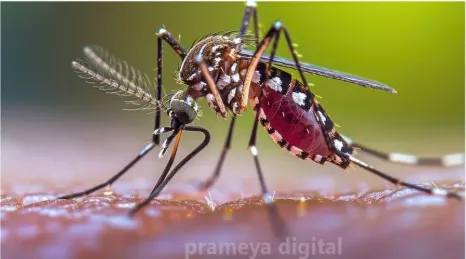
Bhubaneswar, Ap 25: Malaria continues to be a persistent health challenge in Odisha, with the state reporting over 60,000 cases annually in recent years. Despite ongoing awareness campaigns and distribution of mosquito nets and medicines, the disease remains widespread, particularly in tribal-dominated districts.
According to official data, malaria-positive cases were extremely high in 2016 and 2017, with 4.44 lakh and 3.47 lakh cases identified, respectively. Districts such as Koraput, Malkangiri, Nabarangpur, Kalahandi, Sundargarh, Rayagada, Nuapada, Boudh, and Bolangir reported the highest incidences.
The state government’s Malaria Elimination Campaign in remote areas between 2016 and 2017 helped reduce the number of cases significantly. By 2018, cases fell to 66,311, and numbers continued to drop over the next few years, reaching 23,770 in 2022. However, from 2023 onwards, cases are rising again, with 41,973 cases in 2023, 68,639 in 2024, and 61,137 in 2025-26.
To combat malaria, the health department has intensified testing, with annual blood sample testing rising to 23.21% in 2025, up from 22.49% in 2024.
Odisha plans to eliminate malaria by 2030. To achieve this, 853 fever treatment workers have been deployed in remote areas, and 66 sentinel sites across medical colleges, district hospitals, and community health centers are operational. Around 48,905 ASHA workers have been engaged for field-level interventions.
From 2022 to 2027, the state has invested Rs 50 crore in malaria control measures, including insecticide spraying and mosquito net distribution. In 2024-25 alone, 55.5 lakh mosquito nets were distributed across 21 districts with active malaria transmission.
While the government continues preventive measures, concerns remain over funding delays and low awareness at the district level. Health officials emphasize that regular monitoring and community participation are crucial to controlling the disease.
.webp)