

.webp)


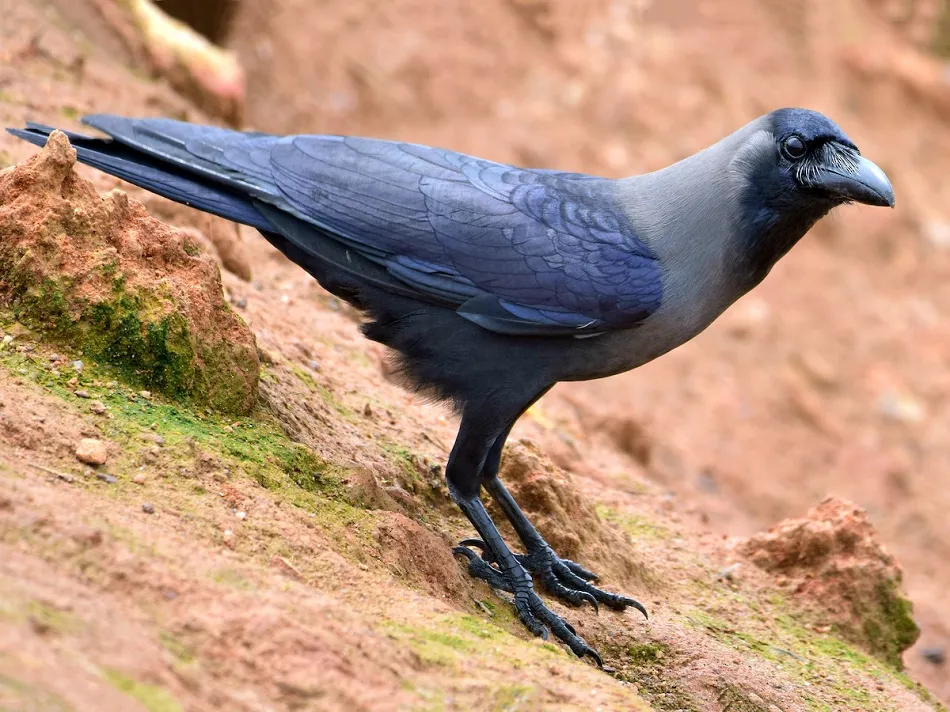
Bhubaneswar, July 18: Once an inseparable part of daily life and folklore, crows are gradually disappearing from Odisha's urban landscape, raising concerns among bird experts and environmentalists. The familiar cawing of crows that once echoed through neighbourhoods at dawn has become increasingly rare, particularly in cities.
For generations, crows occupied a special place in Odia culture. Folk songs, rhymes and childhood memories often revolved around the bird, with mothers using its presence to feed children. However, rapid urbanisation and changing lifestyles have made such scenes a thing of the past.
Bird expert and Birds of Odisha author Pramod Dal says crows continue to thrive in a few rural pockets, including Dhalsinghamarthapur village under Gandia block in Dhenkanal district, where hundreds of the birds can still be seen. Small populations are also found in Kantamalia village. In contrast, crows have become scarce across several districts, including Kendrapara, Jajpur, Jagatsinghpur, Cuttack, Bhubaneswar, Balasore and Bhadrak.
According to the State of India's Birds report, India's crow population is declining at an average annual rate of 2.12 per cent. Experts warn that if the trend continues, crows could eventually face the risk of becoming a threatened species.
Environmentalists attribute the decline to multiple factors. Improved urban waste management has reduced the availability of food for crows, which are natural scavengers and play a vital role in cleaning the environment. The extensive use of chemical fertilisers and pesticides in agriculture has also affected their food chain by killing insects and other organisms that crows feed on.
The rapid expansion of concrete infrastructure has further reduced nesting habitats. Unlike pigeons, which can adapt to buildings, crows require tall, mature trees such as banyan, mango, palm and coconut trees for nesting and breeding. The large-scale loss of such trees in urban areas has severely impacted their survival.
Experts also identify noise pollution as a significant threat. Constant construction activity, heavy traffic and increasing urban noise are believed to be driving crows away from cities.
The disappearance of crows may also have ecological consequences beyond the species itself. Cuckoos, which lay their eggs in crow nests, depend heavily on crow populations for breeding. As crow numbers decline, experts fear cuckoos could also become increasingly rare in urban areas.
With crows playing a crucial role in maintaining ecological balance by disposing of organic waste, conservationists stress the need to protect their habitats through the preservation of mature trees, sustainable urban planning and reduced environmental pollution.
.webp)