
.webp)


New Delhi, April 13: Iran's Ambassador to India, Mohammad Fathali, has described India as a "reliable and compassionate" partner while asserting Tehran's territorial authority over the Strait of Hormuz amidst ongoing regional tensions.
Addressing a press conference in the national capital, Fathali highlighted strong bilateral ties "We have a good relation with the Indian government, we want good preparation for Indian ships" he said while assuring safe passage through the Strait of Hormuz.
"For Indian ships, you know that we have a good relation with the Indian government. We want good preparation for Indian ships. You know our Foreign Minister has described India as one of the five countries as a friend," Fathali said.
The envoy expressed his gratitude for India's support during the current geopolitical crisis, noting the strength of the people-to-people connect. "I want to thank all the Indian people. I believe that they have demonstrated that they are truly reliable and compassionate partners in times of hardship. I would like to thank the Government of India for facilitating all the necessary arrangements in this difficult time," he said.
Addressing the strategic importance of the Strait of Hormuz and the circumstances leading to the current escalation, Fathali pointed out that the waterway remains under Iranian jurisdiction. "Before the war, the Strait of Hormuz was open. They attacked us for days, and after that, they accepted a ceasefire. And they announced that we were on the negotiation table. And after that, they attacked us. They attacked schools and hospitals. This Strait is our territorial waters," he said.
Commenting on the prospect of a naval blockade and the breakdown of previous diplomatic efforts, the Ambassador accused the United States and Israel of breaching commitments. "For us, diplomacy is a continuation of the struggle of our defenders of Iran. We have not forgotten, and we will not forget US history breaches of commitments and ill intentions, because you know that we have so many experiences from the United States," he stated.
Fathali further alleged that the transition from dialogue to conflict was a result of external aggression. "In the twelve days' war, you have also heard and you have seen that Iran was in negotiation, and the Zionist (Israeli) regime and the United States started the attack," he noted, highlighting Tehran's deep-seated mistrust of Western diplomatic overtures.
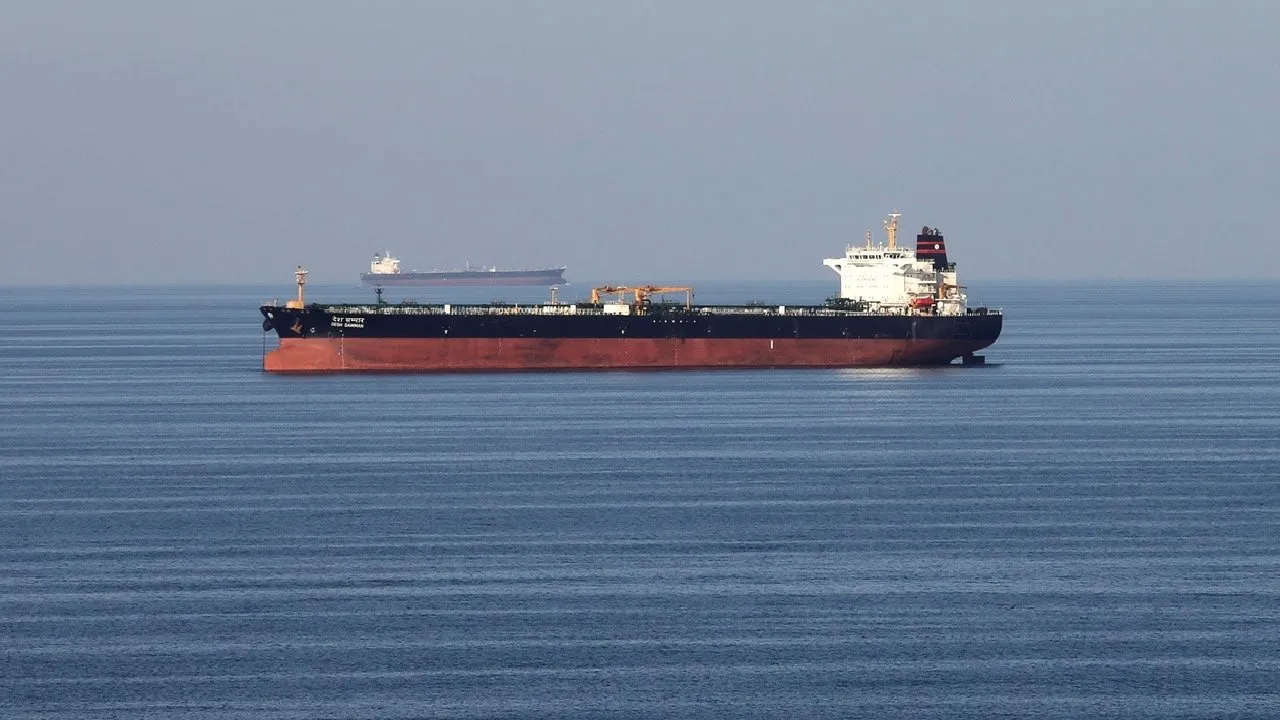
This diplomatic backdrop coincides with significant maritime movements, as the Indian-flagged liquefied petroleum gas (LPG) tanker Jag Vikram became the ninth Indian vessel to navigate the conflict-ridden Strait. Currently being escorted toward Indian shores, the vessel is scheduled to arrive at an Indian port on Tuesday, marking the first successful passage of an Indian ship through the strategic waterway following a temporary ceasefire between the United States and Iran.
Jag Vikram transited the waterway between Friday night and Saturday morning, reaching the Gulf of Oman by Saturday afternoon. Union Shipping Minister Sarbananda Sonowal confirmed the development today, April 13, stating on social media platform X, "Update on Indian shipping operations. Indian-flagged vessel JAG VIKRAM, navigated by 24 Indian crew members, successfully sailed out of the Persian Gulf region on April 11, 2026."
The tanker joins a list of eight other Indian-flagged vessels including MT Shivalik, MT Nanda Devi, Pine Gas, Jag Vasant, BW TYR, BW ELM, Green Asha, and Green Sanvi that have safely crossed the strait. New Delhi has maintained direct diplomatic engagement with Tehran to secure the movement of ships previously stranded in the narrow passage, though External Affairs Minister S Jaishankar previously clarified that there was no "blanket arrangement" for Indian-flagged ships and noted that Iran had not received anything in exchange for the facilitation.
However, the window for such safe passage may be tightening as US President Donald Trump announced a blockade on vessels entering or leaving the Strait of Hormuz, following the collapse of a 21-hour negotiation between US and Iranian delegations. "Effective immediately, the United States Navy, the finest in the world, will begin the process of BLOCKADING any and all ships trying to enter or leave the Strait of Hormuz," Trump declared.
The US President further warned that the Navy would intercept any vessel in international waters found to have paid a transit toll to Iran, asserting, "No one who pays an illegal toll will have safe passage on the high seas." He added that the blockade would take effect immediately, warning that any Iranian forces firing upon US or peaceful vessels would be "BLOWN TO HELL," and stated that the military was "LOCKED AND LOADED" to dismantle Iran's remaining military capacity.
According to a statement from CENTCOM, the blockade specifically targets ships travelling to or from Iranian ports and was set to officially commence at 10 am ET today, Monday, April 13, further escalating the volatility in the world's most critical energy corridor.
.webp)