

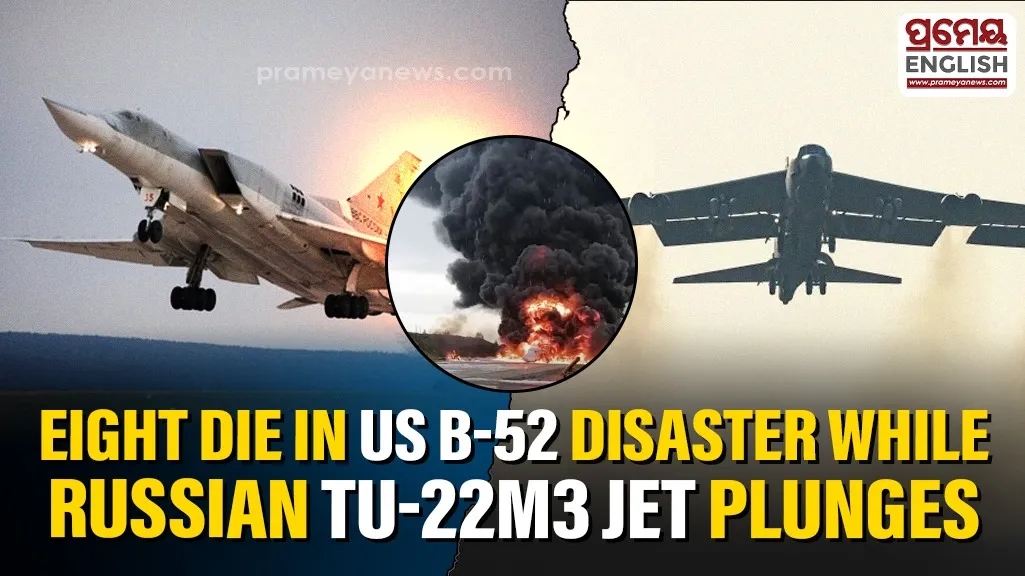
Rival superpower nuclear combat planes crash on identical days.
Tragedy struck both American and Russian aerospace forces simultaneously as two legacy combat planes plummeted to earth in unrelated accidents on Monday. Eight crew members perished when a United States B-52 Stratofortress burst into flames moments after leaving the runway at Edwards Air Force Base in California. Thousands of miles away, a Russian Tu-22M3 jet slammed into a Siberian forest in the Irkutsk region during a scheduled training run. For decades, these specific long-range platforms defined global nuclear deterrence strategies, acting as airborne counterweights during tense geopolitical standoffs.
Military officials confirmed the Edwards Air Force Base accident left no survivors. The doomed B-52 flight carried military personnel, government civilians, and two Boeing contractors. Colonel James Hayes reported the mixed crew was executing a radar modernization test when the aircraft failed in the Mojave Desert. Flames quickly consumed the giant eight-engine plane, leaving a charred debris field larger than a sports stadium. Authorities halted all local flight operations at the California facility through Tuesday while safety teams hunt for mechanical or pilot errors.
Russian defence leaders reported a vastly different outcome for their aviators. The Tu-22M3 crew ejected safely before their supersonic jet plunged into dense woods near the Angara River. Governor Igor Kobzev stated emergency rescue units rushed to the Kamenka village perimeter to retrieve and treat the pilots. Officials confirmed the aircraft carried no live munitions, preventing civilian ground casualties or dangerous secondary explosions.
Washington and Moscow still lean heavily on these vintage designs due to their unmatched cost-effectiveness and flexibility. The B-52 hauls over 31,000 kilograms of precision-guided bombs or nuclear warheads across 8,000 miles without aerial refueling. In contrast, Russia frequently deploys the heavily upgraded Tu-22M3 for high-altitude strikes, including recent combat missions launching Kinzhal hypersonic missiles. Both rival nations currently face severe delays in developing their next-generation B-21 and PAK DP stealth replacements. This forces both militaries to continually patch and modernize their aging Cold War fleets for future battlefields.