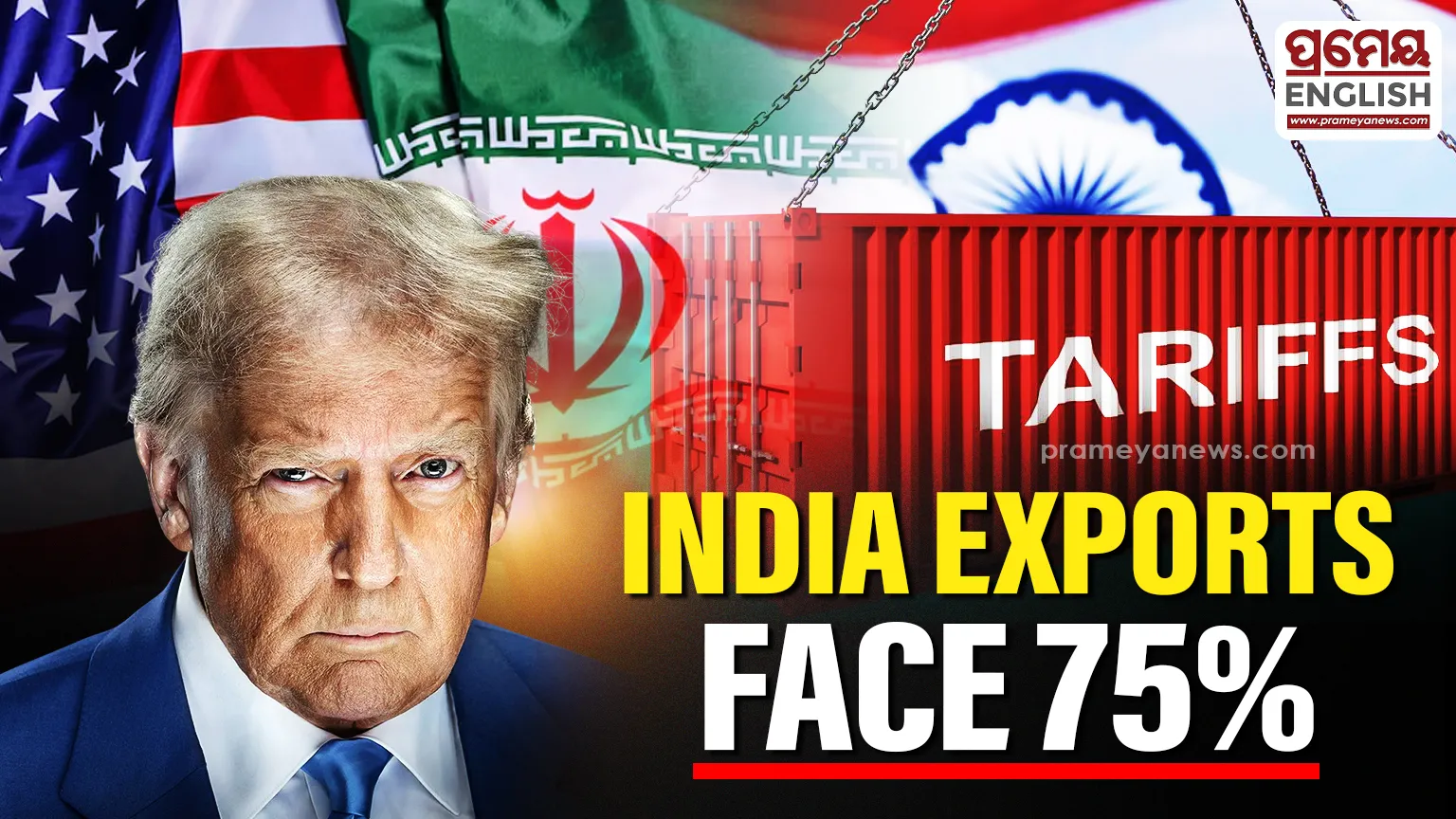
Trump Iran trade tariffs could push Indian export duties to 75 percent
Trump Iran trade tariffs may raise Indian export duties to 75%. Learn how this move impacts India’s trade with the US and the Chabahar Port
Published By : Satya Mohapatra
| January 13, 2026 10:22 AM
New American trade policy threatens New Delhi’s strategic and economic interests
In a move that has sent shockwaves through global markets, US President Donald Trump has announced a fresh 25% tariff on any nation conducting business with Iran.For India, this decision is particularly heavy, as it potentially pushes the total import duties on Indian goods entering the United States to a staggering 75%.
The Looming Trade Crisis
Currently, Indian exports already face a base tariff of 50% in the US.This includes a 25% reciprocal duty and another 25% penalty specifically targeting India’s continued purchase of Russian oil. By adding the new Trump Iran trade tariffs to the mix, the financial burden on Indian exporters could become unsustainable.
The announcement came via social media, where Trump declared the order "final and conclusive."The timing is critical, as it coincides with a period of intense anti-government protests in Iran and occurs just as Indian and US officials were preparing for fresh trade negotiations.
Strategic and Economic Stakes
India remains one of Iran’s top five trading partners. Beyond the exchange of goods like basmati rice, tea, and organic chemicals, the relationship has deep strategic roots. The Chabahar Port, developed jointly by both nations, serves as India's vital gateway to Afghanistan and Central Asia. This new tariff regime places the future of such connectivity projects in a state of high uncertainty.
Pressure Tactics on New Delhi?
Many experts view this move as a pressure tactic. Recent reports suggest that a long-pending trade deal between the US and India failed recently, not over policy, but because of diplomatic friction. US officials have hinted that the Trump administration is using these levies to influence India’s energy choices and trade stance.
For Indian companies in the pharmaceutical, chemical, and agricultural sectors, the choice is becoming increasingly difficult: continue limited trade with Iran or risk losing access to the massive American market. As the situation evolves, New Delhi must now navigate a complex path to protect its economic sovereignty while managing a volatile relationship with Washington.

.webp)
.webp)