
.webp)


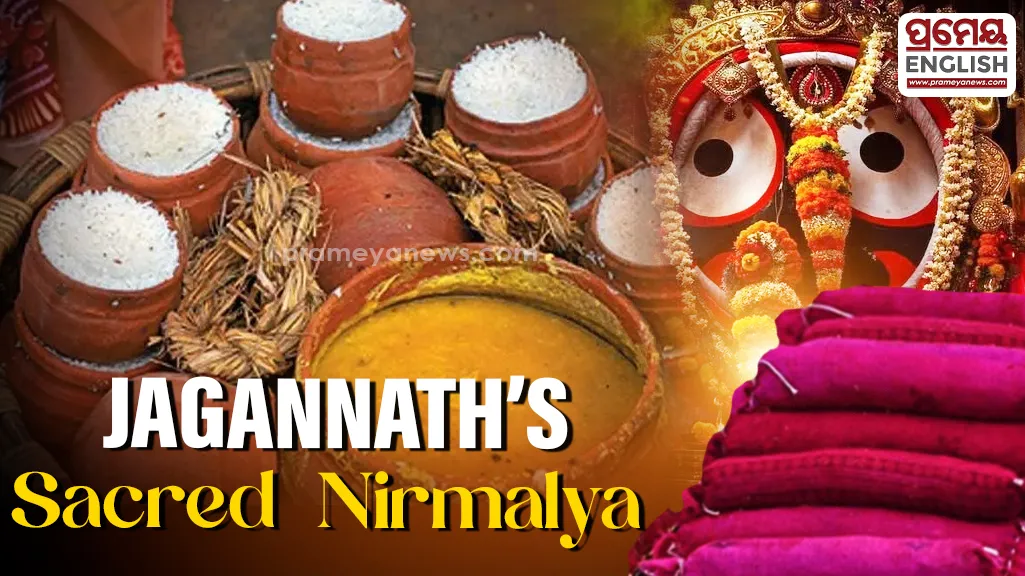
For millions of devotees visiting Puri, a pilgrimage to the Shree Jagannath Temple feels incomplete without tasting the sacred Abhada (Mahaprasad) at Anand Bazaar. Many devotees also carry the holy offering home, believing it to be a symbol of Lord Jagannath’s blessings.
However, a common practice of drying Abhada at home to prepare Nirmalya has long been surrounded by myths and religious confusion. Jagannath scholar and preacher Pandit Suryanarayan Rath Sharma has now clarified the temple tradition and explained why devotees should avoid doing so.
No Ritual Permits Making Nirmalya at Home
In an interview, Pandit Rath Sharma said there is no religious practice or temple tradition that allows devotees to convert Abhada into Nirmalya by drying it at home.
He explained that the Shree Jagannath Temple has a dedicated 'Nirmalya Khala' where the sacred process of preparing Nirmalya is carried out under strict traditional procedures.
According to him, just as only designated temple cooks (Suaras) are authorised to prepare food offerings for Lord Jagannath, only specially assigned servitors are permitted to dry Mahaprasad and prepare Nirmalya within the temple premises.
"If an ordinary devotee brings Abhada home, the earthen pot containing the Mahaprasad may be kept in sunlight if required. However, the Abhada should not be removed from the pot and spread out in the open courtyard or on the floor for drying. Such a practice is not sanctioned by temple tradition," he said.
The belief around Nirmalya
Nirmalya occupies a deeply sacred place in Jagannath tradition and is associated with strong spiritual beliefs. It is widely believed that offering Nirmalya or water sanctified with it to a dying person helps the soul depart peacefully.
However, Pandit Rath Sharma stressed that this profound religious significance does not justify preparing homemade Nirmalya, as the ritual has no scriptural or traditional basis.
What is the"Sathie Pauti Bhoga"?
The scholar also explained the significance of the "Sathie Pauti Bhoga", one of the temple's most sacred offerings.
According to him, the term refers to offerings prepared from 60 traditional measures of ingredients meant exclusively for Lord Jagannath. Two types of food offerings are made in the temple:
Kotha Bhoga: Offered during Sakala Dhupa (morning offering), Madhyahna Dhupa (midday offering), and Sandhya Dhupa (evening offering). After elaborate Shodasha Upachara rituals inside the sanctum sanctorum, the offering is presented to Goddess Bimala. Once sanctified, it is known as Hari Kaibalya, and this offering is referred to as the 60 Pauti Bhoga.
Bhoga Mandap Bhoga: This offering is prepared separately for devotees and is presented through Pancha Upachara rituals. It is the Mahaprasad commonly distributed to pilgrims and is also served during weddings and other auspicious occasions.
.webp)