


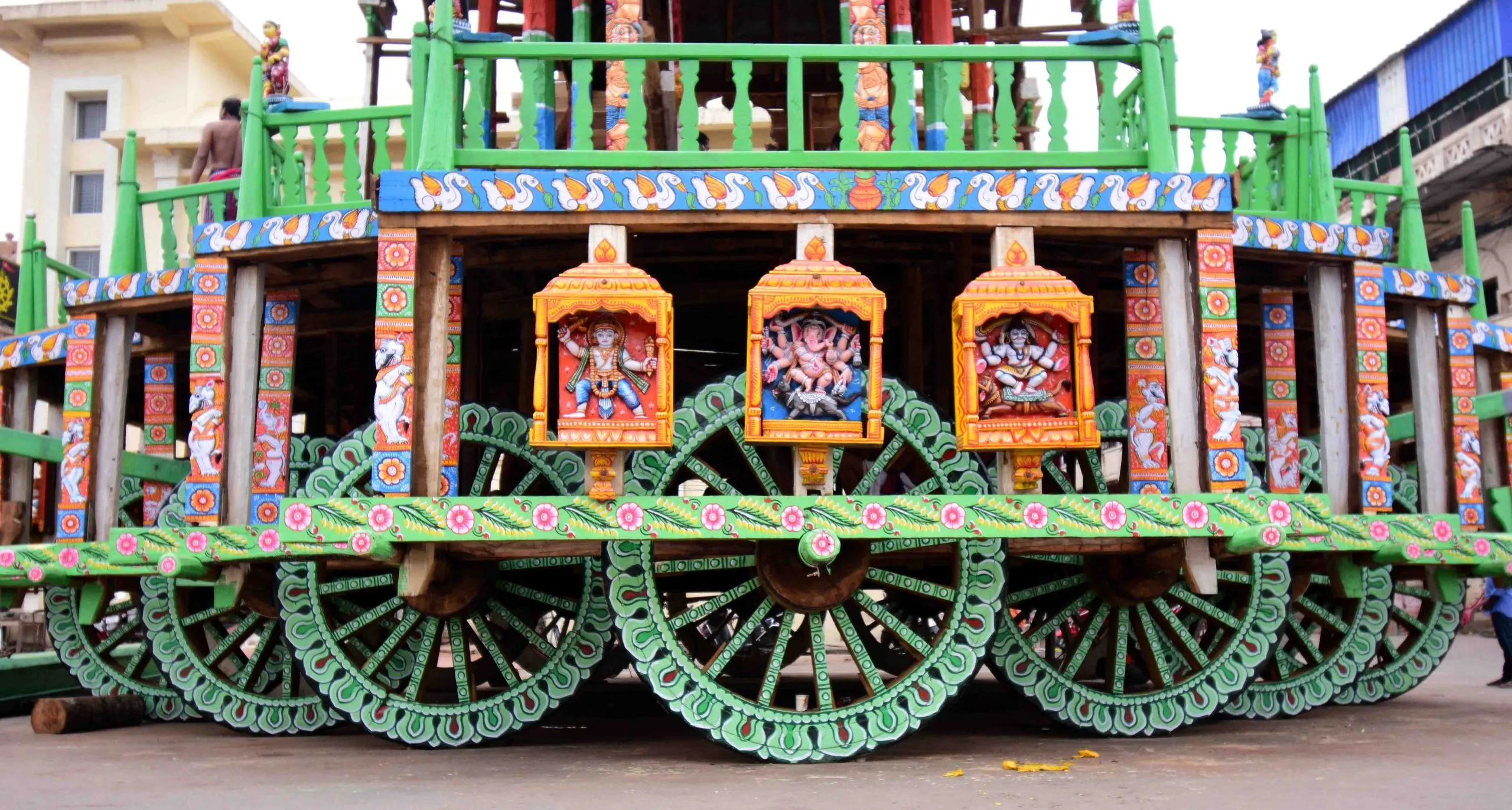
Puri, Jul 6: The annual Rath Yatra of Lord Jagannath, one of the world's oldest and grandest religious festivals, has continued uninterrupted for centuries despite wars, political upheavals and repeated attacks on the Jagannath Temple. However, history records a few extraordinary occasions when the chariot festival was disrupted as invading forces targeted the shrine, forcing servitors to secretly relocate the deities to protect them.
Raktavahu's Invasion
According to temple chronicles, the earliest major disruption occurred following the invasion by Raktavahu. To safeguard the deities, the idols of Lord Jagannath, Lord Balabhadra and Devi Subhadra were shifted to Gopali in present-day Subarnapur district, where they remained hidden underground for nearly 146 years. The deities were later recovered during the reign of the Somavanshi kings and ceremonially brought back to Puri.
Sultan Ilyas Shah's Attack
In 1340, Bengal Sultan Shamsuddin Ilyas Shah invaded Odisha during the reign of Narasingha Deva III. The temple servitors shifted the deities to an undisclosed location, ensuring they remained safe from the invading army.
Firoz Shah Tughlaq
The temple again came under attack in 1360 during the reign of Bhanudeva III, when Delhi Sultan Firoz Shah Tughlaq invaded Odisha, causing another disruption in temple activities.
Ismail Ghazi's Campaign
In 1509, Ismail Ghazi, commander of Bengal Sultan Alauddin Hussain Shah, launched an attack on Puri. The servitors shifted the deities to the foothills of Chadheiguha Hill near Chilika Lake to protect them.
Kalapahad's Devastating Assault
One of the darkest chapters in Jagannath history unfolded in 1568, when Kalapahad, the general of Bengal ruler Sulaiman Karrani, attacked the temple.
The deities were initially hidden on an island in Chilika Lake before being buried at Hastipatna in Parikud. Kalapahad eventually located the idols, carried them to the banks of the Ganga and attempted to destroy them.
According to tradition, Saint Bisara Mohanty rescued the sacred Brahma Padartha from the damaged idols. Later, King Ramachandra Deva I restored the deities and re-established worship.
Following Kalapahad's invasion, Rath Yatra remained suspended for nearly nine years, from 1568 to 1577, marking the longest interruption in the festival's history.
Mughal-Era Attacks
The Jagannath Temple continued to face repeated attacks during the Mughal period.
In 1601, Mirza Khurram attacked the temple, forcing the servitors to move the deities to Panchamukhi Gosani Temple and later to Pentha.
In 1607, Odisha Subedar Hasim Khan invaded Puri. King Purushottama Deva shifted the deities to Gopal Temple in Khurda, from where they returned the following year.
In 1610, Rajput commander Kesodas Maru occupied the temple, converted it into a military fort and destroyed the three Rath Yatra chariots. The deities remained at the Gundicha Temple for nearly eight months before being taken back to the sanctum.
Kalyan Mal's Repeated Invasions
Kalyan Mal, son of Mughal finance minister Todar Mal, attacked the temple twice—in 1611 and 1617. On both occasions, the servitors successfully shifted the deities to safe locations around Chilika Lake before the invaders arrived.
Ahmed Beg's Attack
In 1621, Subedar Ahmed Beg attacked the temple. The deities were first shifted to Andharigada in Banpur, while the sacred Brahma was taken separately to Gadamanitri in present-day Khurda district. They returned to Puri in 1624.
Ekram Khan and Mohammed Taqi Khan
In 1692, Mughal commander Ekram Khan attacked Puri. The deities were initially concealed within the temple complex before being moved to Gadakokal and later Bada Hantuada near Chilika Lake. They returned to the temple in 1699.
The final major disruption came during the invasions led by Naib Nazim Mohammed Taqi Khan in 1731 and 1733. To protect the deities, servitors transported them across several locations, including Banpur, Khallikote, Kodala and Ganjam, before finally sheltering them at Marda, where they remained from 1733 to 1736.
As a result, the Rath Yatra of 1735 could not be held, making it the last recorded cancellation of the world-famous chariot festival due to external aggression.
A Legacy of Resilience
Despite repeated invasions and prolonged displacement of the deities, the Jagannath tradition survived through the unwavering dedication of the temple servitors and the people of Odisha. Their efforts ensured that the rituals and Rath Yatra, though interrupted at times, continued to endure, preserving one of India's oldest and most revered spiritual traditions.