

.webp)


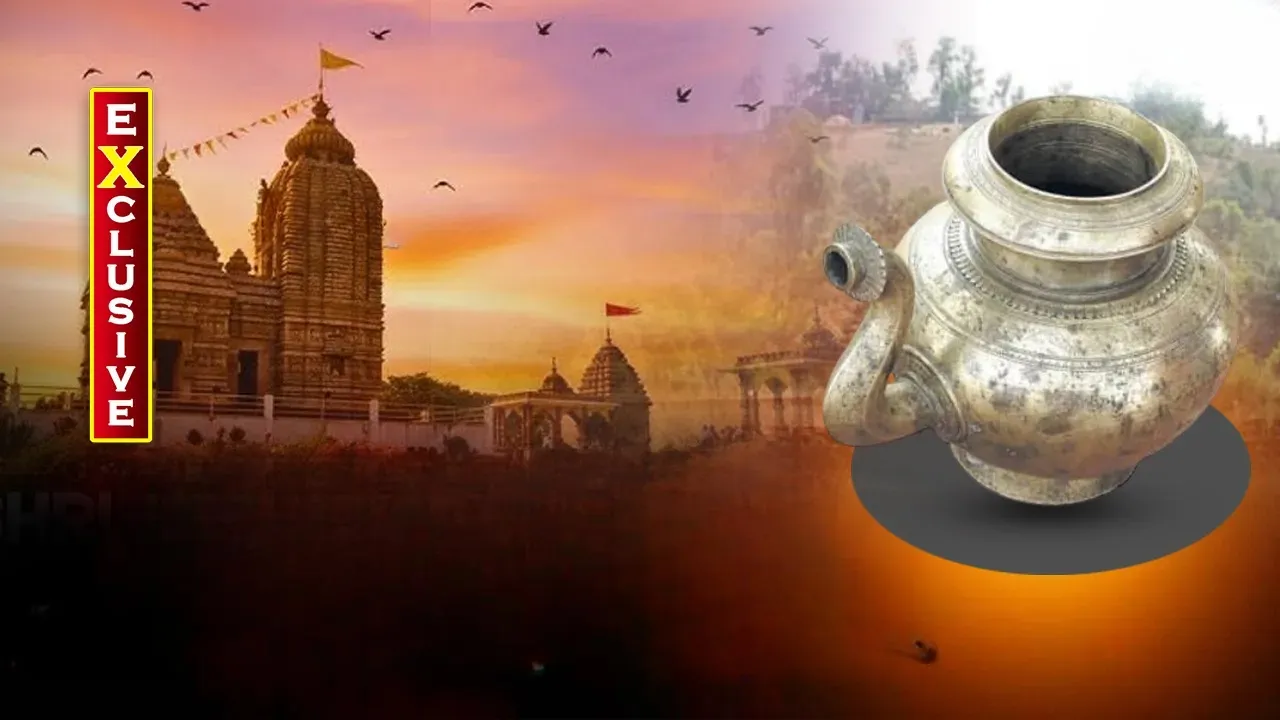
Bhubaneswar, Jul 13: Rising majestically on the outskirts of the capital, the historic Lavanagiri Hill is today crowned by two magnificent temples that have transformed it into a popular destination for devotees and tourists as well. What was once a small Jagannath hermitage nestled amid dense forests has evolved into a grand temple dedicated to Lord Jagannath, while a towering temple of Lord Shiva now stands at the entrance to the hilltop. Despite its growing religious significance, the origin of the name "Lavanagiri" and the mysteries surrounding the hill remain largely unexplored.
To understand the story behind Lavanagiri, one has to revisit the year 2004. Located in the Panchagaon area along the Jatni–Kapilaprasad road, the hill spans just over one square kilometre and rises to a height of nearly 500 feet. As local villagers began constructing a road to the summit to build the Jagannath Temple, an unexpected archaeological discovery changed the course of the project.
While excavating the hill with a bulldozer, workers struck a massive object buried beneath the earth. Further digging revealed remnants of an ancient structure, prompting villagers to inform the State Archaeology Department. A team of archaeologists inspected the site and unearthed several ancient artifacts, including a huge Ashtadhatu (eight-metal alloy) kamandala and a massive metal armlet.
The relics were so enormous that they sparked curiosity among locals. The kamandala is reportedly too large for an average person to lift comfortably with one hand, while the armlet is far bigger than the size of any human arm. These unusual dimensions gave rise to speculation that they may have belonged to a giant-like figure from ancient times.
Local folklore and references in Hindu mythology associate the hill with Lavanasura, a legendary demon believed to have lived atop Lavanagiri. According to tradition, Lavanasura was a devout devotee of Lord Lingaraj. During those times, the land stretching from the foothills of Lavanagiri to Kapileswar village remained submerged for much of the year. To cross the marshy terrain, Lavanasura is believed to have constructed two embankments-Birabandha and Ranibandha. Clad in saffron robes and carrying a kamandala, he is said to have travelled along these routes to offer prayers at the Lingaraj Temple.
Despite its rich blend of mythology, archaeology and history, Lavanagiri has received little attention in terms of heritage conservation. Apart from the construction of roads and a few concrete structures leading to the hilltop temples, the ancient remains discovered during excavation have not been scientifically preserved or protected.
Heritage enthusiasts believe Lavanagiri deserves the same level of archaeological attention as nearby historic sites such as Dhauli and Sisupalgarh. They have urged both the Central and State Archaeology Departments to undertake systematic excavations to uncover the hill's historical significance.
Sudhanshu Mohan Pattnaik, a local resident who has been actively associated with the upkeep of Lavanagiri, recalled that archaeologists had conducted excavations in 2004 and discovered valuable remains beneath the soil. However, after a brief investigation, the excavation was abandoned. As the authorities never returned, villagers eventually refilled the excavation pit.
Pattnaik also claimed that the foothills of Lavanagiri once served as a military camp of Emperor Ashoka, making the site even more significant from a historical perspective. He stressed the need for extensive archaeological research to uncover its forgotten past.
Responding to the demand for further excavation, State Archaeology Superintendent Debayani Bhuyan said the department currently lacks adequate manpower to undertake fresh excavations at new heritage sites. However, she said the department plans to visit Lavanagiri with university students engaged in archaeological research before deciding on future action.
As faith continues to draw thousands of pilgrims to the hill, historians and conservationists hope that Lavanagiri's hidden archaeological treasures and legendary past will finally receive the scientific attention they deserve, preserving one of Odisha's lesser-known heritage sites for future generations.
.webp)