


India strengthens sea-based nuclear deterrence with INS Aridhaman induction
India officially bolstered its maritime nuclear capabilities on Friday with the commissioning of its third nuclear-powered ballistic missile submarine (SSBN), INS Aridhaman. Presided over by Defence Minister Rajnath Singh in Visakhapatnam, the induction marks a shift in the country's strategic posture, providing a more robust second-strike capability. This 7,000-tonne vessel joins its predecessors, INS Arihant and INS Arighaat, ensuring that the Indian Navy can maintain a continuous at-sea deterrent for the first time in history.
Superior Stealth and Strike Range
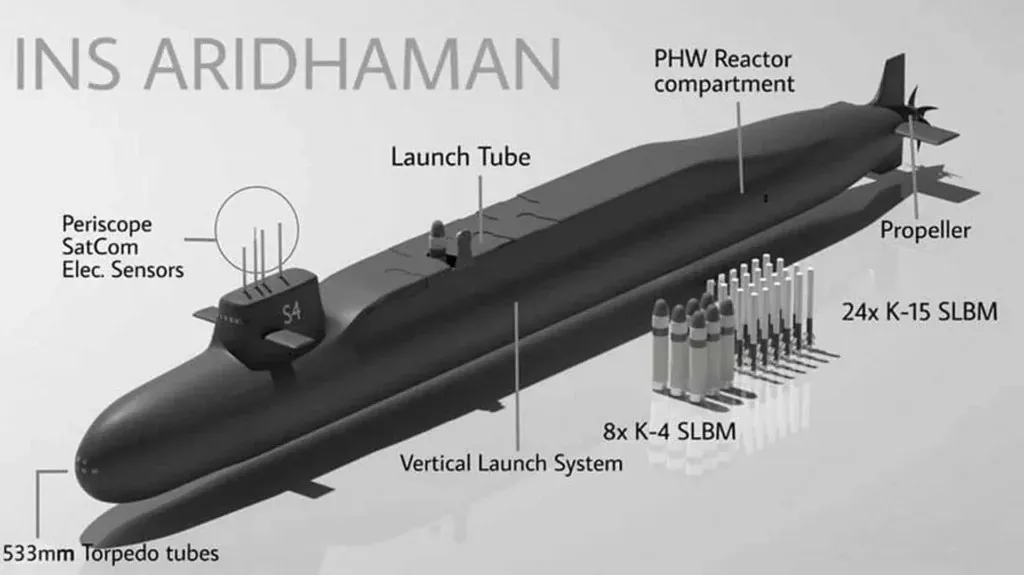
Design improvements in this third Arihant-class boat allow for a significantly reduced acoustic signature compared to earlier models. It features eight vertical launch tubes, doubling the capacity of the lead ship in its class. This enhancement enables the submarine to carry up to eight K-4 intermediate-range missiles, capable of hitting targets 3,500 km away, or 24 K-15 short-range missiles.
Powering the Nuclear Triad
Operation of the vessel relies on an advanced 83 MW pressurized light-water reactor developed by the Bhabha Atomic Research Centre. Unlike conventional diesel-electric submarines that must surface frequently, this nuclear-powered boat can remain submerged for months, moving undetected through deep waters. This endurance is a cornerstone of India’s "No First Use" policy, as it guarantees a retaliatory strike even if land-based assets are compromised. Historically, the Bay of Bengal and the strategic coastline of Odisha have served as the primary testing grounds for the K-family of missiles, with many successful trials conducted from the Integrated Test Range (ITR) at Chandipur and Abdul Kalam Island.
Future Underwater Fleet
Expansion of the fleet continues with a fourth SSBN currently undergoing sea trials and plans for indigenous nuclear-powered attack submarines (SSNs). India now stands firmly within an exclusive club of nations—including the US, Russia, China, and France—possessing a fully operational and modern nuclear triad.