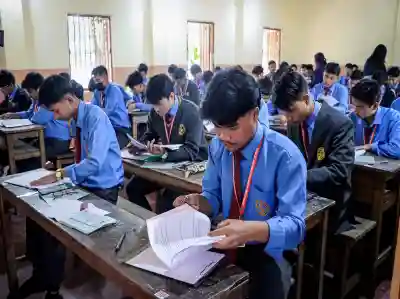



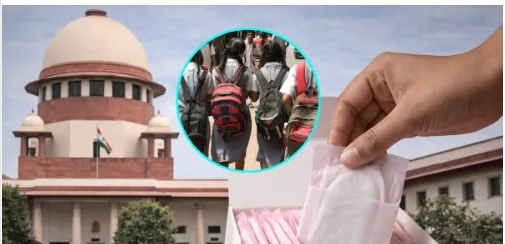
New Delhi, January 30: In a historic ruling, the Supreme Court of India has affirmed that the right to menstrual health and hygiene is an essential part of the Right to Life under Article 21 of the Constitution. It has also linked this right to the Right to Free and Compulsory Education under Article 21A, mandating that all schools, both private and public, across urban and rural areas, provide free biodegradable sanitary napkins of the highest safety and hygiene standards to female students.
A bench comprising Justices JB Pardiwala and R. Mahadevan stressed the importance of creating menstrual hygiene management facilities in schools. The Court’s ruling also covers detailed guidelines for the safe disposal of sanitary waste, though the full judgment has yet to be made available on the official website.
In a significant observation, Justice Pardiwala noted, “This ruling is not just for legal stakeholders. It is meant for classrooms where girls hesitate to seek help and for teachers who want to assist but lack resources. Progress is measured by how we protect the vulnerable.”
Advocate Varun Thakur, counsel for petitioner Jaya Thakur, who filed a Public Interest Litigation (PIL) demanding free sanitary pads for girls in grades 6 to 12 and separate toilets for girls in all government, aided, and residential schools, hailed the verdict as "historic and path-breaking." He emphasized that the Supreme Court's recognition of menstrual health as a fundamental right under Article 21 was a major step forward. "The Court has directed that sanitary pads be provided free of cost to students from Classes 6 to 12. These directives are binding on all states and the Union of India, with a compliance report to be submitted within three months," Thakur said.
The Court has given all States and Union Territories three months to file compliance reports. Schools failing to comply with these directions will face derecognition, the ruling added.