



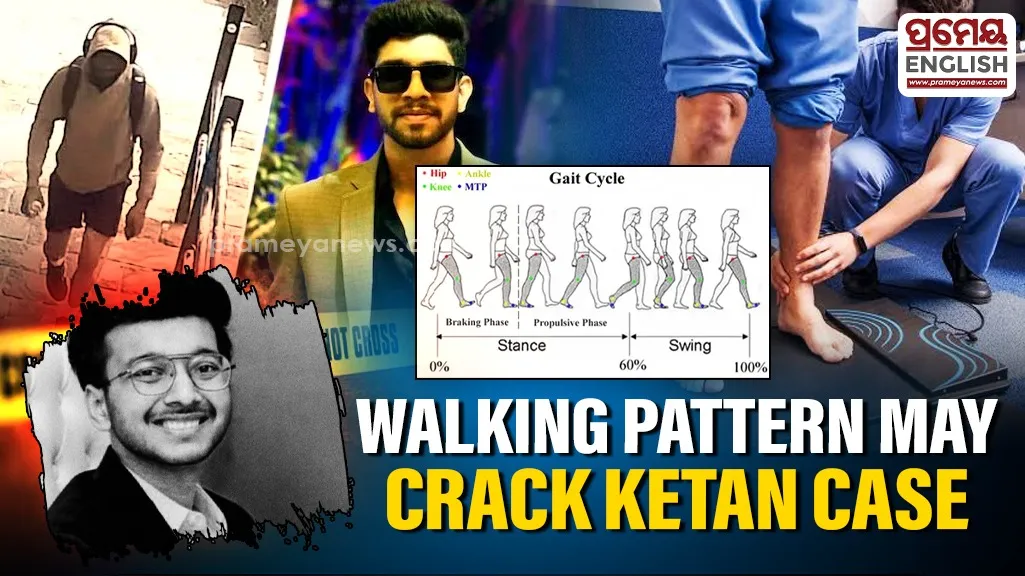
Forensic science uses walking patterns to unmask cunning killers
Pune investigators plan to use forensic gait analysis to catch a hooded murder suspect effectively. Ketan Agarwal tragically lost his life after being pushed off a steep cliff at Lohagad Fort. His fiancee, Siya Goyal, alongside her romantic partner, Chetan Chaudhary, face serious accusations for plotting this crime. Since CCTV cameras failed to capture the primary suspect's face clearly, experts will study his distinct walking style to secure a definitive match. Law enforcement agencies in Odisha and other states frequently study these advanced biometric adoptions to upgrade their own investigative toolkits.
Decoding Human Movement for Criminal Investigations
Investigators carefully reviewed hours of video surveillance near the crime scene. They spotted a young man wearing casual shorts and a heavy hoodie secretly following the couple. This unknown individual stayed dangerously close to Ketan and Siya throughout their uphill trek on June 18. His face stayed completely hidden behind the thick hood fabric. To solve this puzzle, law enforcement officers will force Chetan to recreate the exact walk under observation. He must wear similar clothes and travel along that very same mountain path. Technical experts will then place this newly recorded video right next to the original footage to search for matching physical movements.
Science behind Biomechanical Tracking Methods
Gait analysis operates by precisely measuring how an individual moves their limbs, hips, and shoulders. Every single person naturally develops a deeply unique walking habit over their lifetime. Core elements like standing posture, average step length, and basic skeletal structure remain completely specific to each human being. Smart criminals often cover their heads to avoid standard camera detection. However, they simply cannot change their natural stride while walking long distances. This established scientific method carefully maps those exact physical traits to build a strong, reliable profile of the suspect.
Expert Perspectives on Modern Digital Forensics
Senior IPS officer Mayank Gurjar shared valuable professional insights into this exact analytical process. He previously directed a special investigation team focusing on a high-profile murder case in Chhattisgarh. He explained that traditional facial recognition software regularly fails during poor weather conditions or bad lighting. This blind spot makes movement tracking incredibly valuable for modern detectives. Gurjar clarified that matching a walking pattern does not automatically guarantee a court conviction on its own. It serves as highly effective corroborative evidence. Judges always require additional forensic findings, mobile phone data, and solid witness statements to finalise a guilty verdict.
Global Adoption of Video Surveillance Artificial Intelligence
International police departments already place immense trust in this tracking technology. United Kingdom detectives frequently rely on movement analysis to solve complicated violent crimes when security cameras fail to show clear faces. London authorities even applied it successfully to identify offenders during their widespread 2011 city riots. Meanwhile, China has completely merged artificial intelligence movement tracking directly into its vast national security network. Across India, this specific scientific approach remains largely in its early developmental stages. The tragic Pune cliff incident currently stands out as one of the most prominent national cases pushing this technique forward.
Cyber Specialists Predict Smarter Future Security
Technology security professional Raj Shekhar firmly believes modern software upgrades make this process remarkably accurate today. Blurry camera lenses and terrible angles usually destroy normal evidence gathering attempts at outdoor crime scenes. Modern smart software now calculates exact body angles, weight distribution, and walking speeds in mere seconds. This digital upgrade completely removes human error from the initial observation phase. Shekhar strongly predicts this movement tracking will soon become standard daily practice everywhere. Local police stations, private security firms, and corporate offices will soon depend on these specific programs daily to catch criminals who hide their faces.