Prime Minister Modi secures strategic alliances expanding international cooperation
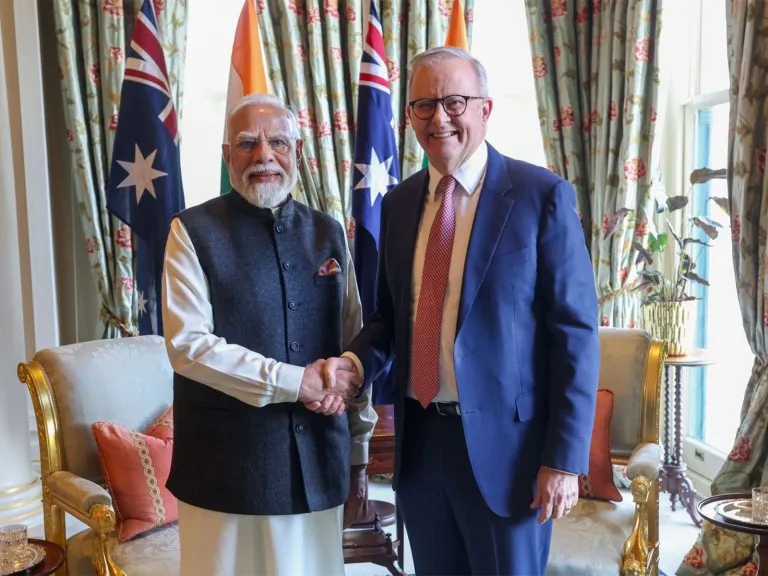
Prime Minister Narendra Modi concluded his recent three-day diplomatic mission to Australia, successfully securing 18 significant agreements that strengthen bilateral ties. These outcomes span critical sectors, including military defense, renewable energy, advanced technology, and higher education. This expansive diplomatic push broadens the strategic partnership between New Delhi and Canberra significantly. Both nations adopted a Joint Declaration on Defence and Security Cooperation, aiming to elevate military industrial collaboration, boost joint innovation ecosystems, and enhance vital information sharing.
Deepening Security and Maritime Focus
Safety across international waters remains a top priority for both governments. Officials formulated a specific Maritime Security Collaboration Roadmap to improve operational coordination, capability development, and rapid pollution response. Furthermore, they committed to executing joint humanitarian assistance and disaster relief operations. To strengthen professional military engagement, Australian authorities formally invited an Indian military instructor to join their esteemed Defence College for the 2028-29 academic year. A separate memorandum connects the Indian Coast Guard directly with Australia's Maritime Border Command to enforce coastal surveillance and maritime laws effectively.
Securing Energy and Cyber Frontiers
Energy independence forms another crucial pillar of these newly forged international agreements. Leaders issued a Joint Statement on Energy Security, openly recognizing India's growing reliance on Australia for liquid fuels and downstream energy products. Most notably, an administrative arrangement under the Civil Nuclear Agreement clears the path for Australian uranium exports to India. This strategic move fundamentally diversifies India's energy grid. Simultaneously, both countries established an ambitious initiative targeting cyber technology and resilient supply chains to counter emerging global digital threats.
Fostering Education and Cultural Exchange
Educational partnerships received substantial attention during these high-level bilateral meetings. Highlighting local capacity building, authorities approved a Centre of Excellence in Mining at the National Skill Training Institute in Bhubaneswar, Odisha. This initiative holds particular relevance for Odisha, a state widely known for its rich mineral resources and rapidly growing mining industry. International university campuses will also expand, with Flinders University planning a Bengaluru location and Victoria University securing approval for Gurugram.
Restoring Heritage and Future Innovation
Cultural restoration efforts marked a memorable highlight of the productive summit. Australian officials agreed to repatriate three ancient Indian artifacts, including an 11th-century Nandi sculpture and a bronze Bhadrakali trident. On the clean energy front, a Rooftop Solar Training Academy in Gandhinagar became fully operational, aiming to instruct 2,000 women and young professionals. Additional pacts focus on advanced mineral exploration, extensive academic research, and global film education, ensuring dynamic, sustained growth across multiple industries.


.webp)


.webp)