

.webp)


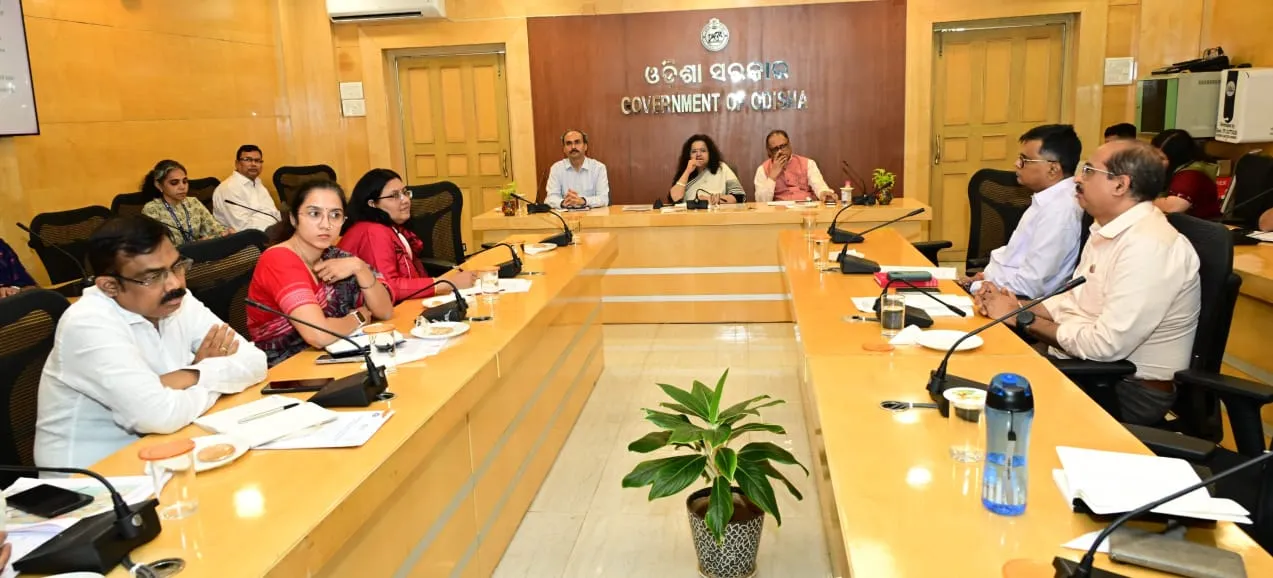
Bhubaneswar, March 24: A high-level meeting to review and monitor the impact of the ongoing conflict in the Middle East on Odisha’s economy was held today under the chairpersonship of Chief Secretary Anu Garg.
Development Commissioner Deoranjan Kumar Singh, Additional Chief Secretary (Home), Hemant Sharma, Director General of Police Yogesh Bahadur Khurania, FS&CW Secretary Sanjay Kumar Singh, Agriculture and Farmers Empowerment Secretary Sachin Ramchandra Jadhav, MSME Secretary Rashmita Panda, along with representatives from Directorate of Export Promotion & Marketing, Odisha Small Industries Corporation, World Trade Centre Bhubaneswar and domain experts, attended the meeting.
In the meeting, detailed discussions were held on the macroeconomic and sectoral implications of the conflict on India, and particularly on Odisha. It was observed that the Middle East region accounts for a significant share of India’s trade, and a prolonged conflict will eventually lead to rise in crude oil prices, supply chain disruptions, increased freight and insurance costs, and currency depreciation, which may have a cascading effect on inflation, current account deficit and overall economic growth.
It was highlighted that a substantial proportion of the State’s exports are linked to West Asian markets, which will affect key sectors of the State such as marine exports, agricultural produce, processed minerals, chemicals and allied industries. Further, Industries are likely to experience raw material shortages and rising production costs. The fisheries sector has already shown signs of stress due to decline in demand from West Asian countries. Increased energy and fertilizer costs will have implications on the agriculture and allied sectors.
In the meeting, the measures undertaken by the Government of India to ensure energy security, stabilization of supply chains, export facilitation and risk mitigation for exporters were discussed in detail. It was stressed that these measures be strictly implemented in the state by the Departments as well as enforcement agencies to maintain stability and discipline in the supply chain of essential commodities like petrol, diesel and LPG and take confidence building measures to allay panic among consumers.
The Chief Secretary emphasized on the need for continuous review and monitoring of the evolving situation and its impact on the State economy, and directed all concerned Departments to closely track sectoral developments, ensure timely policy interventions, and explore alternative markets and supply mechanisms to mitigate the risks.
She also emphasized on quick rollout of PNG distribution systems, establishment of more LNG Terminals in Ports to meet future requirements, ramp up Coal Production to reduce dependence on LPG and other Petroleum Products.
The Agriculture and Farmers Empowerment Department was advised to review the availability of Urea and NPK fertilizers in the districts and seek additional allocation from the Government of India, if required and look for substitutes like organic and bio-fertilizers.
The Director General of Police assured that the police would take necessary measures for maintaining law and order in and around LPG dealer stations and petrol pumps across the state. It was also decided in principle to urge citizens to switch over to EVs as alternative mode of transport, and to make available adequate charging infrastructure network to instill confidence among buyers.
.webp)