

.webp)


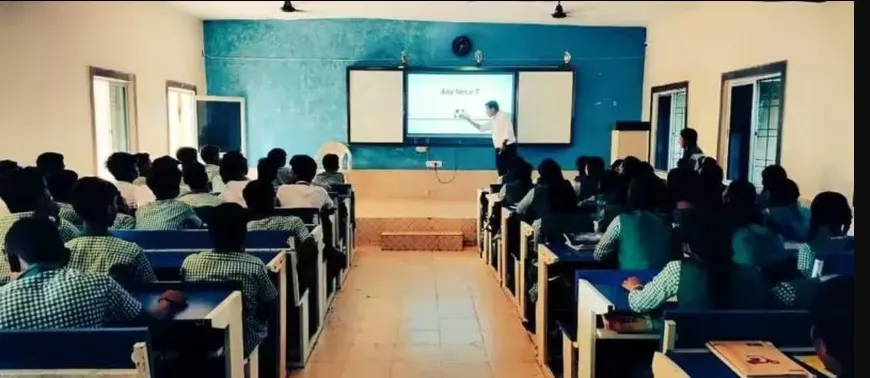
Bhubaneswar, July 23: While the country is rapidly advancing in emerging technologies such as Artificial Intelligence (AI) and quantum computing, Odisha’s school education system continues to face major challenges in building digital infrastructure. A recent government report has highlighted significant gaps in computer facilities, smart classrooms, digital libraries, and ICT resources across schools in the state.
According to the Unified District Information System for Education (UDISE) Report 2025-26 released by the Union Ministry of Education, a large number of schools in Odisha lack basic digital facilities. The report reveals that 83% of schools either do not have computers (desktops/PCs) or the available systems are not functional. Around 86% of schools are without digital libraries, while 23.6% of schools do not have smart classrooms. Nearly 96% of schools lack Integrated Teaching Learning Devices.
The UDISE report, prepared under the framework of the National Education Policy (NEP), states that Odisha has a total of 61,594 schools. Of these, 48,603 are government schools, 5,755 are government-aided schools, 6,329 are private unaided schools, and 907 fall under other categories.
Only 16,690 schools in the state have computer facilities, including 8,334 government schools, 3,370 government-aided schools, and 4,493 private schools. Among government schools, only 17.1% have functional computer facilities, indicating a significant digital gap.
The report also shows that laptop or notebook facilities are available in just 1,344 government schools, accounting for only 2.8% of the total government schools. Although the state government had distributed tablets to government schools a few years ago, only 32,125 government schools currently have functional tablets, meaning nearly one-third of government schools remain without this facility.
A major concern highlighted in the report is the poor availability of Integrated Teaching Learning Devices. Despite increasing emphasis on technology-based education, only 2,141 government schools—just 4.4% of the total—have these devices.
The shortage of digital teaching tools is also evident in projector availability. Nearly 44,434 government schools, or 91.4%, do not have projectors. Smart classrooms have been introduced in 16,738 government schools, while 31,865 schools continue to operate without such facilities.
Digital learning resources remain limited as well. Only 6,526 government schools have digital libraries, meaning 86.6% of government schools do not provide students access to digital library facilities. The report further states that 74.7% of schools in Odisha do not have ICT laboratories, while 80.2% of schools with ICT labs have non-functional facilities.
The findings highlight the urgent need for strengthening digital infrastructure in Odisha’s schools to ensure students have access to modern learning tools and technology-driven education.
.webp)