


.webp)
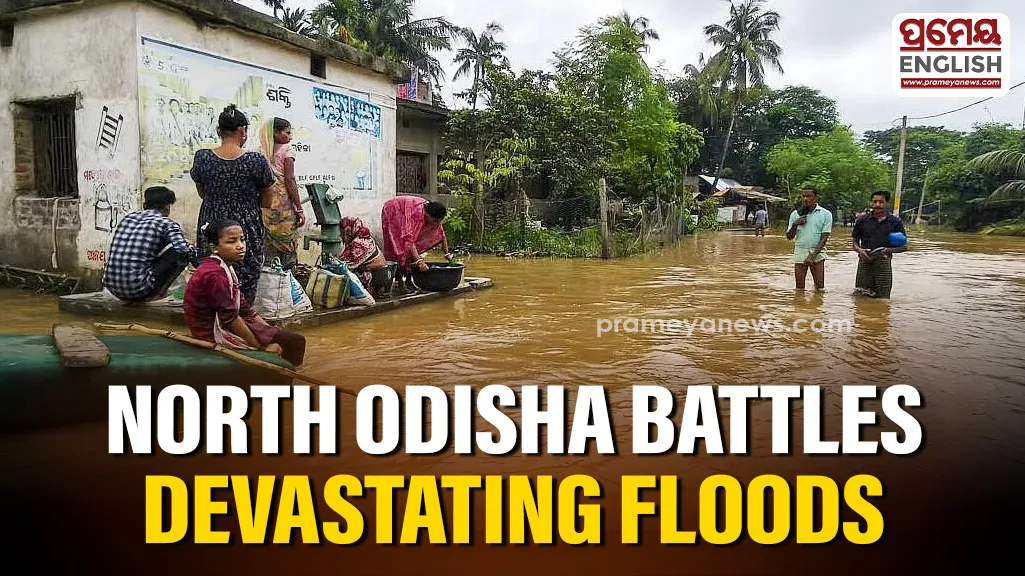
Bhubaneswar, July 29: Northern Odisha remains in the grip of a worsening flood crisis as incessant rainfall has caused major rivers, including the Baitarani, Budhabalanga, Salandi, and Jalaka, to overflow. Large parts of Balasore, Bhadrak, Jajpur, Mayurbhanj, and Keonjhar districts have been inundated, with roads submerged and normal life severely disrupted.
Officials have warned that the rapidly rising Baitarani River could trigger a moderate to major flood, with floodwaters expected to spread to several low-lying areas of Jajpur and Bhadrak by Wednesday morning.
The Odisha government has intensified its response, conducting continuous reviews of the evolving situation. Teams from the Odisha Disaster Rapid Action Force (ODRAF) and the National Disaster Response Force (NDRF) have been deployed to vulnerable areas. Three senior IAS officers have been assigned to oversee flood management in the worst-affected districts. Sudhanshu Mohan Samal has been posted to Bhadrak, K. Sudarshan Chakravarthy to Balasore, and P. Anvesha Reddy to Jajpur. Educational institutions in eight districts have been ordered to remain closed on Wednesday.
The heavy rains have also claimed lives. A young woman was reportedly swept away while bathing after the gates of the Remal Dam in Anandpur, Keonjhar, were opened. Separate wall-collapse incidents claimed the lives of a woman in Harichandanpur and a three-year-old boy in Deogarh district. In Boudh district, a mother and daughter sustained serious injuries after another wall collapsed.
The India Meteorological Department (IMD) has forecast heavy to very heavy rainfall across western and northern Odisha until Wednesday morning, with widespread rainfall likely across the state through the day.
As of Tuesday night, more than 100,000 people across Balasore, Mayurbhanj, Bhadrak, and Jajpur had been affected by flooding, while nearly 25,000 residents had been shifted to safer locations. Revenue Minister Suresh Pujari and Chief Secretary Anu Garg have been monitoring the situation through regular review meetings with senior officials.
Balasore town has witnessed extensive urban flooding even before river waters entered the city. Several residential areas, markets, and commercial establishments remain waterlogged. Nearly three feet of water was reported on the Nuasahi–Balia road near the bus stand. At Mathani, the Jalaka River crossed its danger level, reaching 6.64 metres against the warning mark of 6.50 metres. Thousands of hectares of farmland in Basta, Baliapal, Bhograi, and Sadar blocks have been submerged, while floodwaters have also inundated stretches of the National Highway at Bahanga.
The Baitarani and Budhabalanga rivers continue to flow above danger levels. At Govindpur, the Budhabalanga measured 8.26 metres against the danger mark of 8.13 metres. The Baitarani reached 40.37 metres at Anandpur and 19.41 metres at Akhuapada, remaining significantly above warning levels. Rising water levels in the Subarnarekha and Brahmani rivers have further heightened concerns.
In Bhadrak district, seven blocks, along with municipal and NAC areas, have been affected. Besides the Baitarani and Salandi, several smaller rivers, including the Gamei, Nalia, Genguti, Reb, and Kapali, are in spate, inundating large parts of Tihidi and Chandbali. The Salandi River at Rajghat was flowing at 17.90 metres, well above the danger level. Authorities have warned that water levels in both the Salandi and Baitarani may continue to rise.
State Minister Suryabanshi Suraj and Bhadrak Collector Dillip Routray inspected flood-hit areas, including Dhamnagar, while residents in vulnerable regions of Bhandaripokhari and Dhamnagar have been advised to remain alert.
In Jajpur district, authorities fear extensive flooding as the Baitarani continues to swell. Around eight panchayats in Korei block and ten panchayats in Dasarathpur block are at risk of inundation. Public warning systems have been activated to alert residents in vulnerable villages.
Floodwaters have also disrupted transport in Keonjhar district. Water has overtopped State Highway 49 near Bichhakhandi, while traffic on the Kolkata–Mumbai highway has been suspended, leaving thousands of vehicles stranded. Several parts of Keonjhar town remain cut off, with villages such as Kendughati and Haladihi continuing to remain marooned.
.webp)