
.webp)


India commemorates National Flag Day 2026 honouring historic emblem choices
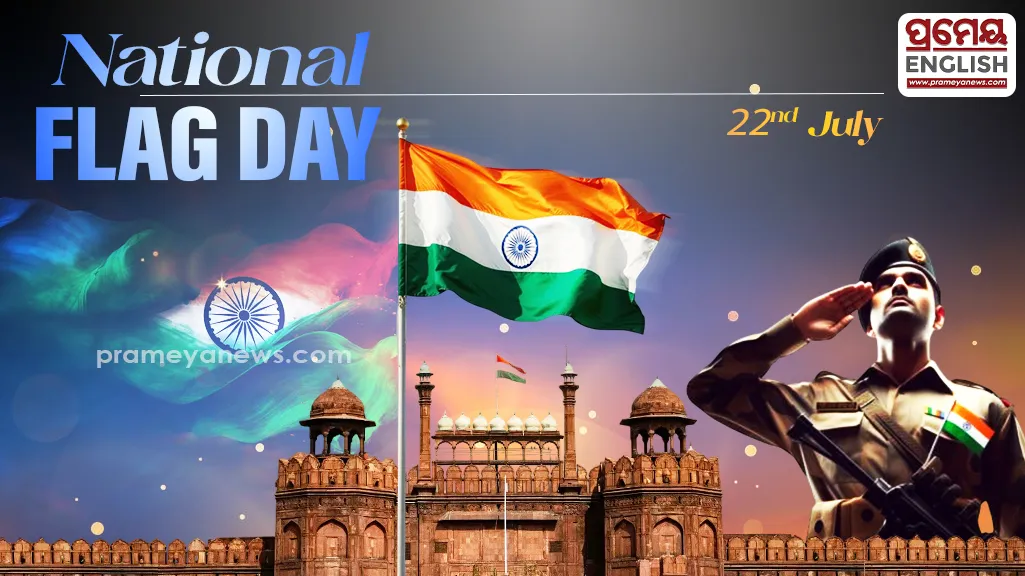
Citizens across India observe National Flag Day 2026 on July 22, commemorating seventy-nine years since the Constituent Assembly officially adopted the Tiranga in 1947. This crucial meeting took place twenty-four days prior to India breaking free from colonial rule on August 15, 1947. Historical accounts from eastern India show that freedom fighters in Odisha, particularly at the Cuttack Swaraj Ashram, eagerly hoisted early flag models to mobilise public support during early mass movements. Observing National Flag Day serves as a vital reminder of national unity, constitutional values, and shared democratic spirit.
Evolution of Tricolour Design
The current national flag originated from an earlier Congress draft created by freedom fighter Pingali Venkayya. Early models featured a traditional spinning wheel, known as the charkha, at the center. However, an ad-hoc committee led by Dr. Rajendra Prasad introduced critical modifications to the 1931 version. Members selected the Ashoka Chakra from the Sarnath Lion Capital to replace the spinning wheel. Pandit Jawaharlal Nehru pointed out that the geometric wheel provided perfect visual symmetry when viewed from both sides. Beyond symmetry, the navy-blue wheel with twenty-four spokes represented continuous movement, law, and moral progress for the emerging republic.
Deep Meaning of Flag Colors and Emblem
Official design rules dictate a strict three-to-two length-to-width ratio. Every color and element within the flag conveys specific national ideals. Top saffron signifies courage, sacrifice, and selfless service. Middle white represents peace, truth, and purity of thought. Bottom green denotes growth, prosperity, and connection to the land. Located at the center, the navy-blue Ashoka Chakra highlights constant motion and dynamic governance. Together, these elements reflect the nation's core principles established during the independence movement.
Role in Indias Freedom Movement
The national flag served as the primary unifying emblem throughout the anti-colonial struggle. Early versions surfaced across international and local arenas, beginning with Sister Nivedita's 1904 design and Madam Bhikaji Cama displaying a version in Germany in 1907. During the 1930 Salt March, thousands of volunteers carried the tricolour alongside Mahatma Gandhi to challenge unfair laws. Displaying the flag grew into a bold act of peaceful defiance against colonial authorities, often resulting in arrests and police crackdowns. Revolutionary activists, students, and workers rallied under this single symbol to build solidarity across regional and linguistic boundaries.
Essential Rules under Flag Code of India
Maintaining dignity during flag display remains a central objective of National Flag Day 2026 celebrations. Governed by the Flag Code of India established in 2002 and updated through recent amendments, guidelines protect the national symbol from disrespect. Flags can consist of hand-spun khadi, cotton, silk, wool, or machine-made polyester fabric. Key directives state that the saffron band must always stay at the top during horizontal display. Additionally, recent legal changes permit round-the-clock display on private and public buildings, provided proper lighting illuminates the flag at night. The code explicitly prohibits using the flag as clothing below the waist, commercial packaging, or letting it touch the ground.
.webp)