
.webp)


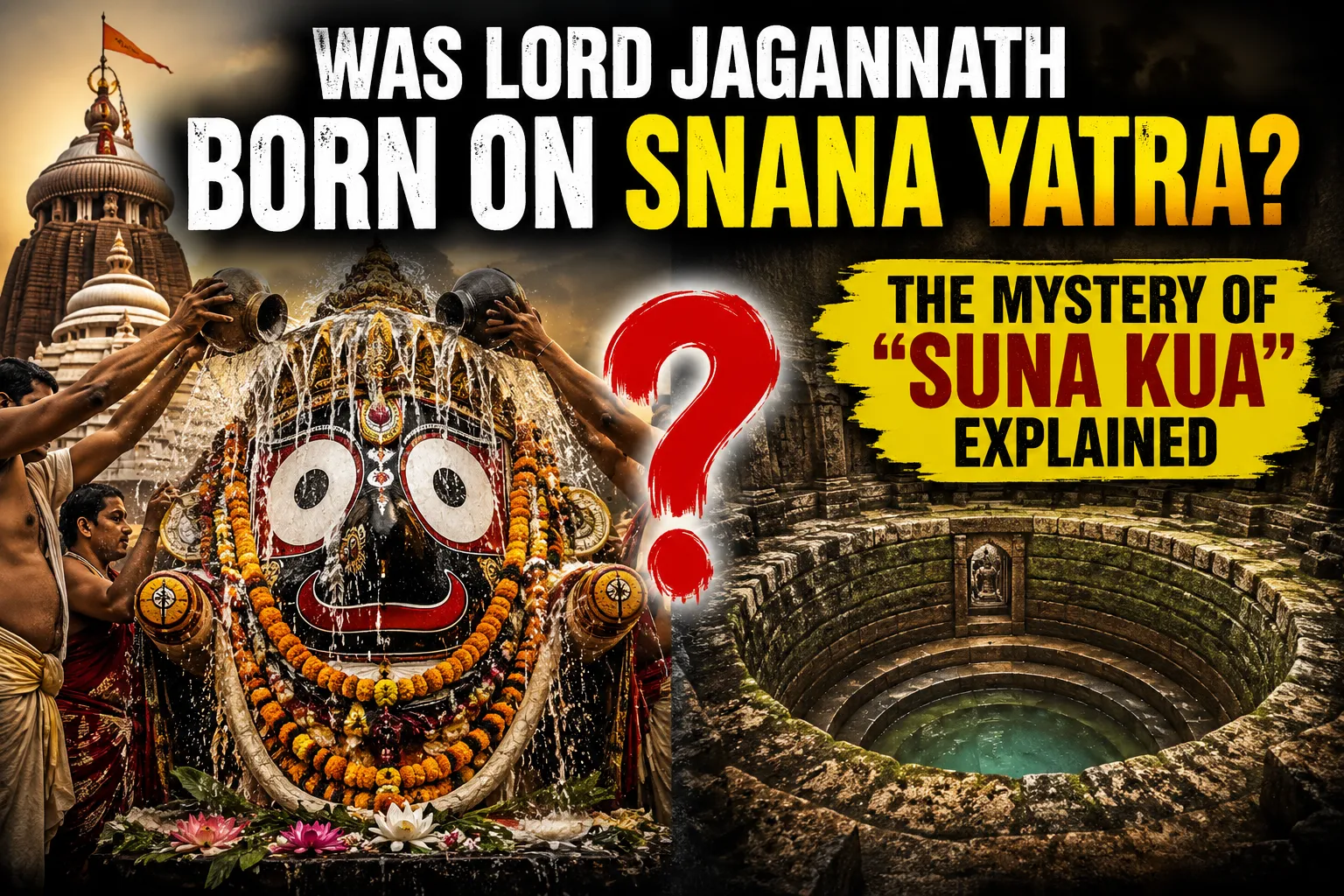
Puri, Jul 18: The Snana Yatra of Lord Jagannath, celebrated on Jyeshtha Purnima, is not merely a grand ritual in Puri-it is revered as the divine appearance day (Janma Tithi) of Lord Jagannath.
According to the sacred text Niladri Mahodaya, Lord Jagannath himself revealed to King Indradyumna that He manifested on the sacrificial altar (Yajna Vedi) on Jyeshtha Purnima after a yajna performed by Swayambhuva Manu. This is why the festival is also known as Jyeshtha Yatra. Since it marks the Lord's first ceremonial bath after His divine manifestation, the ritual is regarded as exceptionally sacred and is known as Avabhrutha Snana, the ritual bath performed at the conclusion of a yajna.
The tradition of Snana Yatra has been observed in Srikshetra Puri since ancient times. Historical references prove its antiquity. The 11th-century scholar-king Bhojadeva, in his work Rajamartanda, described Purushottama Kshetra (the ancient name of Puri) as being especially renowned for the month of Jyeshtha. Later, the 12th-century Sanskrit poet Sriharsha, in Naishadhiya Charita, also referred to the celebrated Snana festival, indicating that the ritual had already gained widespread fame by the time the present Jagannath Temple was built.
Interestingly, the permanent Snana Mandap seen today did not exist in the early centuries. Initially, a temporary wooden platform was constructed at the northeastern corner of the temple every year. It was only in the 15th century, during the reign of Gajapati Kapilendra Deva, that a permanent Snana Mandap was built after the temple's outer enclosure was completed. In the 18th century, King Birakesari Deva further enhanced the structure with its grand stone approach.
One of the most fascinating aspects of Snana Yatra is the elaborate bathing ritual of the four deities. The Chaturdha Murti—Lord Jagannath, Lord Balabhadra, Devi Subhadra, and Sudarshan-are ceremonially bathed with 108 sacred pitchers (Kalasas) of aromatic water. Lord Jagannath receives 35 pitchers, Lord Balabhadra 33, Devi Subhadra 22, and Sudarshan 18, together completing the auspicious number of 108. The water is drawn exclusively from the Suna Kua (Golden Well) within the temple complex.
Temple tradition holds that in ancient times, water from all the holy pilgrimage sites across India was collected for the ritual. When that became impractical, water from these sacred rivers and tirthas was ceremonially united in the Golden Well, making it a symbolic source of all sacred waters. The well remains sealed throughout the year and is opened only once annually for Snana Yatra. On the previous day, the water is sanctified with sandalwood, camphor, saffron, and fragrant herbs before being offered to the deities.
The bathing ceremony is performed while chanting the Samudra Jyeshtha Mantra from the Apas Sukta of the Rig Veda, highlighting the profound Vedic roots of the ritual. Sixteenth-century saint-poet Trilochan Das beautifully wrote that the water used to bathe Lord Jagannath rises to the clouds and returns to Earth as life-giving rain, nourishing all living beings. Significantly, Snana Yatra coincides with the onset of the monsoon, reinforcing the belief that the festival symbolizes not only the Lord's divine grace but also nature's cycle of renewal and prosperity.
Thus, Snana Yatra is much more than a ceremonial bath-it is a celebration of Lord Jagannath's divine birth, cosmic compassion, and universal welfare. From ancient scriptures and temple traditions to historical records spanning centuries, the festival stands as one of the oldest and most spiritually significant observances of Jagannath culture.
Every pitcher of sacred water poured over the deities is believed to carry blessings for humanity, making Snana Yatra not just the Lord's birthday celebration, but a timeless reminder of His eternal promise to protect and nurture the world.
.webp)