.webp)


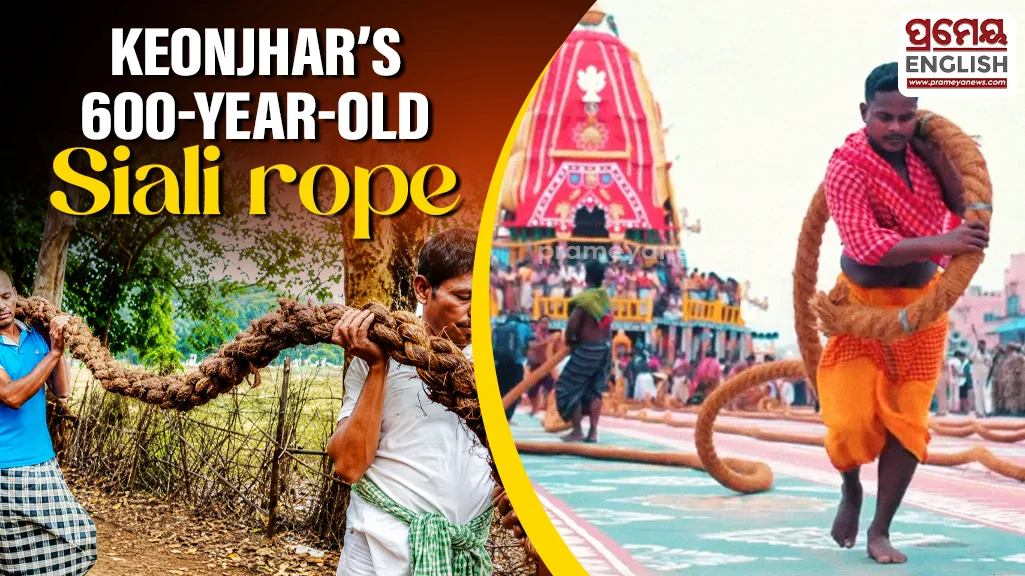
Keonjhar, Jul 14: One of the most unique and enduring traditions of Keonjhar's famous Rath Yatra continues to thrive, as members of the Bhuyan tribal community once again handcrafted and delivered the sacred Siali rope used to pull the district's massive Nandighosh chariot, regarded as the world's largest wooden chariot.
For centuries, ropes made from the bark of the Siali creeper have been used to pull the three chariots of Lord Jagannath, Lord Balabhadra, and Devi Subhadra. Preserving this age-old custom, members of the Bhuyan community from Daanla village in Banspal block carried the three handcrafted ropes on their shoulders to the Grand Road (Bada Danda), where they were ceremonially offered for the Rath Yatra.
The tradition, led by the fourth generation of Bhuyan community elders, remains one of the most distinctive highlights of Keonjhar's annual chariot festival.
According to local history, the Bhuyan community has been safeguarding this rare cultural practice for nearly 600 years, dating back to the beginning of the Rath Yatra in Keonjhar. Earlier, both the Juang and Bhuyan tribes jointly prepared and supplied five ropes for the chariots. Over time, however, the responsibility has remained solely with the Bhuyan community, which now prepares and offers three ropes every year.
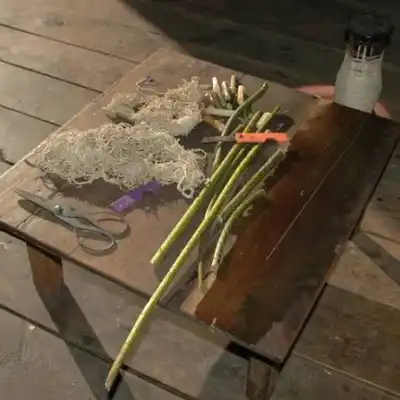
The ropes are painstakingly crafted from the bark of the Siali vine collected from the Gandhamardan hills. After carefully stripping the bark, artisans twist it entirely by hand to create exceptionally strong ropes. Each rope measures approximately 140 cubits in length and six inches in width, making them sturdy enough to pull the enormous wooden chariots.
Once completed, members of the Bhuyan community carry the ropes barefoot on their shoulders in a ceremonial procession before handing them over according to traditional rituals. For them, participating in this service is not merely a responsibility but a matter of deep religious devotion and community pride.
After the ropes reached the chariots, they were formally received through customary rituals. Keonjhar King Dhanurjaya Narayan Bhanjdeo personally welcomed and honoured the members of the Bhuyan community for preserving the centuries-old tradition.
Historians and tribal culture researchers say the ropes attain sacred status once they are attached to the chariots. Devotees traditionally bow before touching the ropes before participating in the chariot pulling, believing that doing so brings spiritual merit and absolves them of sins.
Officials, including the Sub-Collector of Keonjhar, have also acknowledged the cultural significance of the tradition, describing it as a remarkable blend of faith, nature, and indigenous heritage.
Despite the passage of centuries and the march of modernity, the sacred Siali rope tradition remains unbroken. Handcrafted from materials gathered from the forests and preserved by generations of the Bhuyan community, these ropes continue to give motion to Keonjhar's majestic chariots while symbolising the district's rich cultural legacy and tribal heritage.
.webp)