

.webp)
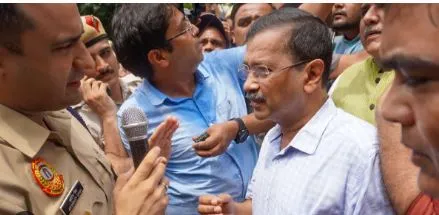
New Delhi, Aug. 4: Aam Aadmi Party (AAP) National Convenor Arvind Kejriwal on Tuesday led a protest march towards the Prime Minister's residence in New Delhi, opposing the Centre's implementation of the E20 petrol policy. During the protest, Kejriwal urged Prime Minister Narendra Modi to halt ethanol imports from the United States, alleging that the policy was being pursued under pressure from US President Donald Trump.
 Addressing party workers, Kejriwal appealed to the Prime Minister not to "come under pressure" from the US and demanded an end to the alleged forced implementation of E20 fuel nationwide. He said the AAP had sought an appointment with the Prime Minister to discuss the issue and vowed to continue the agitation until their concerns were addressed.
AAP leader Anurag Dhanda also criticised the policy, claiming it has sparked widespread concern among vehicle owners. He alleged that nearly 30 crore vehicles could be affected by ethanol-blended fuel and accused the Centre of ignoring public grievances. Dhanda further claimed that ethanol imported from the US was being pushed into the Indian market, urging the government to reconsider the policy and engage with citizens.
Meanwhile, the Ministry of Petroleum and Natural Gas has strongly defended the Ethanol Blended Petrol (EBP) Programme, rejecting allegations related to increased costs and food security concerns. The ministry said ethanol blending played a crucial role in shielding Indian consumers from volatile global crude oil prices.
According to the ministry, petrol prices in Delhi could have touched around ₹125 per litre when global crude prices peaked at nearly USD 135 per barrel. However, due to the 20 per cent ethanol blending programme, consumers paid ₹94.77 per litre, with ethanol being sourced domestically at pre-agreed prices unaffected by international crude price fluctuations.
The ministry maintained that the EBP programme is not a taxpayer subsidy but a long-term energy security measure that reduces India's dependence on imported crude oil, protects consumers from global market shocks, and helps retain more of the country's fuel expenditure within the domestic economy.
.webp)