
.webp)


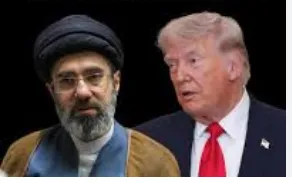
Tehran, April 6: As US President Donald Trump’s highly anticipated news conference on the Iran war approaches, Tehran has once again taken a firm stance against the proposed peace plan. Iran’s Foreign Ministry spokesperson, Esmail Baghaei, referred to the US 15-point peace plan as “extremely ambitious and illogical,” signaling Iran’s unwillingness to engage with the proposal.
According to a report by Iran International, Iran has already drafted a response to the US plan, conveyed through mediators, and will release it at the appropriate time. Baghaei emphasized that negotiations cannot proceed under duress, stressing that US threats targeting Iran’s infrastructure could be considered war crimes. He also reiterated that Iran’s primary focus remains on defending the country amid ongoing attacks, while maintaining diplomacy alongside military efforts.
Meanwhile, both the United States and Iran have been presented with an alternative peace plan aimed at ending hostilities. Sources familiar with the matter informed Reuters that the new framework, which could come into effect on Monday, aims to reopen the Strait of Hormuz. This plan, brokered by Pakistan, calls for a two-tier approach: an immediate ceasefire followed by a comprehensive agreement. The ceasefire would take effect right away, with 15 to 20 days to finalize the broader deal.
The proposed agreement, informally dubbed the "Islamabad Accord," would include a regional framework for the Strait of Hormuz and calls for final in-person negotiations in Islamabad. While US and Iranian officials have not responded yet, Pakistan’s Foreign Office spokesperson Tahir Andrabi declined to comment.
These developments underscore the heightened tensions in the region, with the looming deadline for Trump’s decision approaching. Despite efforts from multiple countries to mediate, Iran remains resolute in its stance, signaling that the path to peace remains uncertain. (With Agency Input)
.webp)