


Luxury vehicle prices likely to drop after trade deal
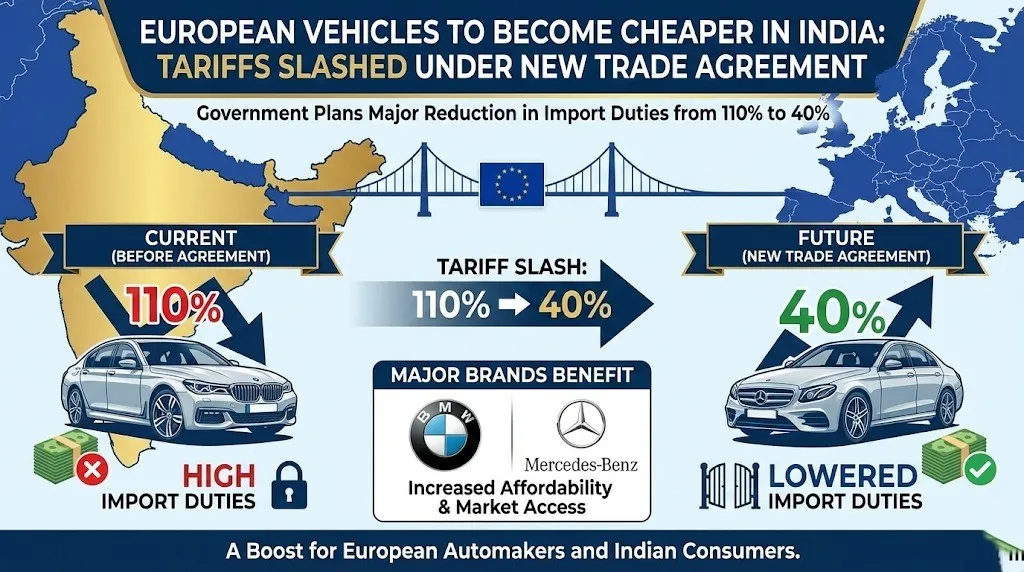
Car enthusiasts across India and Odisha may soon have a reason to celebrate. Prices for premium European vehicles are expected to fall significantly as New Delhi prepares to slash customs duties. Reports indicate that the central government is finalizing a plan to cut import taxes on cars manufactured in the European Union (EU) to 40 percent, down from the current steep rate of 110 percent.
This major policy shift comes as India and Brussels inch closer to sealing a long-awaited Free Trade Agreement. According to sources cited by Reuters, this move represents the most significant opening of the Indian automobile market to date.
What Does This Mean for Buyers?
Under the proposed agreement, duties will be lowered immediately for a specific quota of EU-built cars priced above 15,000 euros (approximately Rs 16.3 lakh). Over time, the plan is to reduce these tariffs even further to just 10 percent. This is great news for potential buyers in cities like Bhubaneswar and Cuttack who have been eyeing brands such as Volkswagen, Mercedes-Benz, and BMW.
Currently, India is the world’s third-largest car market but remains one of the most protected. Import duties on fully built units range between 70 percent and 110 percent, which has often discouraged global automakers from bringing their full range of products to Indian showrooms.
EVs Remain Protected
While petrol and diesel luxury cars will become cheaper, the government is taking a different approach for electric vehicles (EVs). Sources suggest that battery-operated vehicles will be excluded from these duty cuts for the first five years. This decision aims to protect domestic investments in the EV sector. However, after this five-year window, electric cars are expected to follow a similar tax reduction path.
Boost for European Brands
The reduction in India EU car tariffs is expected to benefit major players like Renault, Stellantis, and luxury giants like Mercedes-Benz. Under the proposal, India may allow the import of around 200,000 internal combustion engine vehicles annually at the reduced rate.
This strategic move allows European manufacturers to test new models in the Indian market at competitive prices before committing to large-scale local manufacturing. The official announcement regarding the conclusion of these negotiations is expected as early as this week.