
.webp)


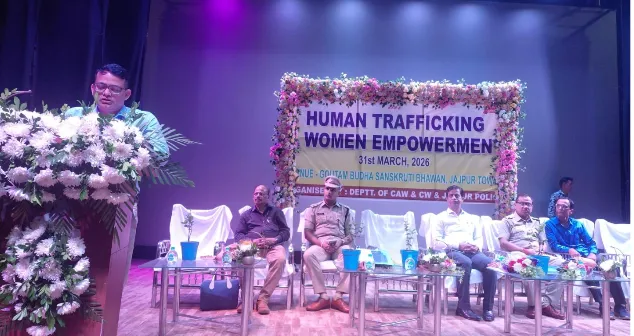
Bhubaneswar, March 31: Combatting the growing menace of human trafficking and empowering women is an essential responsibility for law enforcement agencies, stated Dr. Satyajit Naik, Inspector General of Police, Central Range, Cuttack. Addressing a workshop on Human Trafficking and Women Empowerment in Jajpur, Dr. Naik emphasized the need for constant vigilance, intelligence-driven actions, and a victim-centric approach to tackle this critical issue.
The workshop, attended by key stakeholders from law enforcement, civil administration, and social sectors, aimed to explore effective strategies for prevention, protection, and empowerment. Dr. Naik stressed the evolving nature of trafficking networks and called for enhanced coordination between agencies, increased technological intervention, and stronger community awareness as essential elements in addressing the crisis.
 In his address, Ambar Kar, Collector-cum-District Magistrate of Jajpur, highlighted the crucial role of the administration in reinforcing institutional mechanisms for the prevention, rescue, rehabilitation, and reintegration of trafficking survivors. He emphasized the need for greater collaboration among various departments, such as Women & Child Development, Labour, Education, and Police, to address the root causes of trafficking, including socio-economic vulnerabilities, lack of awareness, and limited livelihood opportunities.
Yash Pratap Shrimal, Superintendent of Police, Jajpur, outlined the proactive measures taken by the district police, including the identification of vulnerable areas, strengthening of Anti-Human Trafficking Units (AHTUs), regular rescue operations, and awareness campaigns at the grassroots level. He reiterated the district police's commitment to strictly enforcing laws and ensuring the safety and dignity of women and children.
 The workshop saw active participation from police officers across districts under the Central Range, officials from various departments, NGO representatives, legal experts, and community leaders. It served as a comprehensive platform for dialogue and collaboration, addressing emerging trends in human trafficking, legal provisions, investigation techniques, and victim rehabilitation. Participants also discussed initiatives aimed at empowering women through education, skill development, and economic independence.
Interactive sessions and case study discussions allowed attendees to share real-world experiences, challenges, and best practices, underscoring the critical role of community vigilance and the contribution of civil society in preventing trafficking.
.webp)