

.webp)
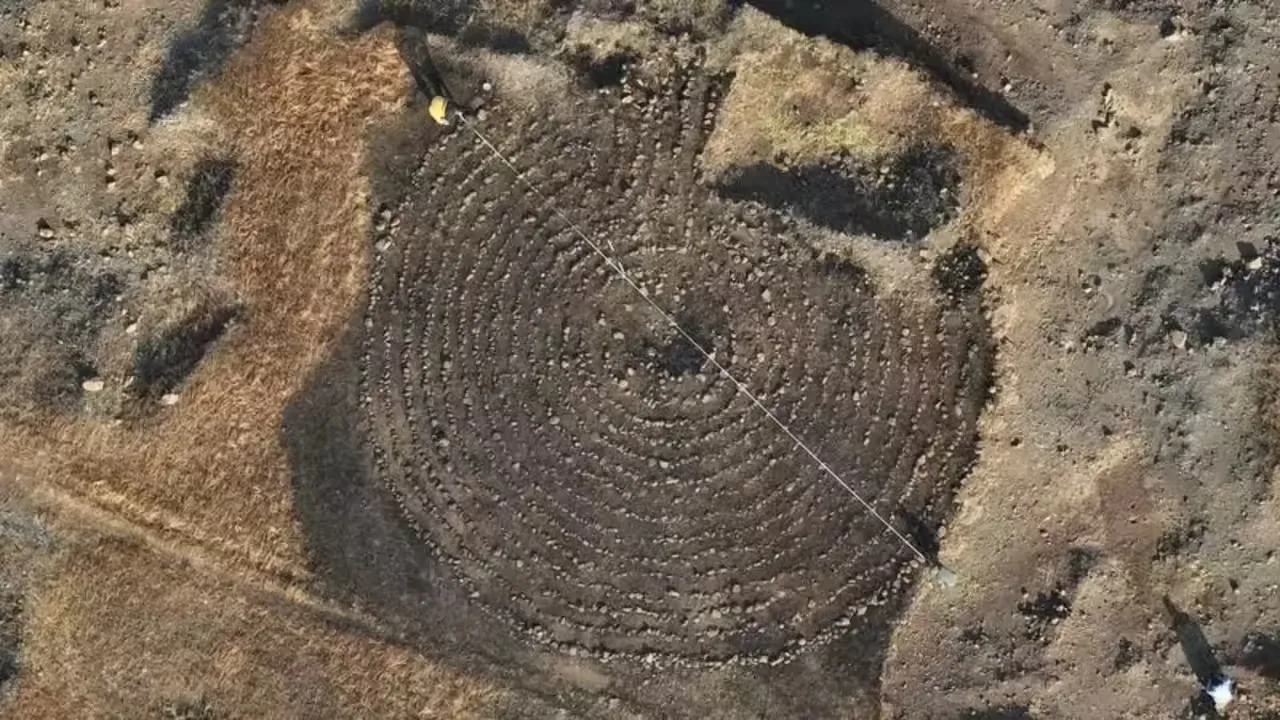
Archaeological breakthrough uncovers massive 2,000-year-old circular stone maze
Imagine searching for rare wolves and birds but stumbling upon a 2,000-year-old mystery instead. That is exactly what happened in the Boramani grasslands of Solapur. A wildlife team monitoring the Great Indian Bustard accidentally spotted a massive stone structure that has now been identified as the largest Solapur stone labyrinth ever recorded in India.
Archaeologists are stunned by the scale and precision of this ancient find. Stretching approximately 50 feet by 50 feet, the site features 15 perfectly concentric circles carved meticulously into the earth. While square labyrinths have been documented in places like Tamil Nadu, this circular design is a first of its kind in terms of scale, making it a landmark discovery for Indian archaeology.
Historians currently link the site to the Satavahana dynasty, which flourished in ancient India. What makes this Solapur stone labyrinth truly fascinating is its resemblance to patterns found on ancient Roman coins. This similarity suggests a deep cultural and commercial exchange between ancient India and the Roman Empire. Experts theorize that the maze may have served as a vital navigational landmark for Roman merchants traveling inland from the western coastlines.
The existence of such a structure challenges long-held assumptions about ancient Indian commerce and urban sophistication. Its survival for over two millennia is a testament to the advanced engineering of the era. This discovery proves that the trade networks connecting India to distant empires were far more complex than previously imagined.
Efforts are now underway to document and preserve the Boramani site. This Solapur stone labyrinth serves as a bridge between wildlife conservation and historical heritage, proving that history often hides in plain sight, waiting for the right moment to be rediscovered.
Image source: SSB Exams
.webp)