
.webp)
For decades, Polycystic Ovary Syndrome (PCOS) has been one of the most commonly diagnosed hormonal disorders among women. Yet, despite its widespread prevalence, the condition has often been misunderstood not only by patients but sometimes even by society at large. The recent emergence of the term PolyMetabolic Ovarian Syndrome (PMOS) is not simply about changing a name; it is about changing our understanding of the disease itself.
The coinage of PMOS reflects a growing scientific consensus that the condition extends far beyond the ovaries. It aims to help women and healthcare providers recognize that what has long been viewed primarily as a reproductive disorder is, in many cases, a complex metabolic condition affecting multiple systems within the body.
Looking Beyond Ovarian Symptoms
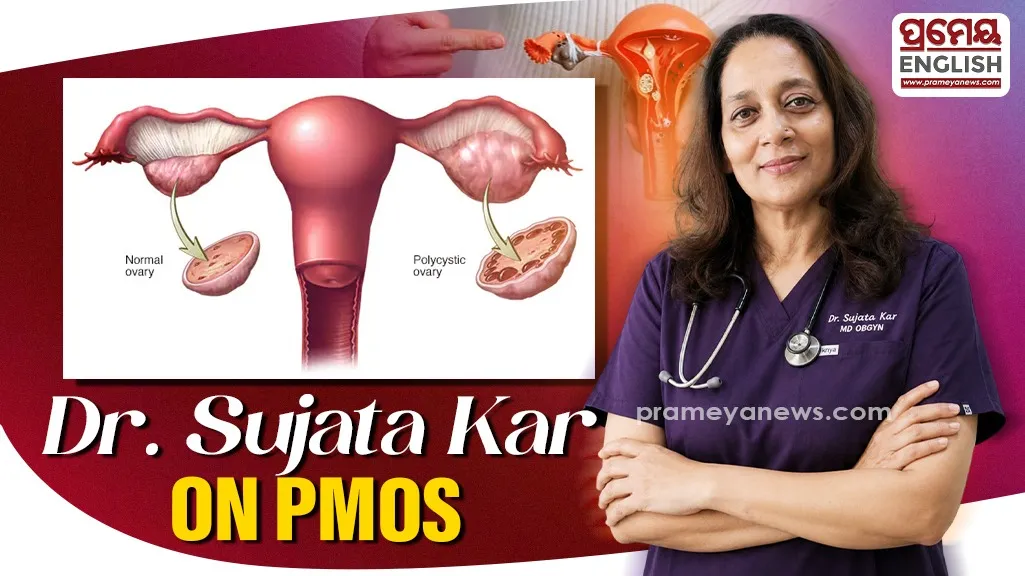
According to Obestetrics and Gynecology Dr Sujata Kar , One of the biggest challenges with the term PCOS has been its emphasis on “polycystic ovaries.” In reality, many women diagnosed with the condition do not have actual ovarian cysts. The follicles seen on ultrasound are often immature eggs that have failed to mature and ovulate. Conversely, some women with normal ovarian scans may still experience the hormonal and metabolic disturbances associated with the condition.
By focusing attention on metabolism, PMOS offers a more accurate picture. Insulin resistance, elevated insulin levels, hormonal imbalance, inflammation, and metabolic dysfunction are increasingly recognized as central drivers of the disorder. Irregular menstrual cycles, acne, unwanted facial hair, weight gain, infertility, and mood changes are often manifestations of these deeper metabolic processes.
Why This Matters for Indian Women
The shift in understanding is especially relevant for India, where metabolic disorders are rising rapidly among younger populations. Indian women are genetically more prone to developing insulin resistance even at relatively lower body weights. Sedentary lifestyles, increasing stress levels, poor sleep quality, and changing dietary habits have further contributed to the growing burden of metabolic disease.
As a result, symptoms often attributed solely to reproductive health may actually be warning signs of broader metabolic dysfunction. Recognizing this connection can empower women to seek comprehensive care rather than focusing only on symptom management.
Better Understanding Leads to Better Remedies
The greatest advantage of viewing the condition through the PMOS lens is that it encourages early intervention. Too often, women seek treatment only when fertility becomes a concern or menstrual irregularities become severe. Once these symptoms improve, long-term monitoring frequently stops.
However, the condition carries implications that extend far beyond reproductive years. Women affected by PCOS are known to face increased risks of type 2 diabetes, hypertension, fatty liver disease, cardiovascular disorders, pregnancy complications, and sleep-related conditions.
A broader understanding allows healthcare providers to focus not just on treating symptoms but also on preventing future complications. Better understanding naturally leads to better remedies, better health outcomes, and a better quality of life.
Moving Away from Stigma and Self-Blame
Another important contribution of the PMOS concept is that it helps challenge the stigma often associated with the condition. Many women are unfairly blamed for their symptoms or made to believe that their health challenges are simply the result of poor lifestyle choices.
While healthy eating, physical activity, stress management, and adequate sleep remain important components of treatment, the condition is influenced by genetics, hormonal regulation, inflammation, and insulin signaling pathways. Women deserve support, not judgment, as they navigate their health journey.
Separating Science from Social Media Myths
As awareness grows, so does misinformation. PMOS is not a new disease. It is an attempt to better describe an existing condition based on evolving scientific knowledge. Similarly, the condition is not limited to overweight women. Many lean women also experience significant insulin resistance and hormonal imbalance despite having a normal body weight.
Women should also be cautious of unproven “quick-fix” solutions promoted online. Detox regimens, miracle supplements, and extreme diets often promise dramatic results but rarely deliver sustainable benefits. Evidence-based treatment, individualized care, lifestyle modification, and regular medical follow-up remain the most effective strategies.
A New Perspective for Women's Health
Whether PMOS eventually replaces PCOS in mainstream medical practice remains uncertain. What is already clear, however, is that women's health can no longer be viewed through a narrow reproductive lens alone. Hormonal health, metabolic health, mental well-being, fertility, cardiovascular health, sleep quality, and long-term disease prevention are all interconnected.
The conversation around PMOS is helping women understand this larger picture. More importantly, it is helping them realize that the condition is not just about periods, fertility, or ovaries. It is a whole-body metabolic and hormonal disorder that deserves early recognition, compassionate care, and lifelong attention. And perhaps that is the true significance of PMOS, not merely a new name, but a better understanding that can lead to better remedies and healthier lives for millions of women.
.webp)