
.webp)


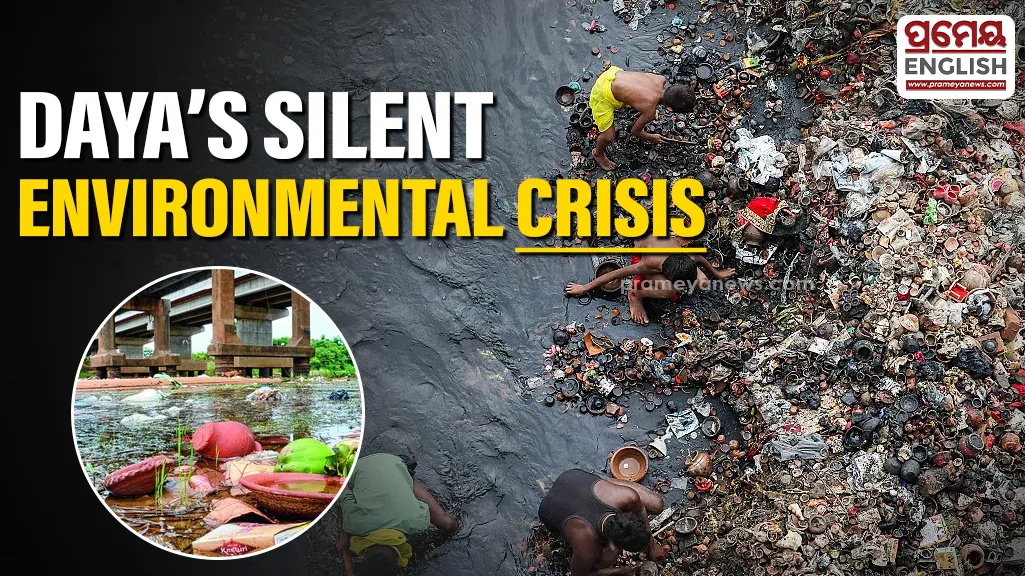
Bhubaneswar, May 29: The condition of the once-serene Daya River has turned alarming, exposing a grim picture of pollution, negligence, and administrative apathy right on the outskirts of the capital city. What was once known as a perennial river carrying clean flowing water has now become a dumping ground for medical and household waste.
A ground report by Prameya near the Daya overbridge at Lingipur Chhak in Bhubaneswar revealed heaps of garbage lying directly inside the riverbed. Used saline bottles, injection waste, plastic materials, and even menstrual waste have been indiscriminately dumped into the river. With the river almost drying up during the summer season, the remaining stagnant water has become highly polluted and foul-smelling.
Locals alleged that garbage from nearby residential areas is regularly thrown into the river without any monitoring by authorities. The decomposing waste has created an unbearable stench in the surrounding area and poses a serious threat to public health and the environment.
Ironically, while the Water Resources Department continues to supply water from the Daya River to the Bhuasuni drinking water project and earns revenue from it, little attention is being paid to the river’s deteriorating condition. Residents questioned how contaminated river water can be linked to a drinking water project while pollution continues unchecked.
The Daya River, a distributary of the Mahanadi originating from Kuakhai, stretches nearly 60 kilometres through Khordha and Puri districts before merging into Chilika Lake near Brahmagiri. Environmentalists point out that the river has already been battling pollution caused by untreated wastewater from the Gangua drain for years.
The issue had previously sparked concern after seven persons reportedly died in the Kanas area of Puri district due to the use of contaminated river water. Following public outrage, the administration initiated plans to establish a major treatment plant near Kanti to treat Gangua wastewater before releasing it into the Daya. However, the ground reality indicates that pollution in the river continues unabated.
Adding to the concern, government studies have reportedly detected toxic arsenic in the river water, making the situation even more serious. Despite such findings, there appears to be no strict enforcement or public awareness campaign to prevent the dumping of waste into the river.
Environmental experts and local residents have now demanded immediate intervention by the government to clean the river, stop illegal dumping, and restore the ecological health of one of Odisha’s historically significant water bodies.
.webp)