
.webp)
Rising urban temperatures threaten Bhubaneswar’s future liveability and green ecosystem.
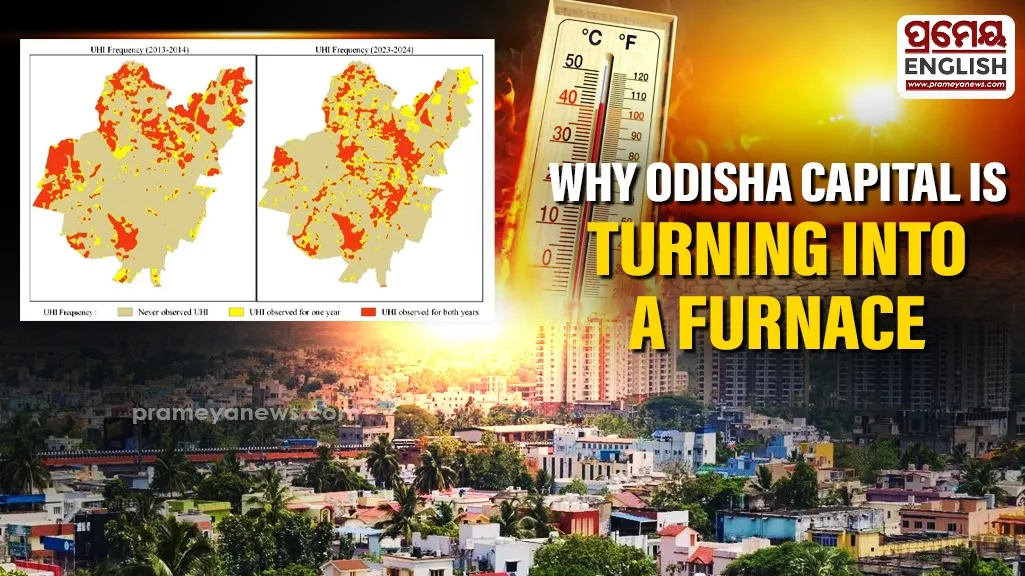
Bhubaneswar now experiences temperatures 1.8 degrees Celsius higher than its surrounding rural pockets, a direct consequence of relentless urban expansion. Research from the Indian Institute of Technology (IIT) Bhubaneswar reveals that this "Urban Heat Island" effect stems from a staggering 83% growth in built-up areas between 2000 and 2014. This shift has essentially transformed the once-lush capital into a concrete trap that retains heat long after the sun sets.
Satellite data confirms a devastating loss of natural cooling systems within the city limits. Dense vegetation plummeted by 89% during the study period, while traditional water bodies shrank by 2%. These environmental lungs previously moderated local climate, but their removal for housing and infrastructure projects has left residents vulnerable to extreme heat. Dr. D. Swain from IIT Bhubaneswar notes that the city, originally sheltered by three distinct forests, lost significant canopy cover during the 1999 Odisha Super Cyclone and subsequent road widening projects. This historical loss of tree cover created a deficit from which the urban environment has struggled to recover.
Paved surfaces and multi-story concrete structures fundamentally alter how the ground interacts with solar radiation. Unlike soil and plants, these materials absorb heat during the day and release it slowly at night, preventing the city from cooling down. While megacities like Delhi report heat island effects ranging from 4 to 12 degrees Celsius, Bhubaneswar’s status as a Tier-2 city shows that rapid, unplanned growth can trigger similar climate crises even in smaller urban centers. Researchers utilized Moderate Resolution Imaging Spectroradiometer (MODIS) technology and Landsat-7 and 8 imageries to track these shifts, identifying specific growth corridors that have become thermal hotspots.
Managing land use patterns remains the most effective way to mitigate these rising temperatures. Experts argue that restoring crop fields, which saw an 83% decline and protecting remaining water bodies could help stabilize the microclimate. Dr. V. Vinoj emphasises that without strategic urban planning, dwellers will face increasingly erratic rainfall patterns and unbearable summer peaks. Integrating green corridors and permeable surfaces into future development plans is no longer optional; it is a necessity for survival.
Historically known for its architectural heritage and scenic greenery, Bhubaneswar must now balance modernization with ecological preservation. Replanting native species lost since the late nineties could restore the natural thermal balance. As Odisha faces more frequent heatwaves, the findings from this IIT study serve as a loud alarm for policymakers to prioritise environmental resilience over unchecked vertical growth. Protecting the peripheral zones from becoming heat corridors is vital to ensuring the city remains habitable for the next generation.
With Inputs from: https://old.iitbbs.ac.in/news.php?id=671
.webp)