
.webp)


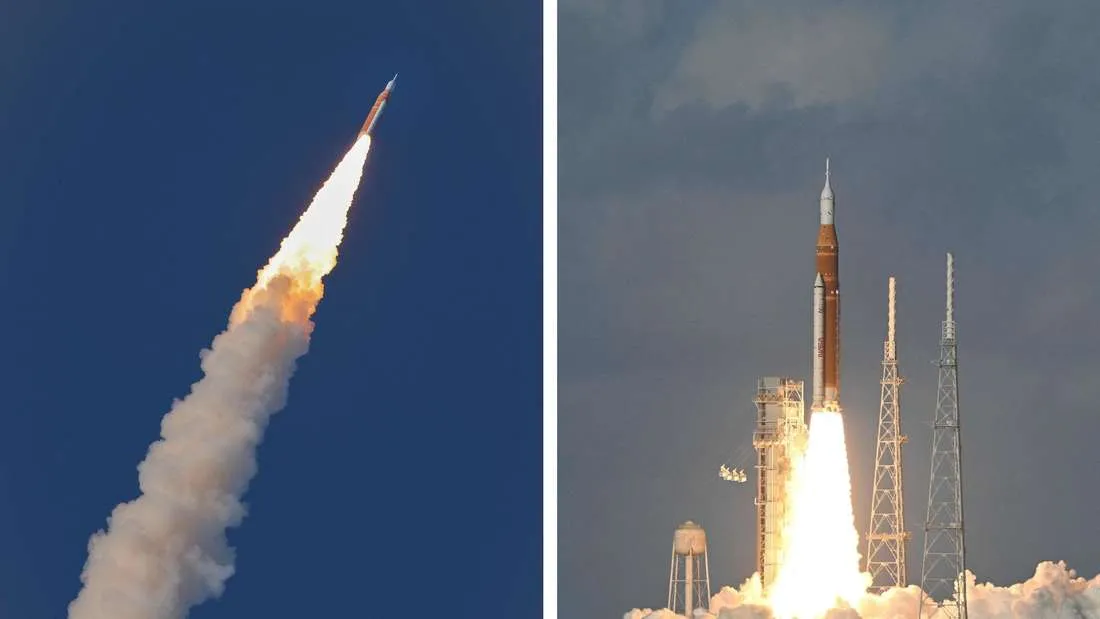
NASA Orion spacecraft begins historic lunar journey with four astronauts.
Four astronauts soared into the Florida sky today, marking the first time humans have ventured toward the Moon in over five decades. This Artemis II mission, departing from the Kennedy Space Center at approximately 4:00 AM IST, signals a departure from decades of low Earth orbit activity and a return to deep space exploration.
Breaking Apollo Records
Reid Wiseman, Victor Glover, Christina Koch, and Jeremy Hansen are currently navigating the Orion spacecraft on a ten-day trajectory. This flight path will take them around the lunar far side, reaching distances from Earth never before achieved by human travelers. While the Apollo missions of the 1960s and 70s were driven by Cold War competition, this modern effort focuses on international collaboration and long-term lunar habitation. For India, this mission is particularly relevant as ISRO’s own Chandrayaan program continues to share data that assists global lunar mapping and south pole exploration.
Inclusion and Scientific Discovery
Christina Koch makes history on this flight as the first female astronaut to reach the lunar neighborhood. Unlike previous all-male crews, this mission reflects a broader representation of humanity. The crew is not merely "flying by"; they are performing high-level geological surveys. Using their extensive training, the four-person team will photograph and analyze ancient lava flows and impact craters on the Moon’s hidden face.
Future Lunar Settlements
Artemis II serves as a vital technical rehearsal for a manned landing scheduled for 2028. NASA is prioritizing safety and sustainable infrastructure, aiming to eventually establish a permanent base. By testing life-support systems in the harsh environment of deep space, this mission ensures that future lunar residents can utilize local resources for survival. The Orion capsule will eventually splash down in the Pacific Ocean, concluding a journey that has effectively reopened the gateway to the stars.
.webp)