



ଓଡ଼ିଆ | ENGLISH
ଓଡ଼ିଆ | ENGLISH

hindu-side-announces-schedule-of-five-aartis-in-gyanvapi-complex

Published By : Prashant Dash
hindu-side-announces-schedule-of-five-aartis-in-gyanvapi-complex

New Delhi, March 2: Prime Minister Narendra Modi on Monday spoke with the King of Jordan, His Majesty King Abdullah II and affirmed India's support for the "peace, security and the well-being" of Jordanians.


The Prime Minister expressed concerns over the "evolving situation" in West Asia, while thanking His Majesty for looking out for the Indian diaspora in Jordan during this "difficult hour."


In a post on X, the PM wrote, "Spoke with His Majesty King Abdullah II, the King of Jordan. Conveyed our deep concern at the evolving situation in the region. We reaffirm our support for peace, security and the well-being of the people of Jordan. I thanked him for taking care of the Indian community in Jordan in this difficult hour."


Earlier today, Prime Minister Narendra Modi engaged in separate telephone conversations with Saudi Arabia's Crown Prince Mohammed bin Salman Al Saud and Bahrain's King Hamad bin Isa Al Khalifa, as the conflict in the Middle East continues to intensify following recent escalations.


During these discussions, the Prime Minister strongly condemned the recent attacks on both Saudi Arabia and Bahrain. He also enquired about the safety and well-being of the large Indian community residing in these countries, reflecting India's priority to safeguard its diaspora amid the regional turmoil.


These calls build on PM Modi's ongoing diplomatic outreach since the conflict erupted involving the United States, Israel, and Iran. On Sunday, he held a telephone conversation with Israeli Prime Minister Benjamin Netanyahu, where he reiterated India's call for an early cessation of all hostilities in the region to restore peace.


In a parallel engagement that day, PM Modi spoke with United Arab Emirates President Sheikh Mohamed bin Zayed Al Nahyan. He condemned Iranian attacks on Gulf countries and urged immediate de-escalation, while expressing appreciation to the UAE leader for ensuring the safety and well-being of the Indian community there.


These high-level engagements underscore India's consistent diplomatic push for stability in West Asia and protection of its citizens abroad, even as the situation remains volatile.


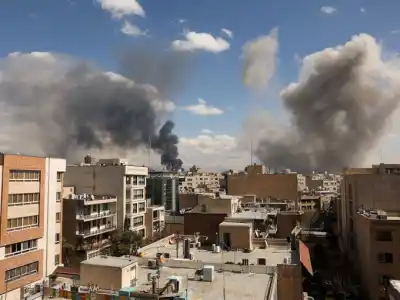
This came against the backdrop of coordinated US and Israeli airstrikes across multiple Iranian cities on February 28, targeting military command centres, air-defence systems, missile sites, and key regime infrastructure. These strikes resulted in the death of Iranian Supreme Leader Ayatollah Khamenei and four senior military and security officials, with large explosions reported in Tehran and other major cities.


US President Donald Trump described the strikes as necessary to "ensure that Iran does not obtain a nuclear weapon".


In response, Iran retaliated by launching ballistic missiles and drones at US assets and allies across the region, including Israel, Bahrain, Kuwait, Qatar, the United Arab Emirates, and Jordan, further widening the conflict in the Middle East and heightening risks for civilians and expatriates alike. (ANI)

​​​​​​​