


Bhubaneswar, Mar 17: The Odisha government has announced that all administrative departments, from the national level to the block level, will soon be updated with "X" handles, allowing citizens to access information and resolve complaints without visiting offices physically. However, despite these announcements, the reality on the ground is far from ideal.
While certain government websites are supposed to be regularly updated, the situation remains unchanged in many departments. In Puri district, most of the department websites have not been updated for years, and some departments have yet to open their "X" handles. Even when these handles are operational, they remain inactive and focused on self-promotion rather than addressing public grievances. This situation is causing confusion as citizens often rely on outdated information, leading to issues in the services they seek.
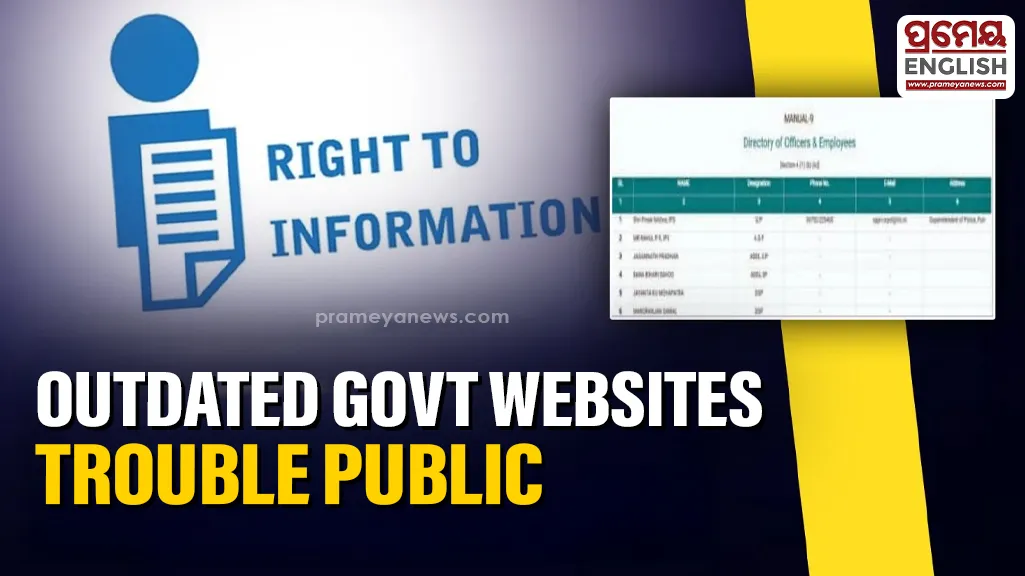
The Puri administration’s website is one example where outdated information is still being provided. The current Puri Police website also remains inactive and hasn't been updated in years. For instance, the name of the Puri Superintendent of Police (SP), Pinaki Mishra, remains listed despite changes within the department. Additionally, phone numbers on the website are often disconnected; leading people to either receive no response or are redirected to incorrect locations.
One significant issue is the online grievance submission system, which is either not functioning or not present at all on many websites, including the Puri administration's site. As a result, people are forced to visit government offices in person, despite being promised digital solutions. The phone numbers listed on the sites also fail to connect to relevant departments, often reaching personal phones or irrelevant offices, causing more frustration for the public.
Moreover, the "X" handle for Puri administration is mostly used for self-promotion, with little to no engagement with public complaints or issues. This trend is seen in several other government departments, where the digital presence is not being used effectively to solve problems but rather to create an illusion of engagement.
Sanjiv Mohanty, the District President of the Odisha State Consumers' Association, stated that it is impractical for every citizen to visit government offices physically, especially in today’s digital age. If the government websites, social media handles, and phone numbers were regularly updated and functional, it would significantly ease the access to services for ordinary citizens.
While the government has made efforts to digitize services, there is a long way to go in terms of ensuring that these systems are active, responsive, and truly accessible to the public.