
.webp)


Melting ice pressures demand strict Himalayan flood prevention plans
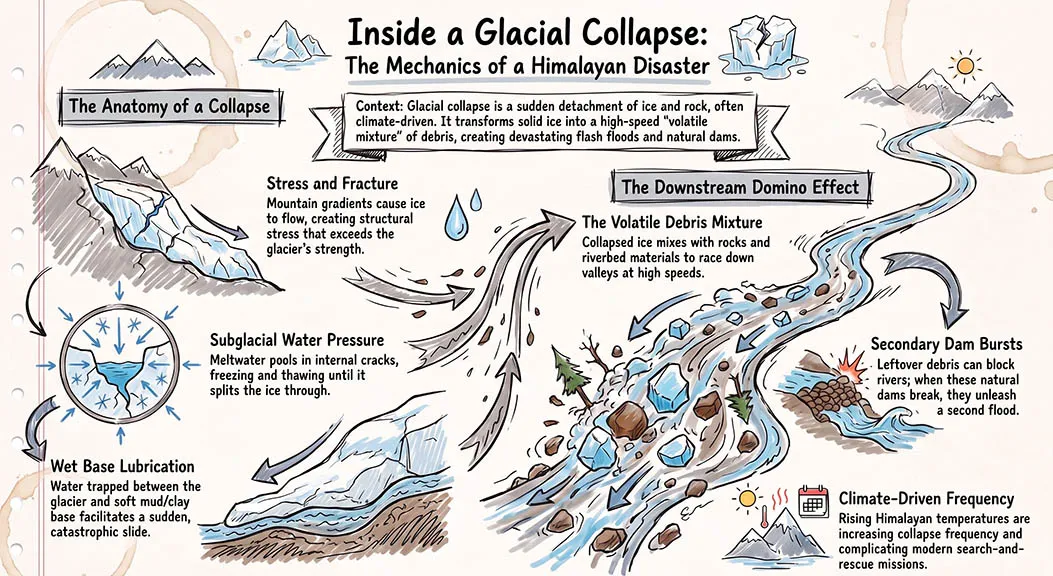
On August 26, 2026, a catastrophic block of glacial ice roughly 600 metres wide detached from Langtang Lirung near the Nepal-China border. Plunging 1,200 metres into the valley below, this sudden separation registered as a magnitude 5.2 seismic tremor. Torrents of mud, rock, and freezing water instantly surged into the Lhende Khola and Bhote Koshi river systems. This violent mixture completely wiped out the Gyirong Port complex and claimed hundreds of lives as river levels surged by nine metres in under thirty minutes. High-altitude border regions have historically faced seasonal flooding, but rapidly accelerating climate warming has turned stable ice formations into volatile hazards.
Understanding Sudden Ice Fractures
Glaciers form over several years as surviving snow compresses into firn and eventually crystallises into solid ice. When this heavy ice structure moves across steep mountain gradients, the accompanying stress can easily shatter the formation. Glaciologist Iqbal S Hasnain explains that warming temperatures force large volumes of meltwater into subglacial channels. Water collects rapidly at the wet base of these formations. It occasionally flows through complex tunnel networks, exerting tremendous pressure that ultimately splits the ice apart. Falling debris then dams narrow river channels. When these temporary blockages break under extreme pressure, secondary floods race downstream at lethal speeds.
Implementing Seismic Early Warning Systems
Stopping future tragedies requires transitioning from reactive rescue missions to proactive hazard management. Remote seismic monitoring networks offer a crucial first line of defense. Placing highly sensitive sensors at high altitudes allows authorities to detect early ice movement and internal fracturing. This provides vulnerable downstream communities with precious minutes to evacuate to higher ground before floodwaters arrive.
Securing Critical River Valley Infrastructure
Recent devastation proves that building too close to active riverbeds carries lethal risks. Strict zoning regulations must dictate future construction projects. Hydropower plants, bridges, and transport networks need mandatory placement outside high-risk flood channels to protect both national assets and local workers.
Strengthening Cross Border Alert Networks
Himalayan river systems ignore political boundaries, meaning upstream instability directly threatens downstream lives. The recent disaster originated in Tibet before destroying parts of Nepal. Establishing real-time data sharing between neighboring nations ensures that emergency responders receive instant alerts the moment mountain sensors detect unusual activity.

.webp)