
.webp)


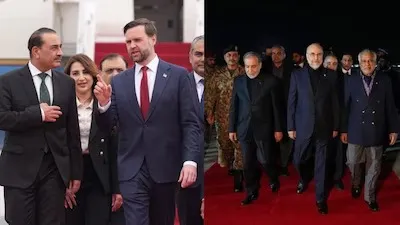
Military attire choices signal Pakistan's complex dual-track geopolitical strategy
General Asim Munir transitioned from tactical combat gear to a formal business suit within hours, signaling a calculated shift in Islamabad's diplomatic messaging during high-level peace negotiations. While receiving the 70-member Iranian delegation led by Speaker Mohammad Bagher Qalibaf, Munir appeared in full battlefield uniform. Shortly after, he greeted US Vice President JD Vance at the Nur Khan airbase wearing a western-style suit, a move experts describe as a deliberate display of "hybrid" leadership.
Military analysts suggest the decision to wear combat fatigues while meeting Iranian officials was a pointed reminder of recent cross-border frictions. Relations between Islamabad and Tehran have remained sensitive since the 2024 missile exchanges and ongoing skirmishes in the Sistan-Baluchestan border region. By choosing battle dress over ceremonial attire, Munir projected a posture of readiness and strength to his western neighbor.
Contrastingly, the shift to a suit for the American delegation highlights Munir's desire to be perceived as a sophisticated diplomatic broker rather than a traditional military strongman. This "civilian" optics choice aims to ease concerns in Washington regarding the military's overt role in Pakistani governance while ensuring the US remains engaged with the military establishment as the primary center of power.
Pakistan has historically navigated a treacherous path between the US and Iran, often acting as a "backchannel" during periods of escalation. This current mediation effort in April 2026 mirrors past attempts to balance Islamabad's "strategic depth" requirements with its dependency on Western financial and security partnerships.
.webp)