
.webp)


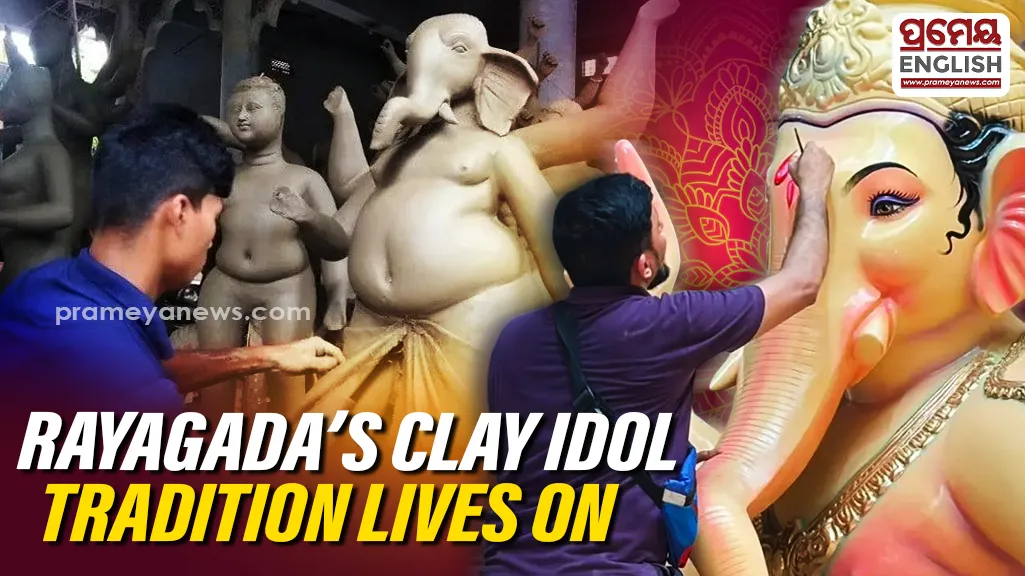
Rayagada, Sept 1: As Ganesh Chaturthi approaches; Amalabhatta village in Rayagada district has come alive with the sound and sight of clay idol-making. Nearly 200 families in the village depend primarily on traditional pottery and clay idol-making for their livelihood.
From Ganesh and Saraswati idols to Durga, Vishwakarma and Gajalakshmi, artisans here create a wide variety of traditional clay idols throughout the year. Ahead of Ganesh Chaturthi, demand rises sharply, with customers from different parts of Odisha as well as neighbouring Andhra Pradesh and Chhattisgarh visiting the village to place orders and purchase idols.
The artisans begin preparations nearly three months before the festive season. They collect clay and other raw materials before starting the painstaking process of shaping, drying and decorating the idols. Since the village currently lacks a proper functional pottery workshop, many artisans are forced to work from their homes.
However, the traditional craft is facing several challenges. The popularity of plaster-of-Paris idols has gradually reduced demand for clay idols, while rising production costs and inadequate government support have added to the artisans’ difficulties.
Around two decades ago, the government had constructed a pottery workshop for the artisans. But the facility has now deteriorated significantly, making it difficult for craftsmen to use it for idol production.
Despite these challenges, Amalabhatta’s artisans continue to preserve their traditional craft. Besides idols, they also make earthen pots, pitchers, lamps and other clay products, many of which are displayed and sold at exhibitions and fairs within and outside Odisha.
Artisans say better government support, renovation of the old pottery workshop and improved market opportunities could help preserve this traditional livelihood and encourage younger generations to continue the craft.
.webp)