
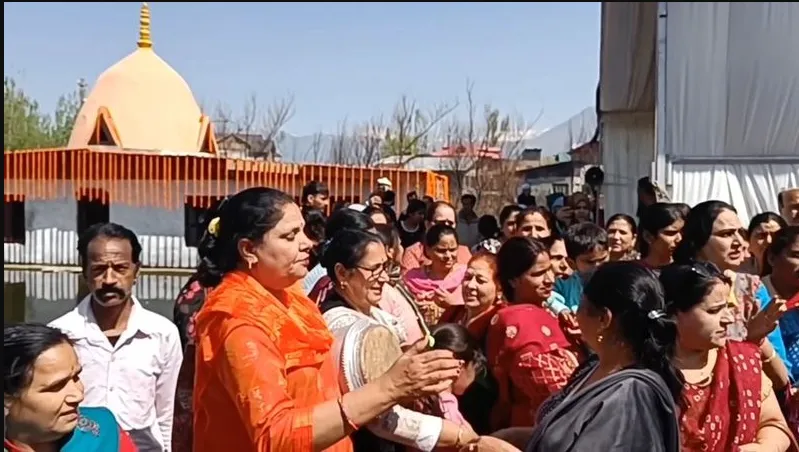
New Delhi/Mumbai/Maihar, Mar 19: Devotees gathered in large numbers on Thursday at prominent temples, including Jhandewalan and Chhatarpur in Delhi and Mumba Devi in Mumbai, to offer prayers on the first day of Chaitra Navratri, marking the start of the nine-day festival dedicated to Goddess Durga. The air resonated with the sound of bells and hymns as devotees participated in Aarti, ushering in the auspicious celebrations.
BJP MP Bansuri Swaraj, speaking to reporters, extended her greetings, saying, “I wish everyone a Happy Chaitra Navratri. May the Goddess bring prosperity into everyone’s life and may Her blessings remain upon our country.”
Meanwhile, in Uttarakhand, Chief Minister Pushkar Singh Dhami greeted the people on the occasion of the Nav Samvatsar and Chaitra Navratri. He described the festival as a celebration of Shakti, underscoring its deep roots in Indian culture. According to a statement from the Chief Minister’s Office, Dhami said the festival emphasises the importance and strength of women in society, noting that the ritual of Kanya Pujan highlights women’s empowerment.
“Chaitra Navratri holds special significance in our ancient scriptures and serves as a foundation for self-purification and virtuous living,” Dhami added. “Worshipping Goddess Durga during this period helps eliminate negative energy and promotes positive energy.”
In Maihar, the district administration announced a complete ban on the sale and purchase of meat, fish, and eggs during the festival period, citing its religious significance. Sub-Divisional Magistrate Divya Patel stated that the restriction would remain in place from March 19 to March 27. “Maihar is a religious city. Therefore, in view of the Chaitra Navratri fair, a complete ban on non-vegetarian items has been imposed. Legal action will be taken against anyone violating this order,” Patel said.
Chaitra Navratri also marks the beginning of the Hindu New Year. Over nine days, devotees worship the nine forms of Goddess Durga, observe fasts, and perform rituals seeking blessings for prosperity and well-being. The festival concludes with Ram Navami, celebrating the birth of Lord Ram. Across the country, temples witness heavy footfall, with special prayers, jagrans, and cultural programmes organised throughout the festival period.