
.webp)

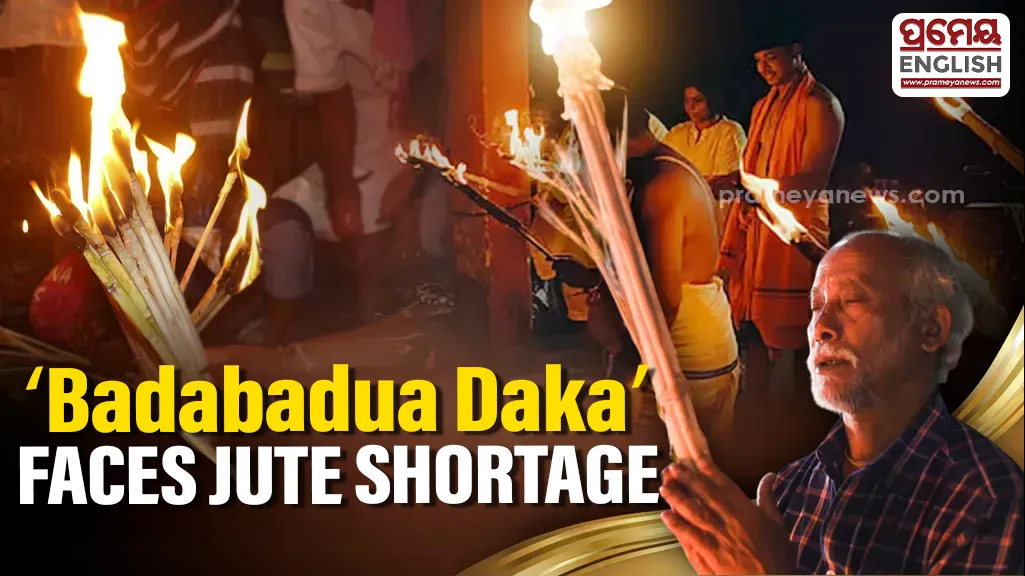
Bhadrak, Oct 30: With Diwali approaching on November 8, a traditional practice followed by Odia families is facing an unusual challenge. Kaunria sticks, traditionally burnt to welcome ancestors during the festival, have become increasingly scarce in village markets due to the sharp decline in jute cultivation in Tihidi block of Bhadrak district.
On Diwali evening, families prepare traditional food and gather outside their homes to perform the Badabadua Daka ritual. They light Kaunria sticks together and chant, “Bada Badua Ho, Andharare Asa, Aloka Dekhi Ama Ku Alokita Kara.”
However, this year, finding Kaunria sticks has become difficult. With fewer farmers cultivating jute, the traditional sticks are now being sold at Re 1 apiece, making them a topic of discussion among villagers.
Earlier, jute cultivation was widespread in Tihidi block, where more than 2,000 hectares of agricultural land were used for the crop every year. However, due to a lack of government support and incentives, the cultivation area has reportedly declined to just 50–60 hectares.
Tihidi block has around 21,000 hectares of agricultural land and favourable conditions for jute cultivation. Areas such as Bodak, Talagopabindha, Bilana, Deula, Mankadakola, Kubera, Baro, Iswarpur, Kanpada, Bahabalpur and Matiasahi have traditionally been known for jute farming.
Several rivers, including the Reba, Genguti, Mantei, Kundi and Salandi, flow through these areas, providing suitable conditions for jute cultivation. Farmers once produced tonnes of jute and supplied it to markets, including the jute mill at Dhamanmandal. However, the mill has now shut down, further affecting the prospects of local farmers.
Farmers allege that the Agriculture Department has failed to provide adequate support, quality seeds, technical assistance and necessary incentives to revive jute cultivation.
Meanwhile, the growing preference for paddy and vegetable cultivation has further contributed to the decline of traditional crops. Sugarcane cultivation, particularly in Talagopabindha and Kubera panchayats, is also gradually disappearing.
The declining availability of Kaunria sticks ahead of Diwali reflects not just a change in agricultural practices but also the gradual disappearance of a traditional crop closely associated with Odisha's cultural heritage.
.webp)