
.webp)


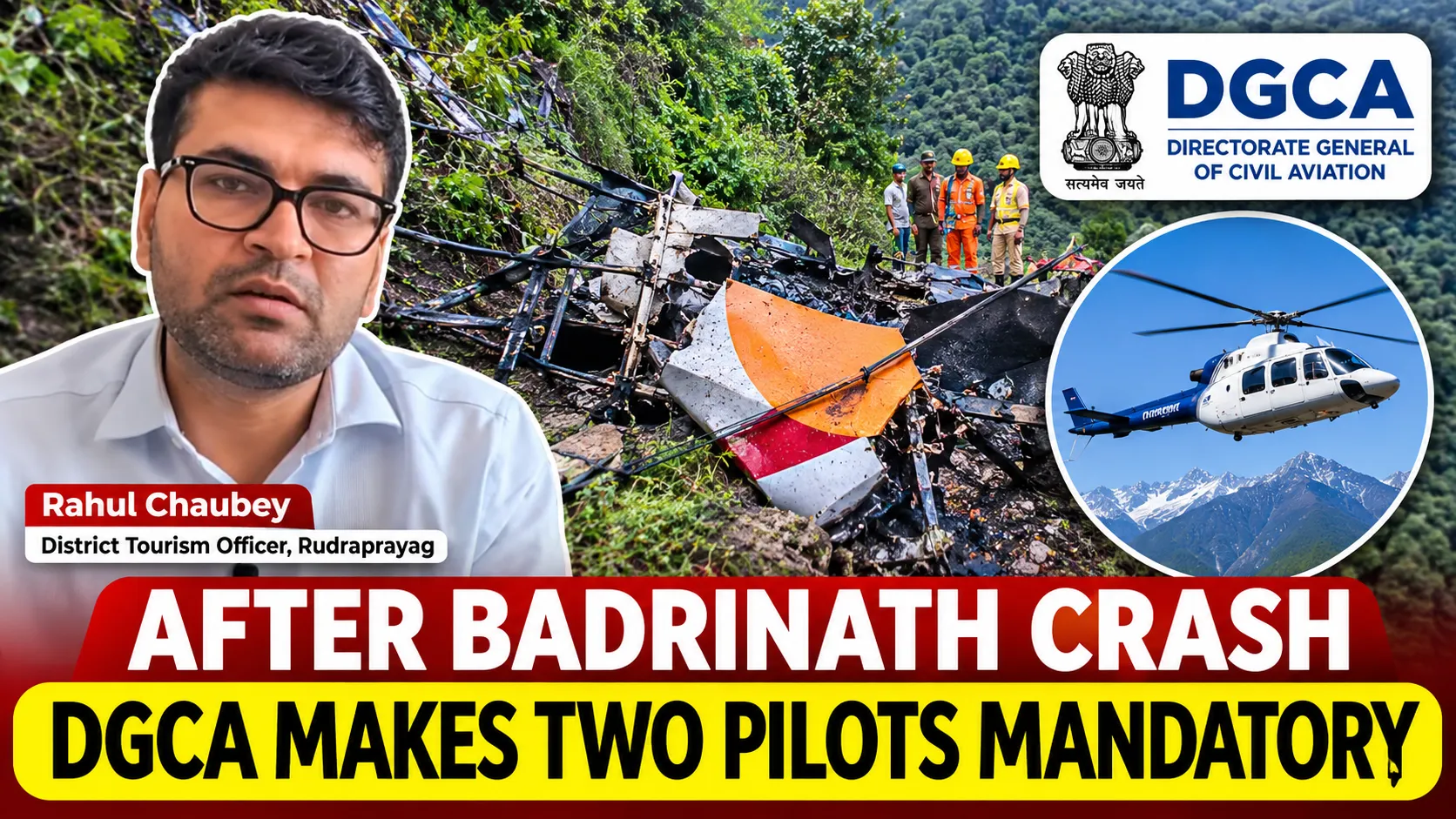
Rudraprayag (Uttarakhand), Nov 2: The Directorate General of Civil Aviation (DGCA) has made it mandatory for all charter helicopter flights operating from Dehradun to the Char Dham shrines to have two pilots on board, in a move to tighten aviation safety guidelines. The decision comes after a recent helicopter crash near Badrinath Dham that claimed six lives.
District Tourism Officer and Heli Service In-charge, Rudraprayag, Rahul Chaubey, said that while local shuttle operations to Kedarnath and Badrinath shrines continue without disruption, charter flights originating from Dehradun must now strictly comply with the dual-pilot protocol.
Explaining the aviation regulator's decision, Chaubey said the revised directive aims to enhance flight safety and ensure stricter operational control amid challenging weather conditions in the Himalayan region.
"This has been done so that, in view of safety and weather conditions, better control and supervision of these charter services can be maintained," he said.
The development comes after the Federation of Indian Pilots (FIP) submitted an urgent representation to Prime Minister Narendra Modi on Monday, seeking a comprehensive review of helicopter operations across the country.
In a letter signed by FIP President Capt. CS Randhawa, the organisation called for stronger safety oversight by the DGCA and the establishment of a National Helicopter Safety Framework.
The FIP has urged the Ministry of Civil Aviation to constitute a dedicated National Helicopter Safety Review Committee, comprising representatives from the DGCA, Aircraft Accident Investigation Bureau (AAIB), FIP, helicopter operators and technical experts. The proposed committee should submit a time-bound action plan within 90 days, it said.
Citing findings from the 380th Parliamentary Standing Committee Report, the pilots' body also raised concerns over the decentralised management of pilgrimage helicopter operations by state-level agencies such as the Uttarakhand Civil Aviation Development Authority (UCADA). It argued that the existing arrangement creates a gap in accountability and called for more direct and proactive supervision by national aviation regulators.
The FIP also flagged the use of single-engine, Performance Class 3 helicopters for high-risk operations in mountainous terrain. According to the organisation, several such aircraft lack essential safety equipment, including autopilots and weather radars.
It recommended a transition towards Performance Class 1 helicopters equipped with autopilots, weather radars and Enhanced Vision Systems (EVS), operated by two-pilot crews holding valid instrument ratings.
The pilots' body further called for stricter enforcement of Safety Management Systems (SMS) among helicopter operators, comprehensive pilot training, standardised ground-handling procedures and mandatory mountain-flying certifications.
Emphasising that commercial pressures and seasonal operational targets should never compromise flight safety, the FIP said pilots must have the authority to discontinue flights whenever conditions are unsafe.
The organisation also sought a meeting with the Civil Aviation Ministry, stating that its professional expertise should be considered while framing a comprehensive national policy for helicopter safety.
.webp)