

.webp)

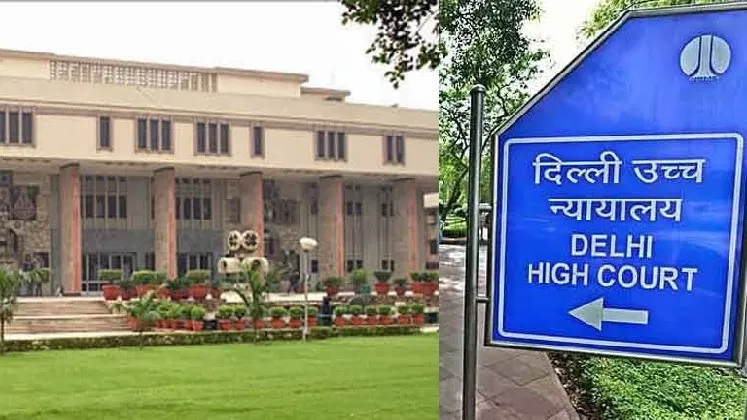
New Delhi, October 7: The Delhi High Court has directed initiation of criminal complaint proceedings against six CBI officers, including then Inspector Sushil Dewan, after finding that the agency’s 2016 reply to the trial court contained a materially false assertion that correspondence with the administrative ministry was “underway” when, in fact, only an internal deliberation was taking place.cb
Justice Madhu Jain held that the contemporaneous CBI records, including successive drafts and file notings, provided a reasonable foundation for the prima facie allegations of offences under Sections 191 read with 193 and Section 209 of the IPC. The court said the threshold for directing a complaint under Section 340 CrPC was satisfied and that an inquiry into the alleged offences was “expedient in the interests of justice.”
The High Court set aside the October 25, 2025 order of the Special Judge (PC Act), Rouse Avenue Courts, which had declined to initiate proceedings against the CBI officers.
It directed the Special Judge to make a written complaint against Sushil Dewan, Vineet Vinayak, Amit Kumar, Raman Tyagi, Prem Kumar Gautam and Md Azad and transmit it to the jurisdictional Magistrate within four weeks.
The case relates to CBI proceedings against former IRS officer Ashok Kumar Aggarwal in a disproportionate-assets case. After the Delhi High Court held the sanction for his prosecution invalid in January 2016 and he was discharged, the Ministry of Law and Justice gave an opinion in June 2016 that there appeared to be no reasonable ground to pursue the matter before a higher forum. The opinion was communicated to the CBI through the DoPT on July 1, 2016.
Aggarwal subsequently sought the return of documents seized during the investigation. In its reply dated August 2, 2016, the CBI stated that correspondence with the administrative ministry regarding further legal action was “under way” and opposed the return of certain documents on the ground that they might be required in further proceedings.
However, the High Court found that no such correspondence with the DoPT was actually underway on August 2, 2016. The court noted that the Ministry’s opinion had already been received and that what was pending was an internal CBI proposal to seek reconsideration and further legal opinion. It held that an internal proposal could not be equated with actual correspondence with an external authority.
The court placed particular reliance on the successive drafts of the reply. It noted that an earlier draft expressly recorded that the DoPT had turned down the CBI’s proposal to file an SLP. That statement was subsequently deleted and replaced by a handwritten assertion that correspondence with the administrative ministry was underway. The court found that the alteration changed the factual position presented before the trial court.
Justice Jain said the record showed that Sushil Dewan prepared successive drafts, incorporated the handwritten alteration into a later draft, prepared the final reply and filed it under his signature.
The court also found that Vineet Vinayak had a direct and material role, including his approval of the final reply. Prem Kumar Gautam, Amit Kumar and Md Azad were also found to have participated in the processing and vetting of the drafts, while Raman Tyagi dealt with the final reply before it was forwarded for approval.
The High Court rejected the argument that the later additional reply filed on August 9, 2016 completely cured the earlier statement. It noted that the later reply itself recorded that the proposal was forwarded to the DoPT only on August 8, thereby reinforcing the distinction between internal consideration and actual transmission to the Ministry.
The court also noted that, even after the Section 340 application was filed, the CBI continued to maintain that its earlier assertion was correct because the proposal was being processed internally.
The court further disagreed with the Special Judge’s reliance on the fact that Aggarwal had initially obtained an order for release of the documents. Referring to the Supreme Court’s decision in Iqbal Singh Marwah v. Meenakshi Marwah, the High Court said the question of expediency under Section 340 CrPC has to be assessed by considering the impact of the alleged offence on the administration of justice, and not merely the extent of injury suffered by an individual litigant.
The court also rejected delay as a reason to decline action, noting that Aggarwal had moved his Section 340 application soon after the disputed reply and that the matter remained under judicial consideration throughout. It observed that the relevant material consisted primarily of preserved official drafts, file notings and court filings, and there was no indication that the passage of time had made a fair inquiry impracticable.
Importantly, the High Court clarified that its order directing the complaint does not amount to a finding of guilt against the officers. It directed the competent court to proceed independently on the material before it and without being influenced by the observations made in the present judgment beyond the question of directing the complaint.
The criminal appeal filed by Ashok Kumar Aggarwal was accordingly allowed, with the High Court directing revival of the earlier court complaint proceedings before the Chief Judicial Magistrate (Central), Tis Hazari Courts, Delhi, in accordance with law. (ANI)
.webp)