

.webp)


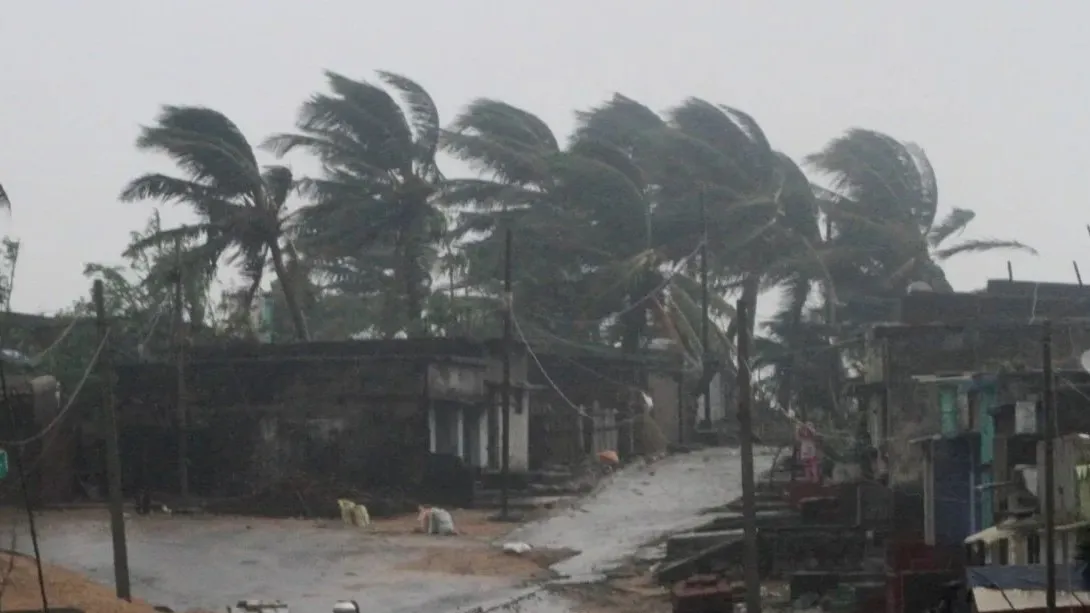
Bhubaneswar, November 18: With severe cyclonic storm ‘Akvan’ advancing towards the coast, the State Government on Wednesday directed district collectors to step up preparedness and ensure that all precautionary measures are completed well before the anticipated landfall on November 20.
In a 21-point directive issued on Wednesday, Special Relief Commissioner (SRC) Rajesh Prabhakar Patil asked collectors to prioritise evacuation of vulnerable populations, ensure readiness of cyclone shelters, strengthen emergency communication systems and mobilise rescue and relief resources to minimise loss of life and damage to property.
Also Read: East Coast Railway put on high alert to ensure passenger safety during Cyclone Akvan

The storm, which was moving north-northwestwards at a speed of 7 kmph, is likely to cross the North Andhra Pradesh-Yanam and South Odisha coasts between Narsapur and Puri by noon on November 20. The system is expected to bring maximum sustained wind speeds of 90-100 kmph, gusting up to 110 kmph.
The SRC identified Gajapati, Ganjam, Puri, Khordha, Jagatsinghpur, Kendrapara, Bhadrak, Balasore, Nayagarh, Cuttack, Jajpur, Dhenkanal, Keonjhar and Mayurbhanj as districts likely to be affected by the cyclone and associated rainfall. Collectors of other districts have also been asked to assess the situation and take necessary precautionary measures.
Making evacuation the foremost priority, the SRC directed collectors to identify all vulnerable people, particularly those living in kutcha houses, low-lying areas and vulnerable coastal locations, and shift them to multipurpose cyclone and flood shelters or other safe buildings.

Collectors have also been asked to ensure the early relocation of elderly persons, persons with disabilities, pregnant women and children. Special safety assessments have been ordered for residential schools, childcare institutions and old-age homes, with arrangements to shift inmates wherever necessary.
The district administrations have been directed to immediately inspect all cyclone and flood shelters and ensure that they are ready to accommodate evacuees.
Collectors must arrange adequate stocks of food, drinking water, essential medicines, lighting and sanitation facilities. Free kitchens are to be organised to provide cooked food to people taking shelter.
The SRC has also asked districts to test generators, water supply systems, inflatable tower lights and other emergency equipment. Defective equipment must be repaired immediately, while adequate fuel arrangements must be ensured.
All District Emergency Operation Centres and control rooms have been directed to function round the clock. Collectors must ensure adequate manpower and keep all communication equipment in working condition.
Districts have also been asked to test satellite phones and alternative communication systems under the EWDS project to maintain contact with the State Emergency Operations Centre in the event of disruption of normal communication networks.
The SRC has directed collectors to ensure that all fishermen are warned against venturing into the sea. The restriction must be strictly enforced until the IMD issues a de-warning.
Power boats of the Special Relief Organisation, NDRF, ODRAF and Fire Services teams must be checked and kept ready for immediate deployment. Adequate stocks of petroleum, oil and lubricants must also be maintained.

Collectors have been instructed to arrange evacuation of livestock and domestic animals from vulnerable areas, ensuring that no cattle are left tied inside kutcha houses.
Mobile health and veterinary teams must be organised in advance for deployment in affected areas. Adequate fodder and animal feed must also be arranged.
The SRC has directed districts to make advance arrangements for post-cyclone food assistance, including rice, chuda, gur and other essential commodities. Temporary shelter materials, particularly polythene sheets, must be provided immediately to families whose houses are damaged.
District collectors have been asked to coordinate with concerned departments and tree-cutting teams to ensure immediate clearance of blocked roads after the cyclone subsides.
Advance arrangements must also be made with electricity, telecommunications and internet service providers for speedy restoration of essential services.
The SRC has further directed district administrations to undertake public awareness campaigns, circulate accurate and verified information and prevent rumours and panic among people.
.webp)