
.webp)


New Delhi, November 17: Delhi Assembly Speaker Vijender Gupta on Tuesday described Gopashtami as a symbol of India's age-old cultural and civilisational commitment to cow protection, while paying tribute to devotees and spiritual leaders who lost their lives in the police firing during the November 7, 1966, agitation against cow slaughter near Parliament.
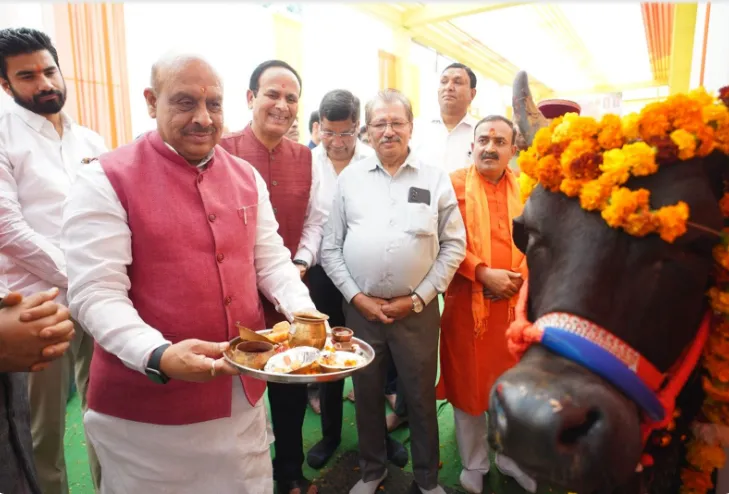
Addressing a Gopashtami celebration at Mayur Vihar Phase-I in East Delhi, Gupta recalled the historic protest in which devotees and spiritual leaders demanding a nationwide ban on cow slaughter were met with police firing. He said the sacrifices made during the agitation remain an important chapter in the history of India's cow protection movement.
“Gopashtami is not merely a religious observance; it reminds us of our civilisational responsibility towards Gau Mata and allows us to remember those who sacrificed their lives for her protection,” Gupta said.
He observed that reverence for cows extends beyond religious practices and reflects India's cultural identity, spiritual traditions and civilisational heritage. This year's observance, he added, carries particular historical significance as it marks six decades since the 1966 agitation near Parliament.
Recalling the hardships endured by devotees and spiritual leaders during the movement, Gupta said many faced imprisonment, legal proceedings and other difficulties while standing for the cause of cow protection. He emphasised that the sacrifices of saints and spiritual leaders had often played a significant role in awakening society's collective conscience.
Highlighting the religious significance of Gopashtami, Gupta said the festival commemorates the occasion when Lord Krishna took up the responsibility of tending cows in Vrindavan, moving from caring for calves to becoming a cowherd. This association earned him the revered names of Gopa and Govinda and underlined the special place of cows in India's religious and cultural traditions.
The Speaker also highlighted the historical contribution of cows to India's rural economy and social life, noting that they have traditionally represented both spiritual reverence and agricultural prosperity.
He stressed that cow protection should go beyond ceremonial worship and translate into practical initiatives, including responsible animal care, improved management of Gaushalas and greater public participation in animal welfare activities.
Calling upon citizens to strengthen their commitment to Gau Seva, Gupta said the tradition was deeply rooted in India's social fabric and civilisational ethos. He also appreciated the organisers for bringing together devotees and community representatives to celebrate the occasion and promote cow welfare and traditional values.
Gupta said Gaushalas and voluntary organisations have an important role in encouraging community participation and fostering compassion towards animals.
Urging the younger generation to understand the significance of Gau Seva, he said service and protection of cows should be viewed as a broader social responsibility rather than being limited to religious observances.
He concluded by calling for collective efforts to protect Gau Mata and preserve India's enduring traditions of service, compassion and cultural continuity.
.webp)