


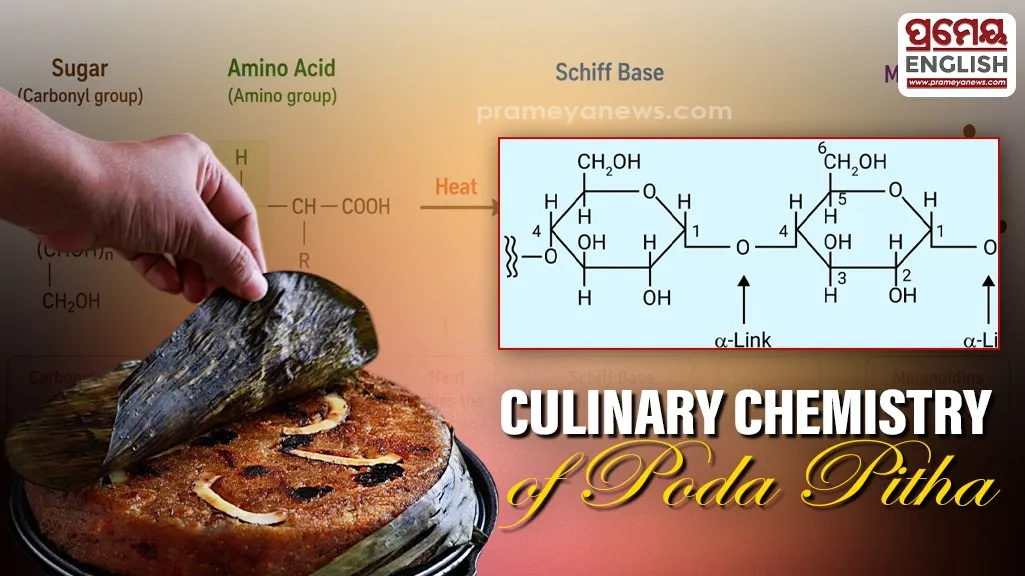
Culinary Chemistry of Poda Pitha
Celebrating the Raja festival in Odisha is incomplete without the lingering aroma of freshly baked Poda Pitha filling the household. Preparing this traditional delicacy is essentially a beautiful exercise in culinary chemistry. Every step in the recipe, from boiling the flavoured water to the slow baking process, triggers specific chemical reactions that transform simple ingredients into a complex sensory experience.
Structural Foundation through Gelatinization
Creating this traditional delicacy begins with a crucial chemical process known as starch gelatinization. Boiling water interacts with jaggery, freshly grated coconut, and aromatic spices. Rice powder is slowly introduced into this hot, flavoured liquid. Heat energy breaks the intermolecular bonds of starch molecules within the rice. Water absorbs into these granules, causing them to swell and eventually burst. This transforms the loose powder into a thick, cohesive dough that holds the pitha together.
Browning Reactions for Flavor and Color
Baking the dough in an iron wok over a slow flame initiates two vital chemical transformations. Naturally occurring amino acids in the rice and nuts react with the reducing sugars present in the jaggery. This heat-driven process is the Maillard reaction. It generates hundreds of new flavor compounds, giving the pitha its signature roasted, savory-sweet profile. Simultaneously, the high heat at the base causes the jaggery to undergo caramelisation. This breaks down complex sugars into sweet, nutty, and slightly bitter notes while forming the iconic dark, crusty exterior.
Role of Ghee and Banana Leaf Infusion
Pure ghee plays a dual role in this cooking process. As a lipid, it acts as an excellent solvent for fat-soluble flavour compounds. Essential oils from crushed green cardamom, black cardamom, and black pepper readily dissolve into the hot ghee. This ensures volatile aromatic molecules are evenly distributed throughout the batter. Wrapping the dough in a ghee-greased banana leaf adds another layer of complexity. Heat releases natural polyphenols and delicate earthy aromatics from the leaf directly into the baking crust. The leaf also functions as a breathable lid. It traps enough steam to gently cook the interior crumb while allowing the bottom to achieve a perfect crisp.
Sensory Harmony and Chemical Balance
Cooling the pitha before slicing is a vital final step. During this resting phase, starch molecules begin to realign and set in a process called retrogradation. This gives the baked treat its firm yet slightly yielding texture, preventing it from crumbling upon cutting. The slow-cooking method over an hour ensures a beautiful temperature gradient. It creates a stark textural contrast between the intensely caramelized, crispy outer shell and the moist, spiced interior crumb. Every bite delivers a scientifically balanced symphony of sweet jaggery, rich fats, and warm spices.
With Recipe Inputs from Ritu Pattnaik