
.webp)

By Debi Prasad Sahu
Bhubaneswar: Odisha aims to increase its urbanisation rate from the current 17 per cent to 40 per cent by 2036 while building a $500-billion economy, Chief Minister Mohan Charan Majhi said on Saturday.
Inaugurating the National Urban Conclave 2026 in Bhubaneswar, Majhi said the state was developing modern urban infrastructure to achieve its vision of a prosperous Odisha as it approaches 100 years of statehood in 2036.
Inspired by Prime Minister Narendra Modi's vision of 'Viksit Bharat 2047' and the Purvodaya policy, Odisha is emerging as a major growth engine, he said, stressing the need for inclusive, technology-enabled and well-planned cities.

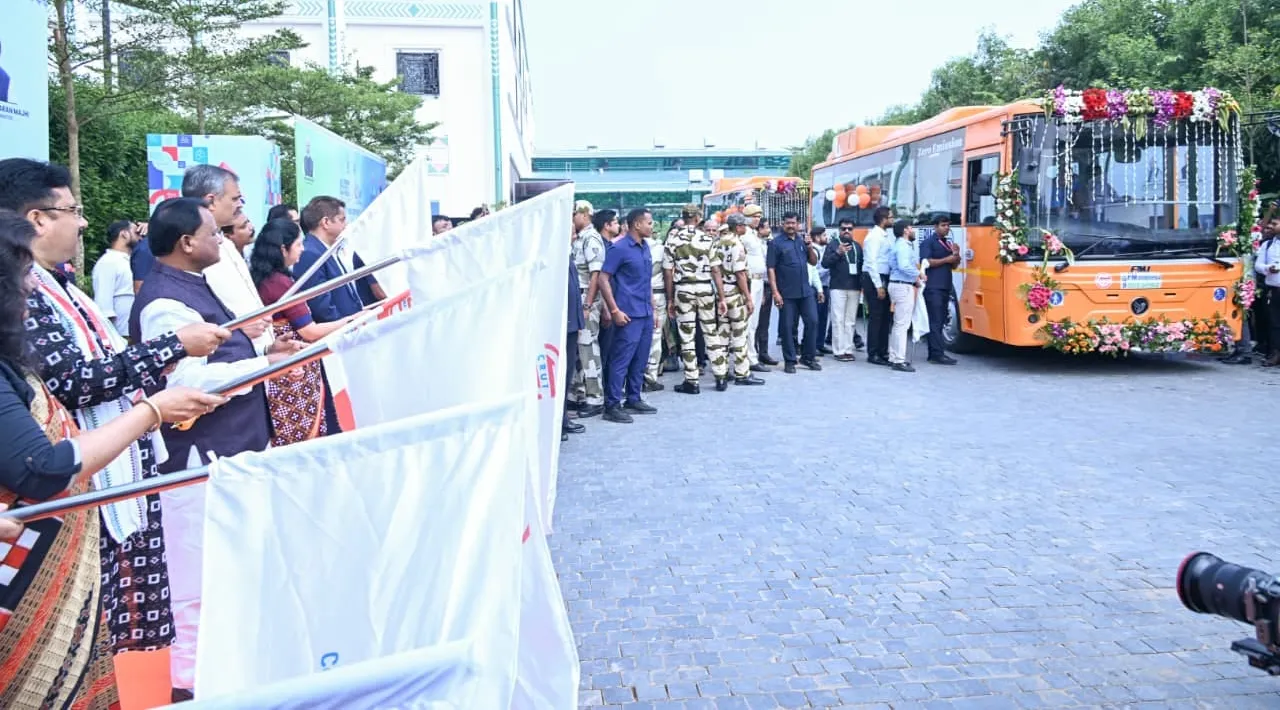
The Chief Minister launched 26 e-bus services under the PM E-Bus Sewa scheme. The initiative envisages the addition of 400 e-buses, 100 midi buses and 50 mini buses. Ama Bus services, currently operational in seven cities, will be extended to nine more cities — Baripada, Angul, Jharsuguda, Balasore, Jajpur, Rayagada, Jeypore, Bhadrak and Balangir.
The Capital Region Urban Transport (CRUT) network, which started with 200 buses in 2018, now operates 770 buses across 138 routes, connecting seven cities and serving around 3.5 lakh passengers daily. The Odisha Yatri app has facilitated more than nine lakh bus journeys, generating Rs 12 crore in earnings for drivers without commission deductions.

Highlighting investment-led growth, Majhi said Odisha had received investment proposals worth Rs 23 lakh crore, while projects involving Rs 3.5 lakh crore across more than 200 industries had reached the implementation stage. The Bhubaneswar-Cuttack-Puri-Paradip Economic Region is being developed with guidance from the Union government and NITI Aayog. The state has also created 28 new notified area councils, seven municipalities and one municipal corporation.
Also Read: Cuttack plans four multi-level parking facilities
Under urban welfare initiatives, 1.53 lakh houses have been constructed under the Pradhan Mantri Awas Yojana-Urban. The PMAY Urban Bandhu programme has received approval of Rs 1,615 crore over five years, including a 90 per cent exemption on stamp duty and registration fees for economically weaker section beneficiaries.
The state is also implementing urban infrastructure projects worth Rs 6,000 crore, the Rs 1,600-crore Swachh Odisha Yojana and round-the-clock 'Drink from Tap' water supply in 11 cities. The Garima scheme provides sanitation workers with safety equipment, insurance and social security benefits.

Emphasising the conclave's theme, 'The Right to Walk', Majhi said safe footpaths, pedestrian crossings and public spaces were essential to urban transport planning.
NITI Aayog CEO Anurag Jain said urban residents would account for 50 per cent of India's population and contribute 75 per cent of its GDP by 2047, underscoring the importance of planned urbanisation.
Chief Secretary Anu Garg said piped drinking water was being supplied to households in 114 urban areas, while the Drink from Tap initiative had expanded to 11 cities.

The Chief Minister also released the Ankur Handbook and Town Planning Handbook and launched the new Urban Development Policy. Union Minister of State for Housing and Urban Affairs Tokhan Sahu, state Housing and Urban Development Minister Krushna Chandra Mahapatra and other officials attended the conclave.
.webp)