


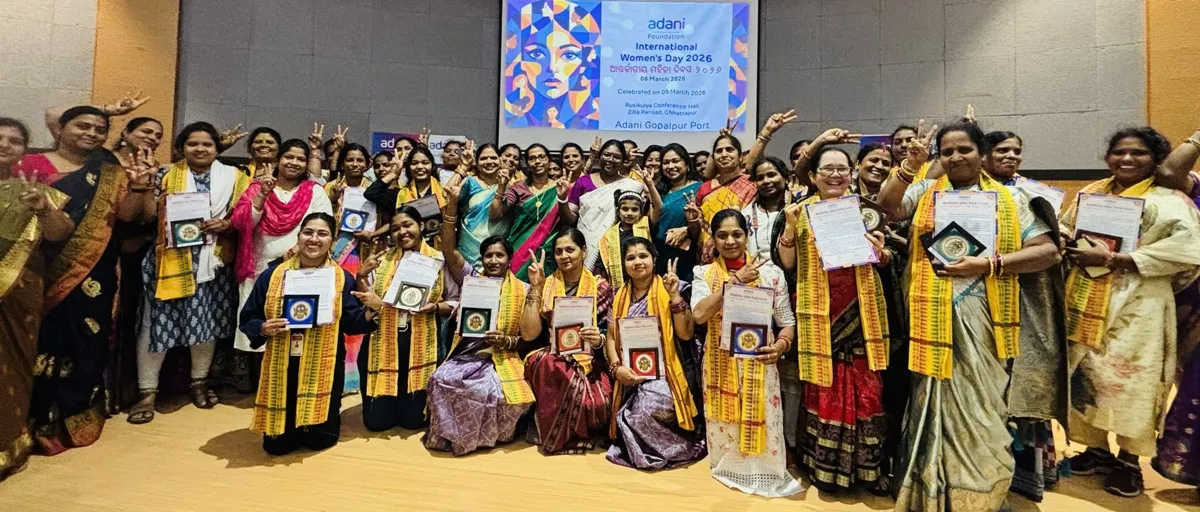
Chatrapur, March 10: To honor the achievements, resilience and contributions of women, Adani Foundation celebrated International Women’s Day with great enthusiasm at the Zilla Parisad Rushikulya Conference Hall in Chatrapur.
The programme was graced by Sumitra Majhi, Joint Labour Commissioner, Berhampur, as the chief guest.
In her address, she highlighted the inner strength and resilience of women and stated that women often discover their true potential in challenging situations.
She also noted that women today are emerging as key contributors to their families’ economic stability and increasingly taking leadership roles in society. She appreciated the efforts of Adani Foundation in empowering rural women.
More than 300 women from Gopalpur Port peripheral panchayats and the Chatrapur NAC area participated in the event. On the occasion, 30 women entrepreneurs were felicitated for their dedication and efforts towards self-reliance and 10 successful women leaders from different fields Sneha Gouda, Reshamarani Satapathy and Amruta Swain for their innovative sanitary napkin project, child artist Manke, Odissi dance guru Alaka Sahu, social worker Samapti Panda, and specially abled teacher Upasana Nanda were honoured for their inspiring contributions to society.
The programme was also attended by Divya Mohanty, Tahasildar, Chatrapur; Sharmistha Pradhan, Chairperson, Chatrapur NAC; Adete Acharya, District Culture Officer; Sumitra Mishra, Principal of Chatrapur Women’s College; Suchitra Panigrahi, Headmistress of PM Shri Onslow School; Dr. Sharmistha Sadangi, Psychiatrist, MKCG Medical College; Manorama Sahu, District Gender Coordinator; B. Laxmi Patra, Sarpanch of Kalipalli Panchayat; Ranjita Patra, President of Gopalpur Port Women’s Club; and Nirupama Satpathy, who encouraged the participating women.
Speaking on the occasion, Debadutta Mishra, CSR Head, Gopalpur Port, said that Adani Foundation continues to work towards skill development and economic empowerment of women in the surrounding communities and primary objective of this felicitation ceremony is to showcase the hidden talents of women and boost their morale to achieve greater heights.