

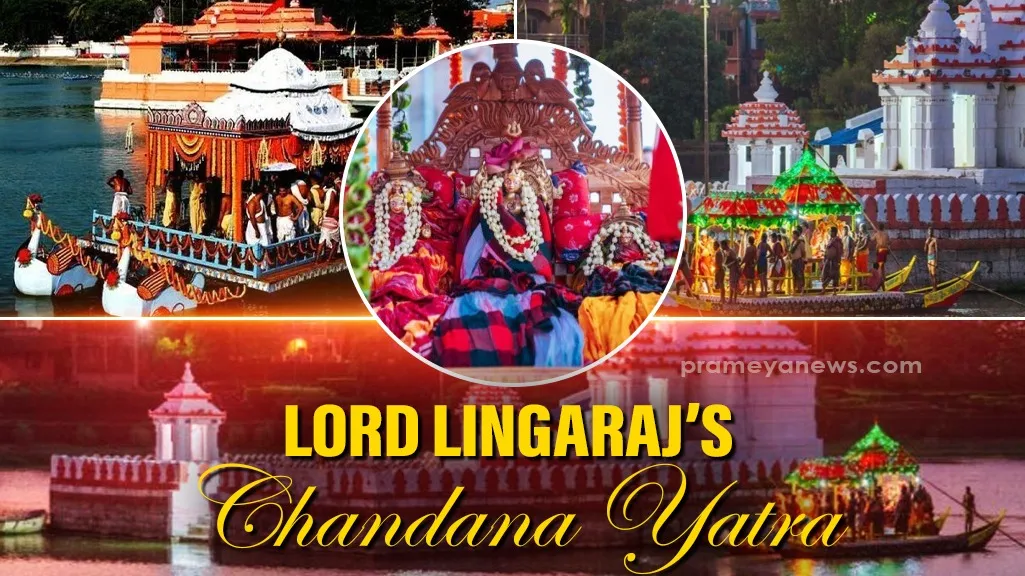
Divine rituals cool Lord Lingaraj during summer boating festival
Bhubaneswar's historic Lingaraj Temple is executing its annual 22-day Chandana Yatra water festival at the sacred Bindu Sagar tank, drawing thousands of cultural enthusiasts and devotees to Ekamra Kshetra. This ancient summer ritual involves complex liturgical protocols that see the presiding deity leave the main sanctum to seek relief from the scorching tropical heat. Administrators and senior servitors strictly follow traditional manuals to ensure every chant, offering, and boat movement aligns precisely with centuries-old historical mandates.
Cooling the cosmos serves as the primary spiritual objective of this celebration, which begins every year on the auspicious day of Akshya Trutiya in the month of Baisakha. However, the deep theological structure of the festival relies on a legend of domestic discord between Lord Lingaraj and Goddess Parvati. During the earlier Ashokastami car festival, Lord Lingaraj travels to the Rameshwar Temple with Goddess Rukmini and Lord Vasudev on the Rukuna Chariot, leaving Parvati behind. This exclusion sparks a divine marital argument upon his return, culminating in Parvati locking the temple gates against her spouse. To pacify his angry consort, Lingaraj compromises by offering a divine vow, promising to include her in the upcoming 22-day summer boating festival at Bindu Sagar. This ancient covenant explains why Goddess Parvati, Goddess Durga, Lord Vasudev, and Lord Kapilanath join the central deity on the water today. This grand ritual showcases how Ekamra Kshetra evolved from indigenous stone worship into a major medieval Shaiva center, visible in how the deity transitioned over centuries from Kruttivasa to Lord Lingaraj.
Constructing the majestic floating platform, known locally as the Chapa, demands an intricate system of traditional engineering. Hereditary temple servitors execute separate phases of this sacred project within a short window. Badhei Sevakas, acting as traditional carpenters, join two large country boats to build a steady deck, carving a throne for the deities and fixing ornamental swans to the bow. Bauri Sevakas supply raw timber before Kaibarta boatmen perform purification rituals, installing the sacred flag and holy pot. Finally, Samartha Sevakas dress the entire barge in vibrant fabrics. Intriguingly, craftsmen use recycled wood salvaged from the dismantled Rukuna Chariot, creating a direct physical link between the spring car festival and summer water rituals.
Inner temple cleansing rituals must take place before the deities make their public appearance. Servitors initiate the daily sequence by offering prayers to the sun god and gatekeepers to cleanse the perimeter. Next, priests perform the grand Mahasnana, washing the main deity with five sacred substances including fresh milk, clarified butter, curd, honey, and molasses. Once the washing finishes, a specialized servitor dries the sacred stone using fresh cloths before closing the heavy doors. The lead priest then emerges carrying a cooling paste made of freshly ground sandalwood, walking around the temple complex while musicians play heavy brass gongs. After the stone receives its traditional triple-line mark, kitchen staff bring a refreshing summer beverage in a formal procession, allowing chief priests to complete the intricate sixteen-part ritual offering.
Moving the proxy deities from the inner halls to the water requires careful coordination between neighboring shrines. As the procession moves through the Lion's Gate, a fascinating encounter known as the Kasia-Kapila Bheta occurs when Lord Kapilanath arrives from his nearby temple to join the parade. Traditional scholars view Kapilanath as an advisor or spiritual guide to Lord Lingaraj, representing a unique blending of Brahma, Vishnu, and Shiva. Strong carriers transport the heavy palanquins through the crowded streets, receiving traditional wages for their intense physical labor. Throughout this neighborhood transit, priests maintain a rhythmic chant that fills the air, guiding the deities safely toward the historic water tank.
Sailing routines on the water tank follow strict geometric paths, with boatmen executing clockwise circles to honor the guardian goddesses protecting the lake. The barge stops at several historic stone steps along the water edge, where local monasteries step forward to present traditional food offerings. The historical Gopal-Tirtha, Shankarananda, and Shiva-Tirtha monasteries act as vital administrative partners throughout the 22 days, providing specific rice and fruit offerings to the moving deities. This complex festival requires immense stamina from the entire temple administration to maintain the daily routine over three weeks. On the final twenty-second night, the entire cycle reaches its climax when servitors give all participating deities a refreshing turmeric water bath. This final act completes the cooling cycle, fulfills the ancient divine promise, and successfully protects the delicate religious legacy of the city.
With inputs from: Prof (Dr) Chitrasen Pasayat